Not-so-stable coins: Why currency pegs don’t always work

Kelly Ng
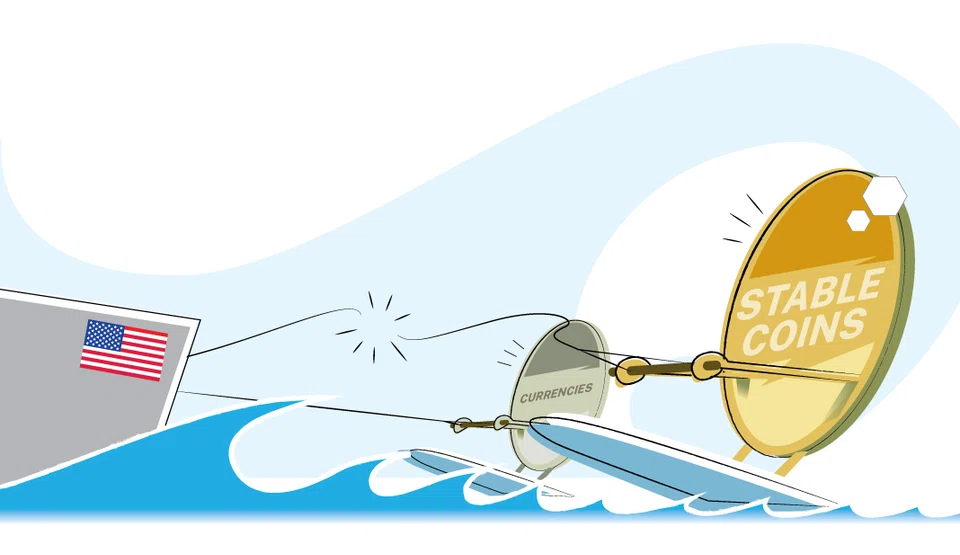
TERRAUSD’S flop last week has destabilised other stablecoins – even Tether, the largest of such coins, briefly lost its peg to the US dollar. This calls into question their namesake.
Stablecoins, which typically claim to be backed either by real-world assets or crypto collateral, are supposed to avoid volatility. Their use case is to allow crypto traders to transact more efficiently, without using fiat currency.
Tether and USD Coin, the 2 largest stablecoins, say they are backed by a combination of cash, commercial paper, certificates of deposit and Treasury bills.
TerraUSD, on the other hand, is an algorithmic stablecoin. Its value is assured by lines of computer code and a sister token, and not by any significant collateral base.
Some observers have suggested that TerraUSD failed to maintain its peg because it was under-collateralised. But others have pointed out that all stablecoins – even those such as Tether, which claims to be "100 per cent backed" – face the same difficulties of all currency pegs: it is difficult to maintain a peg when circumstances move against you.
How currency pegs work
Free-floating exchange rates are determined by demand and supply in the foreign exchange (FX) market.
For a country to maintain a fixed exchange rate, its central bank must therefore constantly buy or sell its own currency on FX markets.
This buying and selling action is similar to what TerraUSD's algorithm was supposed to do – mint or burn coins to control supply and demand relative to the US dollar.
To successfully maintain a peg, a central bank needs large amounts of FX reserves.
Hong Kong, one of the few countries in the world to have successfully maintained a peg to the US dollar, had US$465.7 billion in FX reserves last month. That is close to double its money supply.

The HKD has been tied to the USD since 1983. Recent USD strength has forced the Hong Kong Monetary Authority (HKMA) to dip into its FX reserves for the first time in 3 years, and some market watchers are now questioning whether the peg will hold.
Last Thursday, the HKMA last week sold about US$722 million in 2 interventions to buy HK$5.7 billion and defend its peg.
Why pegs break
South-east Asia has had some trying experiences with currency pegs. Both Malaysia and Thailand were forced to abandon pegs because their central banks ran out of reserves to defend them. In fact, Thailand's abandoning of its peg for the Thai baht is thought to have helped trigger the Asian Financial Crisis.
The trigger at that time was a US economic recovery, which led the US Federal Reserve to raise interest rates in order to stave off inflation – much like it is doing now.
As the USD strengthened in response, so did the baht. But a higher baht wasn't good for the Thai economy. Exports were hurt, foreign investments fell and capital flowed out of Thailand.
The Thai government tried at first to keep the peg, but eventually surrendered to market forces.
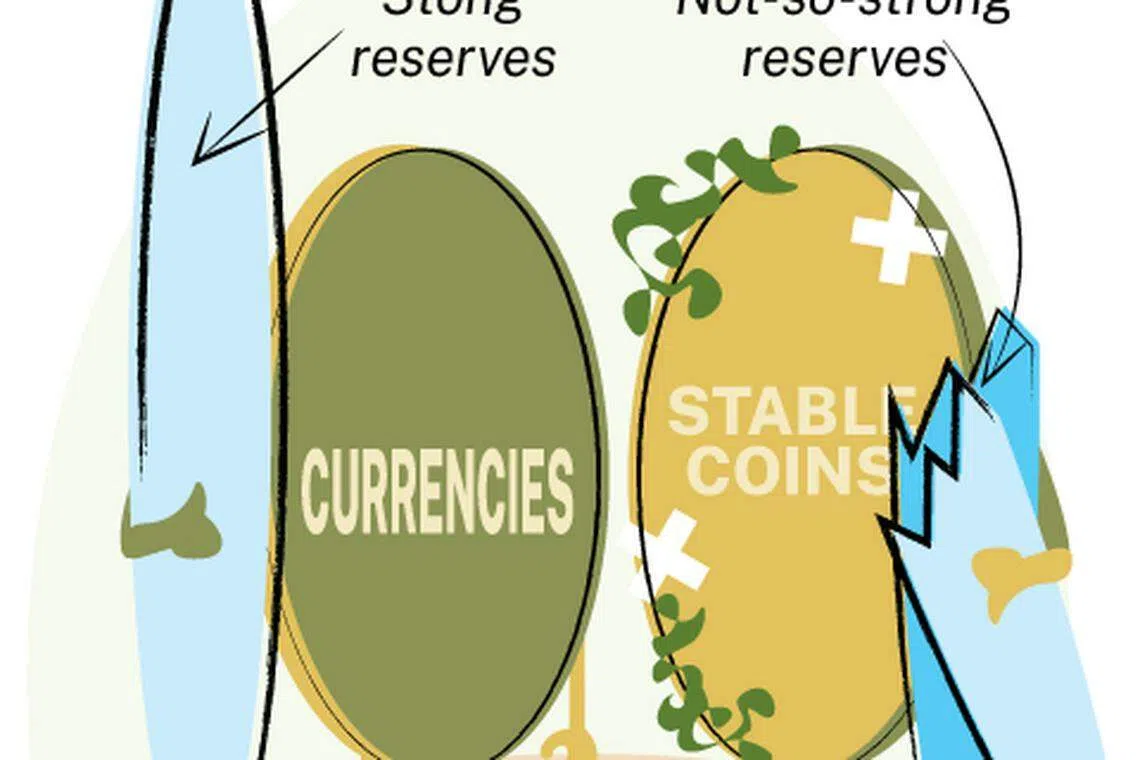
In hindsight, economists say, the currency pegs in Thailand and Malaysia meant both countries had limited control of their monetary policies. Their currencies were also susceptible to speculation by currency traders looking for imbalances.
Bank of Singapore’s currency strategist Sim Moh Siong said currency pegs must be sustained by a robust pool of reserves and a “flexible” economy.
“For example, if interest rates go up, the economy has to be flexible enough to withstand the stress. This is how the Hong Kong dollar’s peg has survived for such a long time,” he said.
Stablecoins in uncertain waters
Stablecoins aren't used as currencies for any economies, so the comparison is not exact. Demand and supply in cryptocurrency markets is driven more by sentiment than any macroeconomic fundamentals.
But given that stablecoins are pegged to real currencies – mostly the USD – the same rules apply. Unless stablecoins have sizeable collateral above the standard 1:1 ratio, their pegs will be difficult to defend in times of volatility in their underlying currencies.
Unfortunately, there are no regulatory guarantees that the coin-issuing entities have enough reserves to maintain their peg or to pay out to customers in the case of a run on their systems.
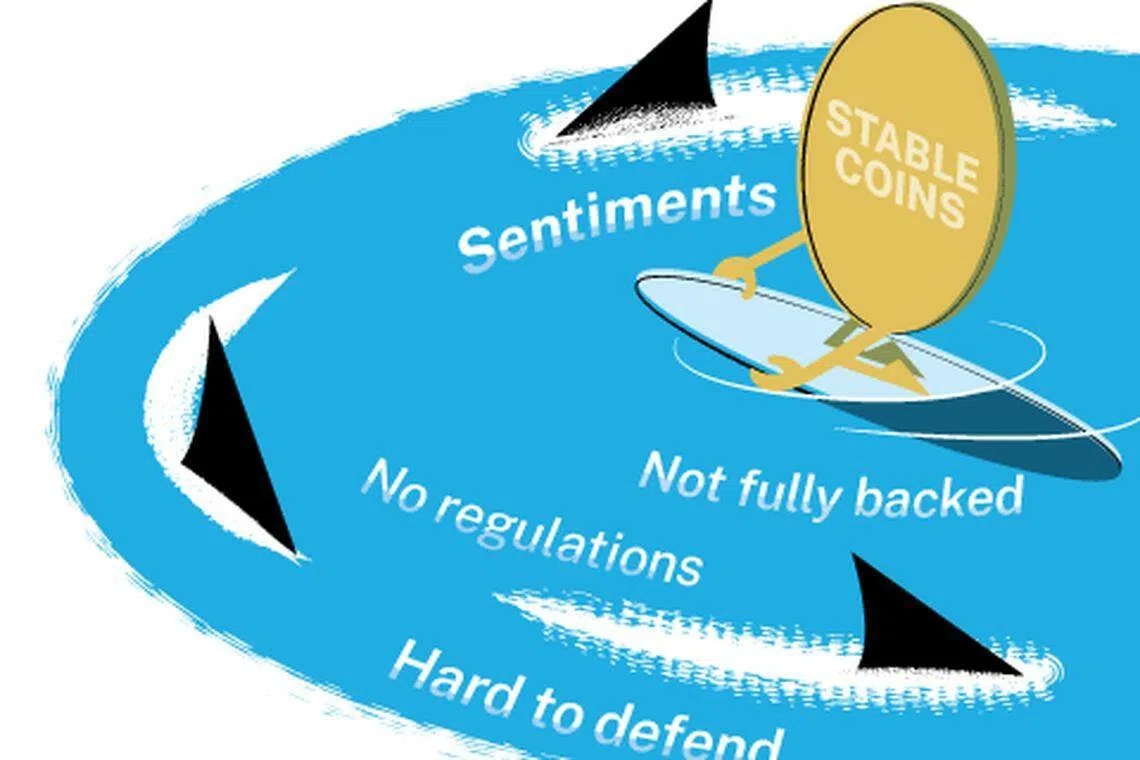
A stablecoins report issued by the US Treasury and other agencies last November said: “There are no standards regarding the composition of stablecoin reserve assets, and the information made publicly available regarding the issuer’s reserve assets is not consistent across stablecoin arrangements as to either its content or the frequency of its release.”
In an investigation, New York authorities found that Tether and crypto exchange Bitfinex covered up the loss of some US$850 million of clients’ funds. Tether’s lawyers admitted later that Tether had only been 74 per cent backed in April 2019.
Some stablecoins are also partially backed by other cryptoassets. The problem with this, said National University of Singapore law professor Kelvin Low, is that when it becomes necessary to sell assets to defend the peg, prices of those cryptoassets will fall. This was what may have happened to Bitcoin when Terra sold its bitcoin reserves in a futile bid to defend the peg, he said.
Low added: “Even if the accounts are audited, as is the case for USDC (USD Coin), such stablecoins face the same contagion risks that perfectly solvent banks face when there is a bank run. When you need to sell lots of assets in a short amount of time, it puts pressure on the prices.”