Should we invest in cryptocurrency?
Weigh the returns and the risks of cryptocurrency before deciding
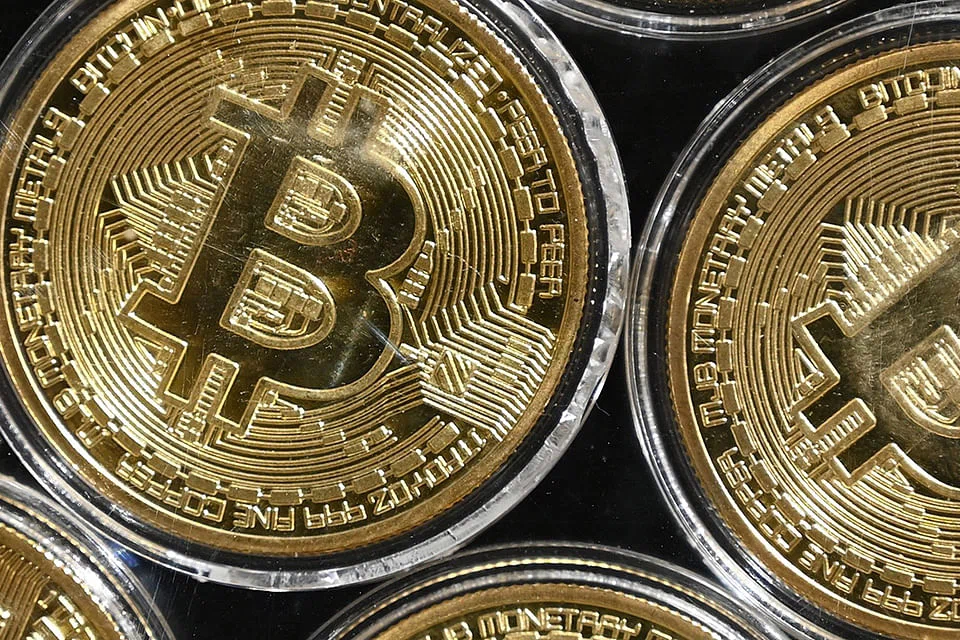
IN recent months, cryptocurrency, particularly Bitcoin has been a hot topic. When Elon Musk announced that Tesla had bought US$1.5 billion worth of Bitcoin and that Tesla will accept Bitcoin, its price surged 20 per cent to US$42,000. Today, Bitcoin has crossed US$60,000.
Should we invest in cryptocurrency? To answer this, we first have to understand what cryptocurrency is in the context of money.
At Providend, we always say that money is an enabler of life goals. But to be an enabler, money needs to fulfill three fundamental roles: (1) a store of value, (2) a medium of exchange and (3) a unit of account. Today, money has a physical form in notes and coins but strictly speaking, these notes and coins do not have intrinsic value. It is the features that constitute money, collectively agreed upon by people, give money value. There are six characteristics to consider when we gauge the different forms of money:
1) Durability - Not easily destroyed.
2) Portability - Easily carried.
3) Divisibility - Easily subdivided into smaller units.
4) Fungibility - $10 of the same currency can be exchanged with another $10 of the same currency.
5) Acceptability - Universally accepted by others.
6) Scarcity and stability - Cannot be easily reproduced, otherwise value will be diluted.
An ideal form of money should have all these six characteristics.
When barter for goods and services failed, humans have used different forms of money across history. From cowrie shells to oddly shaped snail shells, to cacao beans, to woven cloth and huge rai stones, the problems with all these forms of money and why they failed, are that they either lacked portability, durability, divisibility, uniformity or sometimes, even acceptability because different countries and regions attach varying values to the various forms of money.
We then saw the use of metallic money in the form of iron, copper, silver and gold. However, the biggest problem with metallic money is its portability. By 1900, about 50 countries adopted the gold standard, a monetary system whereby a country's paper currency is directly tied to gold held in banks' vaults. This was given up during the Great Depression in the 1930s. In 1958, the Bretton Woods agreement was implemented in which 44 countries agreed that their currency would be pegged to the US dollar which itself would be pegged to the gold price. In 1971, US President Richard Nixon suspended it.
Today, money is mostly fiat currency, in the form of paper money backed only by the government who prints it. Modern money is becoming more digitalised as the exchange of money for goods and services are done through internet. We hardly use physical cash and coins anymore.
On Oct 31, 2008, Satoshi Nakamoto (the name used by the presumed pseudonymous person or persons) published a paper Bitcoin: A Peer-to-Peer Electronic Cash System which became the genesis of a new form of money -- cryptocurrency that we see today.
The name Bitcoin is actually misleading because we don't actually own a digital coin per se. What we own is actually a computer file that acts like a private ledger recording every transaction.
So, imagine that on the entire Bitcoin network, there are three parties: Peter, Susan and Andrew. They all have a Bitcoin wallet that starts with an empty private ledger. Peter then buys a Bitcoin at say $100. There will be an "announcement" on the Bitcoin network about this transaction and Peter, Susan and Andrew's ledger would record this transaction. Of course, only Peter's wallet will show he has $100. If Peter sends this $100 to Susan to buy a watch from her, an announcement will be made again, and everyone's ledger will again update this transaction and now only Susan's wallet will show the $100.
Subsequently, if Susan sends the $100 to Andrew to buy two books from him, another "announcement" will be made on the network and all the ledgers update this transaction again.
In order to ensure that the transactions are genuine, every transaction must be digitally signed by the sender. But how do we ensure that everyone in the network will pay attention to the announcement and update their private ledgers faithfully and correctly?
This is where the "checkers" come in. When an announcement of the transactions is made, the "checkers" will organise these transactions into blocks (or ledgers) that are chained together (thus the term blockchain). Using something called cryptographic protocols, the "checkers" will find the blockchain that is "correct" and announce it to the users and everyone like Peter, Susan and Andrew will update his or her own private ledger based on the correct blockchain.
Thus, the blockchain is the public ledger that the private ledgers take reference from. In blockchain language, "checkers" are called block creators, also known as miners in the Bitcoin network and they are paid a fee (in the form of Bitcoin) for verifying a block successfully.
We have seen how in history the different forms of money have failed due to the lack of one or many of the six characteristics of a good form of money. The biggest problem with cryptocurrency like Bitcoin is the lack of acceptability, at least for now. While a number of companies (such as Microsoft, Tesla, AT&T in US, Burger King in Venezuela and Germany, KFC in Canada) have accepted Bitcoin for transactions, many still do not.
Some countries like India are even proposing a ban on cryptocurrencies and fining anyone trading in the country or even holding such assets. The day may come when cryptocurrencies are accepted as a form of money. But no one knows when and whether it would be Bitcoin, Ethereum, Litecoin, etc that will be accepted.
Not crazy rich
So, should we invest in Bitcoin or for that matter, any other forms of cryptocurrency? I think we need to ask ourselves whether in our wealth plan to achieve our life goals, do we need the kind of returns that cryptocurrency may give? If we do not, then perhaps there is no need to take such high risk.
We may also want to ask ourselves whether we have the ability to take the risk. Since we don't know when and what type of cryptocurrency will be widely accepted, can we afford to wait and if it does not happen, can we afford to lose money on it? And finally, we want to ask ourselves whether we can sleep in peace, if we invest a large part of our money into it.
My humble advice is that we should first build our core portfolios using instruments that are proven by evidence, to give us the returns we need. And after doing that and only if you wish to, put some of your money into cryptocurrency. This approach will not make you crazy rich, but it won't make you poor either. It will certainly give you enough and with peace of mind to live the life you want. Anyway, that is what money is for - to be an enabler.
- The writer is CEO, Providend Ltd, Singapore's first and probably sole fee-only comprehensive wealth advisory firm. He can be contacted at chris_tan@providend.com