Taking the risk out of blue investments
Financial structures that reduce the risk of financial loss in a deal, or de-risking, should be at the heart of any approach to mainstream blue finance
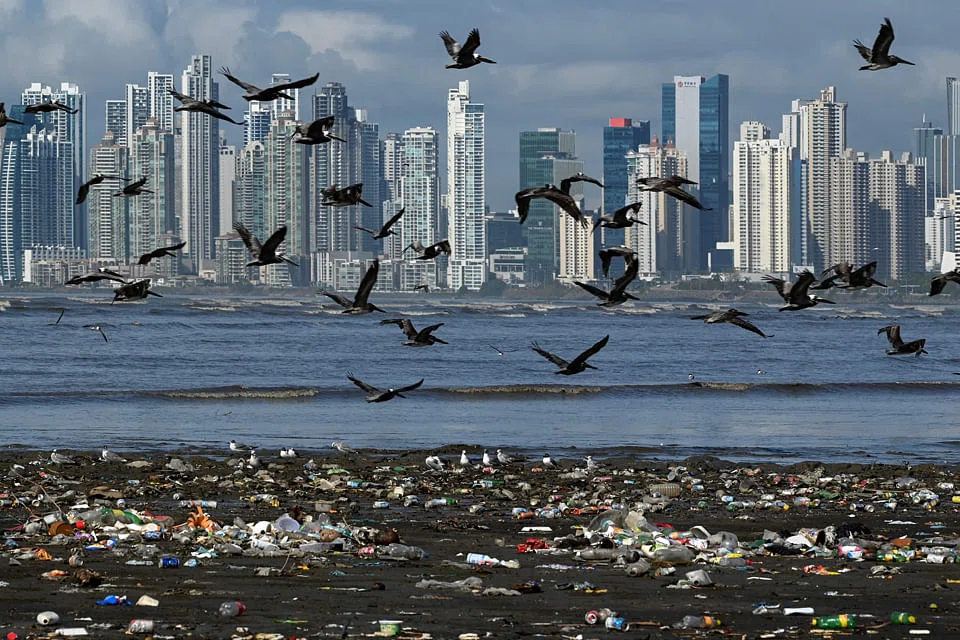
IMAGES of dying or dead whales stuffed with plastics, sea turtles caught in fishing nets, and seagulls covered in oil underscore the perilous state of our oceans more powerfully than any statistics. More than 90 per cent of global warming from 1971 to 2010 occurred in the oceans, resulting in massive destruction of marine life.
If treated as a nation, oceans would be valued at an estimated US$24 trillion, according to a report commissioned by World Wildlife Fund (WWF). Millions of people depend on ocean resources. But this economy is under siege: The ongoing and frighteningly fast destruction of marine biodiversity, inextricably linked with climate change and pollution, threatens global food security, lives, and livelihoods.
The Covid-19 pandemic has clearly shown that proactive investments can prevent or reduce the impact of crises at a fraction of the cost compared to investments required to address emergencies and finance recovery measures from a crisis after it materialises.
In the same way, supporting critical blue projects now will help avoid many future costs to national economies of dysfunctioning ecosystems, such as the economic collapse of fishing communities and coastal tourism, climate change, and the threat of water shortages and sea level rise to urban areas.
Averting a worst-case scenario
Those threats are emerging even now, highlighting the need for urgent action. A number of blue and green studies and frameworks prepared by development agencies and governments have identified priority steps to rescue the oceans. Unsurprisingly, the measures involve a mixture of infrastructure development, policy actions, and new regulations. The Asian Development Bank (ADB) has developed an Ocean Financing Framework to help governments identify projects which could have a positive impact on ocean health.
Pollution reduction projects are high on this list. Nearly eight million tons of plastics enter our oceans each year, adding to the estimated 150 million tons already in the marine environment and which is expected to triple in the next 20 years. Other toxic wastes - from paper, tanning, construction, agriculture, and other industries - also enter the oceans as effluent through rivers and channels.
Infrastructure is the key to reducing these chronic pollution levels through projects such as wastewater treatment plants and solid waste recycling. Another crucial action is to adapt to climate change policies through measures such as coastal protection. Smart policy is imperative to stop pollution at source, overfishing, heedless use of plastics, and other harmful physical and financial practices.
Innovative financing and ecosystem accounting
Finance underpins each of these approaches. The money is available. Global pension funds alone are estimated to have between US$30 trillion and US$50 trillion of assets under management. Commercial banks, sovereign funds, and development aid all provide a wealth of funding sources.
The problem is that the pipeline of commercially viable projects, which financial institutions would be willing to finance, is too small. Only US$13 billion has been invested in blue sustainable projects over the last 10 years through philanthropy and official development assistance, and even less by the corporate sector.
Southeast Asia alone needs more than US$100 billion per year from 2016 to 2030 to finance climate-resilient infrastructure. This is expected to grow due to the ongoing Covid-19 pandemic. Clearly, attracting finance to blue projects is a real challenge due to the high perceived risk and low returns for many of these initiatives, especially when the services provided by the blue ecosystems are not yet, or only partially, accounted for.
We lack widespread application of innovative financing mechanisms that allow for risk-commensurate returns for investors in a sustainable blue ocean economy to catalyse private finance. Tackling this impediment is essential as constrained public fiscal resources are insufficient to meet all infrastructure financing needs.
To attract finance: blend, leverage, incentivise
It's a simple rule that finance professionals learn early in their careers: choose the right financing to manage project risks. Funds in the private and commercial sectors, for example, cannot be expected to finance projects when risks such as affordability issues and regulatory uncertainties are beyond their control.
Governments need to cover some of these risks (especially those over which they can assert some control) through government financing. In return for this support, commercial financiers should be required to achieve sustainability targets that are higher than usual, and achieved in a quicker time period.
Financial structures that reduce the risk of financial loss in a deal, or de-risking, should be at the heart of any approach to mainstream blue finance. Governments can achieve this by blending each dollar they invest directly or indirectly via development funds with multiples of dollars from private and commercial finance sources. A factor of six should be the lowest average aim.
Scaling up the use of de-risking tools and mechanisms by governments is critical. Three tools highlighted in a recent ADB study on green finance are especially conducive to mobilising blue finance.
The first is sovereign blue finance facilities. Concessional funds can help to either blend down the overall project financing costs, or provide investment incentives through payments linked to targets such as blue credits. Blue financing facilities at national or local government level can send strong signals to local project sponsors and global investment funds on government's intent on developing and financing bankable blue projects. The ADB-managed Asean Catalytic Green Finance Facility is an example of such a facility in the "green" space, and can be replicated at national levels.
Innovative blue capital market instruments are another financing channel. Blue bonds can be a powerful way to mobilise funds from global markets for projects. Debt-for-nature-swaps can mobilise resources for protecting nature while reducing the debt burden of developing countries or coastal communities.
Finally, an ocean credit or blue credit is a pre-determined annual payment by a government entity to a project implementing company. The credit is linked to performance or impact indicators that a project needs to achieve, such as increased carbon sequestration. A project qualifying for blue credits could be cultivation of seaweed or expansion of mangrove forest. ADB has established an innovative finance hub to help national and local governments develop blue credits.
The urgency and vast scale of financing needed to protect our oceans require a global coalition of financiers, government, and organisations like ADB to implement the required innovation.
Like the oceans, blue finance is largely uncharted. We need to put it on the map, before it's too late to turn back the tide of damage to our global marine environment.
- Ingrid van Wees is the Vice-President for Finance and Risk Management of the Asian Development Bank