

Turning investment theory into a successful value-oriented equity strategy
The latest edition of Koller, Goedhart and Wessels' Valuation gives executives and managers insights on creating value and measuring success

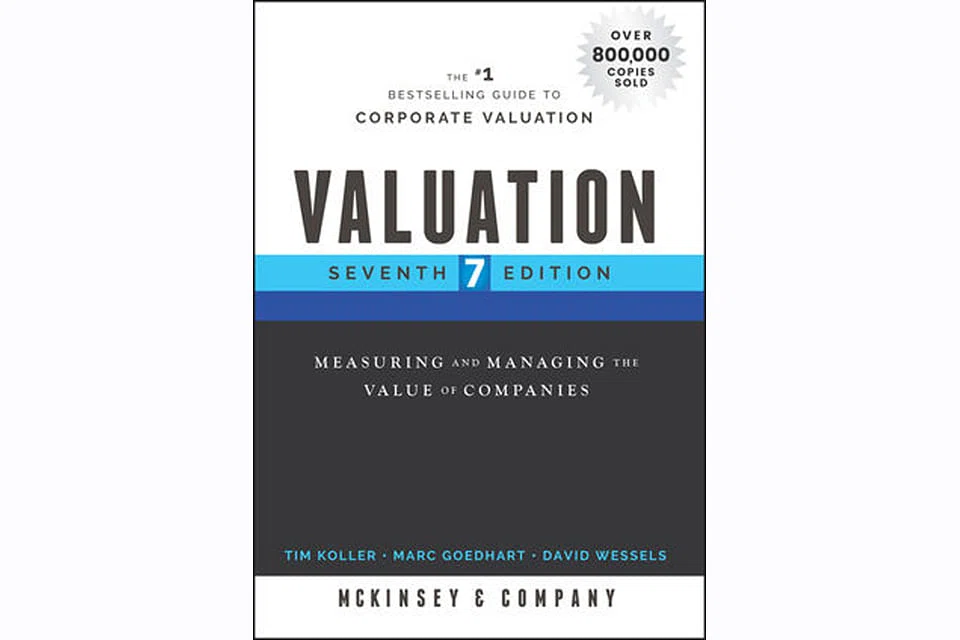
WHAT is "value"? This is a pressing question for investors: Turning investment theory into a successful value-oriented equity strategy has proved challenging over the last decade.
Tim Koller, Marc Goedhart, and David Wessels set out the core principles of valuation and offer a step-by-step guide to measuring the value of a company in the seventh edition of Valuation. The new edition (the first of which was published in 1990) also addresses three factors challenging many value strategies today: the rising proportion of investments in intangible assets, the network effects enjoyed by dominant technology companies, and incorporating an environmental, social, and governance (ESG) lens in assessing value.
The core principles of business valuation are general economic rules that apply in all market conditions. The guiding principle is simple: "Companies that grow and earn a return on capital that exceeds their cost of capital create value."
The authors argue that too many investors are using the wrong yardstick by focusing on earnings per share. In practice, "expected cash flows, discounted at the cost of capital, drive value", they explain. What's more, they say, "the stock market isn't easily fooled when companies undertake actions to increase reported accounting profits without increasing cash flows". Indeed, rising accruals typically indicate that the company will post lower earnings in the future.
The book, originally written as a handbook for McKinsey & Company consultants, offers a how-to guide to valuation. The heart of the book is a series of step-by-step methods for calculating value using enterprise discounted cash flow (DCF) and discounted economic profit approaches.
The authors assert that "a good analyst will focus on the key drivers of value: return on invested capital, revenue growth, and free cash flow". Analysts should be ready to dig into the footnotes in order to "reorganise each financial statement into three categories: operating items, non-operating items, and sources of finance".
Where can this ideal analyst be found? Detailed work on the scale described requires time and judgment. The authors cite the example of Maverick Capital as practitioners: They hold only five positions per investment professional, many of whom have covered the same industry for more than a decade.
I should make it clear: That is not me. My decade as an equity fund manager ended 20 years ago. Instead, I bring a multi-asset investor's perspective to the practical lessons this book offers, of which there are plenty.
First, for companies that find a strategy for earning an attractive return on invested capital (ROIC), there is a good chance this above-market return will be sustained. In a study of US companies between 1963 and 2017, the top quintile of companies ranked by ROIC did see declining returns toward the mean, but they remained about 5 per cent higher than the average 15 years later.
According to the authors, these "high-ROIC companies should focus on growth, while low-ROIC companies should focus on improving returns". Growth is rarely a fix for low-return businesses. "In mature companies," they explain, "a low ROIC indicates a flawed business model or unattractive industry structure."
ROICs across industries are generally stable, so industry rankings do not change much over time.
Over the last 35 years, higher market valuations have been driven by steadily increasing margins and return on capital. For asset allocators, the higher valuations for US companies relative to other countries reflect higher ROIC.
Businesses with the highest returns weave together a number of competitive advantages. The authors identify five sources of premium prices: innovative products; quality (real or perceived); brand; customer lock-in, such as replacement razor blades; and rational price discipline (avoiding commoditised products).
They also identify four sources of competitive advantage on costs: innovative business methods (for example, Ikea stores); unique resources (in mining, North America's gold is closer to the surface than South Africa's and thus cheaper to extract); economies of scale; and network economics.
Start from the future
The second lesson is that sustaining above-average growth is much less common than sustaining superior returns. The authors note that "high growth rates decayed very quickly. Companies growing faster than 20 per cent in real terms typically grew at only 8 per cent within five years and at 5 per cent within ten years".
Yet some sectors have consistently been among the fastest growing, including life sciences and technology. Others, such as chemicals, reached maturity well before the 1990s.
Third, analysts valuing rapidly growing Internet and technology stocks should, advise the authors, "start from the future . . . think in terms of scenarios, and compare economics of the business models with peers". Doing so requires an estimation of what the future economics of the company and its industry might become.
DCF remains the essential tool, offering a value under each of many possible scenarios. The greatest increases in value have been seen in those industries where the winner takes all. The authors state: "In industries with network effects, competition is kept at bay by the low and decreasing unit costs of the market leader."
Investors will need to take a 10- or 15-year view to put the right valuation on a fast-growing company, which often involves looking beyond mounting losses in the early stages.
Digital applications can offer obvious benefits to performance for all companies. McKinsey & Company identified at least 33 opportunities, from digital marketing to robotic process automation.
Fourth, the best owner of a business frequently changes over its life cycle. The authors explain: "A company . . . is likely to start up owned by its founders and may end its days in the portfolio of a company that specialises in extracting cash from businesses in declining sectors." The chapter on corporate portfolio strategy provides a good framework for understanding the rationale for mergers, acquisitions, and divestitures.
More sustainable opportunities
Yet, fifth: "One-third or more of acquiring companies destroy value for their shareholders, because they transfer all the benefits of the acquisition to the selling companies' shareholders," the authors state. Acquirers typically pay about 30 per cent more than the pre-announcement price. Still, acquisitions can create value, and this book offers six archetypes for successful deals.
In contrast, divestitures do typically add value - a sixth lesson. The authors note: "The stock market consistently reacts positively to divestitures, both sales and spin-offs. Research has also shown that spun-off businesses tend to increase their profit margins by one third during the three years after the transactions are complete."
Finally, corporate strategy that tackles ESG issues can boost cash flows in five ways:
- Facilitating revenue growth
- Reducing costs
- Minimising regulatory and legal interventions
- Increasing employee productivity
- Optimising investment and capital expenditures
For example, one study found that gold miners with social engagement activities avoided planning or operational delays. Nor is a do-nothing approach cost free. Better performance on ESG issues reduces downside risk. For example, it can help avoid stranded assets. A strong ESG proposition can create more sustainable opportunities, boosting DCF value.
ESG reporting, however, is not featured in the chapter on investor communications. I would urge the authors to address this issue in their next edition. Asset owners need to understand the impacts of their investments.
In conclusion, neither the Internet nor the rising focus on ESG issues has rendered obsolete the rules of economics, competition, and value creation. As the authors state: "The faster companies can increase their revenues and deploy more capital at attractive rates of return, the more value they create."
This well-written book gives chief executives, business managers, and financial managers insights into the strategies they can use to create value and provides investors with tools to measure their success.
- The writer is an Edinburgh-based investment professional and previously served as head of thought leadership at Aberdeen Standard Investments and head of asset allocation at Schroders Private Bank.
TRENDING NOW

Olivia Lum, ex-CFO not giving evidence in their Hyflux trial

Bank on AI-resilient Singapore property via deep-value listed property groups

Positive pivot or premature? Analysts split on Keppel Reit’s S$610.9 million buy

Once staunchly pro-China, Malaysian Chinese businesses are now distancing themselves from Beijing

