

Is the 30% rebound in Asian high yield sustainable? We think not
China’s property sector is still mired in uncertainty and default risk is persistent. Investors should steer clear of Asian high-yield bonds
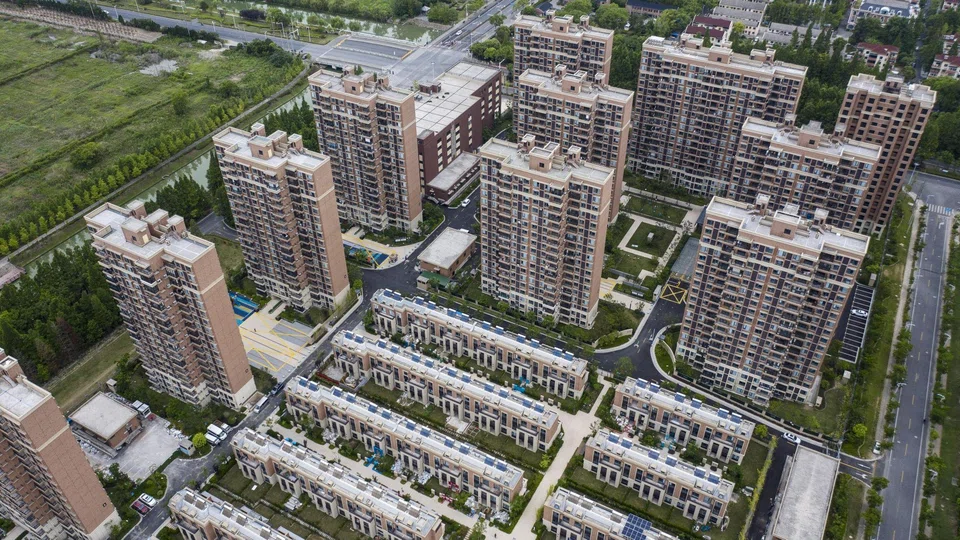
AS CHINA unleashed a wave of supportive policies for the property sector alongside the reopening of its economy from Covid-19 curbs, Asian high-yield bonds – as measured by the Bloomberg Asia USD High Yield Bond Index – have surged by around 30 per cent since November 2022.
In our opinion, the rally is likely to be short-lived.
Property demand still fragile
China’s crackdown on the property sector may finally be over, but the deepest problems have not disappeared. Supportive policy measures and the post-Covid reopening have failed to restore confidence in the housing market. As it stands, property demand remains fragile.
Furthermore, China’s reopening comes at a time when external demand weakens as global economies slow down. These pose risks to China’s economic prospects, consequently affecting prospective homebuyers’ finances and their willingness to purchase big-ticket items amid the uncertainties.
Homebuyers also have continued concerns over the developers’ ability to deliver homes that have been pre-sold. It will take time for developers to finish their uncompleted projects, especially if the developers themselves need to be restructured. We also think that there needs to be a steady stream of completions, in order to meaningfully restore confidence in the housing market.
Do not expect a short-term rebound
While new home prices in January 2023 were up 0.1 per cent month on month versus a 0.2 per cent slide in December 2022, we note that one positive data point does not make a trend. In our view, the confidence crisis is creating a vicious circle, where homebuyers are holding themselves back from the market and waiting for prices to fall further.
On the supply side, as developers struggle to sell homes, inventory has been piling up. Home inventory, measured in terms of gross floor area, is near a five-year high. Inventory destocking through price cuts could weigh on China’s home prices. Therefore, excessive property inventory needs to unwind in an orderly manner, or the sector could risk having a systemic crisis.
While China is trying to manage the oversupply of homes and limiting price declines in some areas, we think it is still too early to conclude that a “soft landing” in the housing market can be engineered. Therefore, we are keeping a wary eye on the recovery story as China’s housing market has yet to find a stable footing. Policy impact will also take time to materialise.
Default risk remains persistent
We have continued to see developers such as Times China defaulting in recent times, showing the limitations of the government’s attempts to ease liquidity crunch in the property sector.
For a start, financing tools recently revived by the Chinese government, referred to as the “three arrows” (bank loan, bond issuance and equity finance), may not benefit every developer. Only developers that have been classified as “good quality” by the government are expected to receive broader support.
Meanwhile, land purchases plummeted by over 50 per cent year on year. As developers are reluctant or lack the ability to buy land for new building, contracted sales growth is expected to remain subdued, resulting in the potential for deterioration of liquidity.
In the near term, China’s property bond market faces a challenging hurdle of offshore bond maturities. Country Garden, with a focus on China’s more challenging Tier 3 and Tier 4 cities, stands out as a big name. Its large scale and the unclear industry outlook suggest that the impact of new policies and rescue measures might have their limitations.
The longer-term outlook of property developers is also bleak. China’s shift to a top-down, state-controlled economy is expected to threaten the long-term profitability of private developers. At the annual National People’s Congress, the authorities have remarked that they will remain tough on the sector; we believe policy is unlikely to be relaxed by a huge extent.
Additionally, the unfinished homes and falling home prices have spooked some potential homebuyers, who now prefer to rent. China has plans for those looking to rent; it aims to build 6.5 million public rental housing in 40 cities by 2025.
Asian high-yield bond market running ahead of itself
From the perspective of valuations, there has been a broad and fairly indiscriminate recovery.
The proportion of Chinese property bonds trading above 50 US cents on the dollar in the Bloomberg Asia USD High Yield Bond Index has increased dramatically to 76 per cent at the time of writing. As at end-October, which was the peak of the sell-off, the percentage stood at just 9 per cent.
Meanwhile, Asian high-yield credit spreads have narrowed by nearly half since November 2022, and are now nearly returning to levels seen pre-Evergrande crisis.
Overall, we believe the market is likely running ahead of itself, painting an extremely optimistic scenario where risks are dissipating rapidly and everything could quickly come under control. In reality, while the worst may be over, conditions in China’s property sector do not seem to be reverting to where they were before.
To reiterate, the actual pace of recovery could lag behind the high expectations of a short-term rebound. Once the market realises that, the rally is likely on its last legs and will correct itself.
Investors should redeploy capital elsewhere
As we believe the recent sharp rebound is unsustainable, we hold a defensive stance on Asian high-yield bonds. Now would be an opportune time for investors to gradually cut their positions. For investors who do not have any positions in the Asian high-yield bond market, we recommend that they stay clear.
Amid the global macroeconomic uncertainties, we opt to stay defensive, with a preference for high-quality, short-duration bonds.
The writer is a senior research analyst of the research and portfolio management team at FSMOne.com, the B2C division of iFast Financial. The latter is the Singapore subsidiary of SGX-listed iFast Corporation Ltd.
TRENDING NOW

Stocks to watch: CapitaLand Ascott Trust, Keppel Infrastructure Trust, iFast, ESR Reit, First Sponsor

Indonesia says gas export cuts to Singapore remain within contract terms

If Europe goes to war, the fallout will be felt in East Asia

Government to bring forward raising of retirement age, give employers more financial support to create flexi-load jobs

