Is the AI-led rally in US stocks a bubble?
Generative AI holds great promise, but the path ahead is likely bumpy with periodic setbacks
ONE puzzling phenomenon for investors this year is the dichotomy between the equity market and the outlook for the US economy. Many economists have cautioned about the high risk of recession in the US, exacerbated by credit tightening in the regional banking sector.
The large inversion of the yield curve also warned ominously of recessions comparable to the 2000 dotcom bubble and the 2008 global financial crisis.
In our view, the strong performance in the equity market rests upon two important factors: disinflation and a soft landing for the US economy. A notable macro development in 2023 is the precipitous decline in inflation. In many developed economies, inflation peaked around the middle of last year and has since trended downwards.
However, inflation rates remain stubbornly above the central banks’ target levels, prompting them to maintain an inflation-fighting posture even though economies have slowed while stresses among US regional banks loomed.
The outlook for inflation is a key determinant of financial markets as it sets the future course of interest rates that drives asset prices. The next factor supportive of a stable equity market is the avoidance of a hard landing as corporate earnings is highly correlated to the health of the economy.
So far, major economies have held up much better than initially expected, with a lowered risk of a recession this year. This is a pleasant surprise as historically, declining inflation with a moderately supportive economy does not coexist with a rising equity market.
AI: tranformational or fad?
The strong performance of the S&P 500 is partly due to the artificial intelligence (AI)-led rally, triggered by the unveiling of ChatGPT by Microsoft in March. Since then, many other large tech firms such as Google and Meta have launched their own offerings. Response to ChatGPT was overwhelming. It crossed one million users in just five days and 100 million users in a month – a remarkable take-up rate outpacing other well-known AI and social media platforms.
AI, or the more recent generative AI, is a general-purpose technology with wide-ranging implications beyond the tech companies. While it is not without shortcomings, the maiden launch was impressive. The technology has the potential to augment human knowledge, produce creative work and even add value in highly specialised and technical areas such as producing medical diagnoses.
The potential of this technology can be far-reaching. Broadly speaking, it could offer new sources of revenue and higher productivity for the companies that are able to harness its potential.
A narrow rally
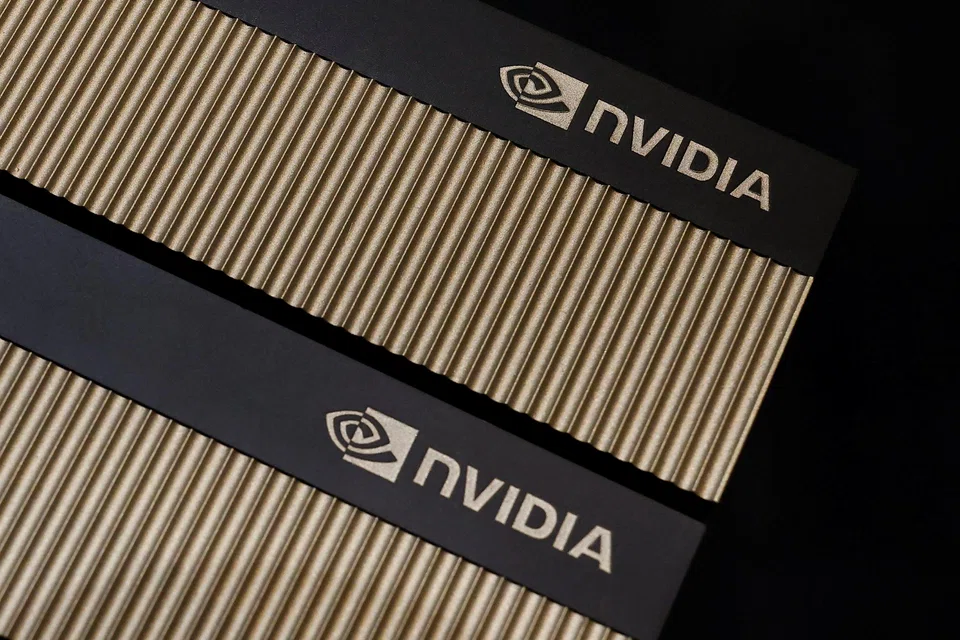
Year to date, excluding the top 10 performing stocks of the S&P 500, the returns of the remaining 490 stocks were collectively in the low single-digit levels. The mega-cap stocks have rallied 40 per cent to 50 per cent, and the poster child of the AI rally is none other than Nvidia.
On face value, Nvidia is now trading at a whopping 37 times price-to-sales multiple, which some may argue is unambiguously a bubble. However, the price-to-earnings (P/E) ratio based on consensus for earnings per share for 2024 is roughly 55 times. This is way below that of the many “profitless tech” in 2021 and the 300 times P/E ratio on the Nasdaq 100 index back in 2000.
Bill Gates famously wrote in 1996: “We always overestimate the change that will occur in the next two years and underestimate the change that will occur in the next 10. Don’t let yourself be lulled into inaction.” Generative AI should be seen in the same light. Sans a few AI platform companies, the immediate revenue and cost impact on the rest of the sector may not be realised soon, but adoption rate should accelerate quicker than before.
AI aside, the tech sector has arguably gone through a “recession” ahead of the economy. The pandemic in 2020 rejuvenated the tech sector as technology and digital were critical enablers for economies living with lockdowns and mobility restrictions. But extrapolation of those trends turned out to be unsustainable and subsequent interest-rate hikes further crimped valuations, resulting in a recession-like sell-off in 2022.
In 2023, the sector recovered strongly, not on revenue growth, but on cost rationalisations after a frosty 2022. While cost cutting has its limits in driving profits, the divergent earnings profile of the sector may offer some offsets to the broad market, resulting in a more muted earnings downturn, notwithstanding a slowing economy.
Longer term concerns
The World Economic Forum (WEF), in its Future of Jobs Report 2023 predicted that there would be 26 million fewer jobs in record-keeping and administrative roles worldwide by 2027 due to automation. Accenture estimated that 40 per cent of all working hours could be impacted by large language models, as language-based tasks account for 62 per cent of total employee hours, and 65 per cent of that time can be made more productive through augmentation and automation.
This will have massive social and political implications as jobs are either lost or redesigned. This will also happen at a time when the labour share of gross domestic product is already at a multi-decade low with most value accretive to the corporate profits.
Laws are also being introduced to mitigate some of the potential risks of AI including accuracy of information and privacy issues. While the technology holds great promise, the path ahead is not entirely without bumps and periodic setbacks. AI is undoubtedly promising in the long term, but investors should be prepared to tolerate higher volatility along the way.
The writer is chief investment officer at UOB Private Bank
TRENDING NOW
Green fuels, autonomous ships: How Singapore is future-proofing its shipping industry
US trade chief to consider trade deal tariff caps in excess capacity probe
Grab CEO’s wife Chloe Tong on life with Anthony Tan and finding her purpose
Deal between tycoon friends sparks scrutiny of Philippine power sector