

Allianz’s offer makes business sense but Income’s ethos of affordable insurance hangs in the balance

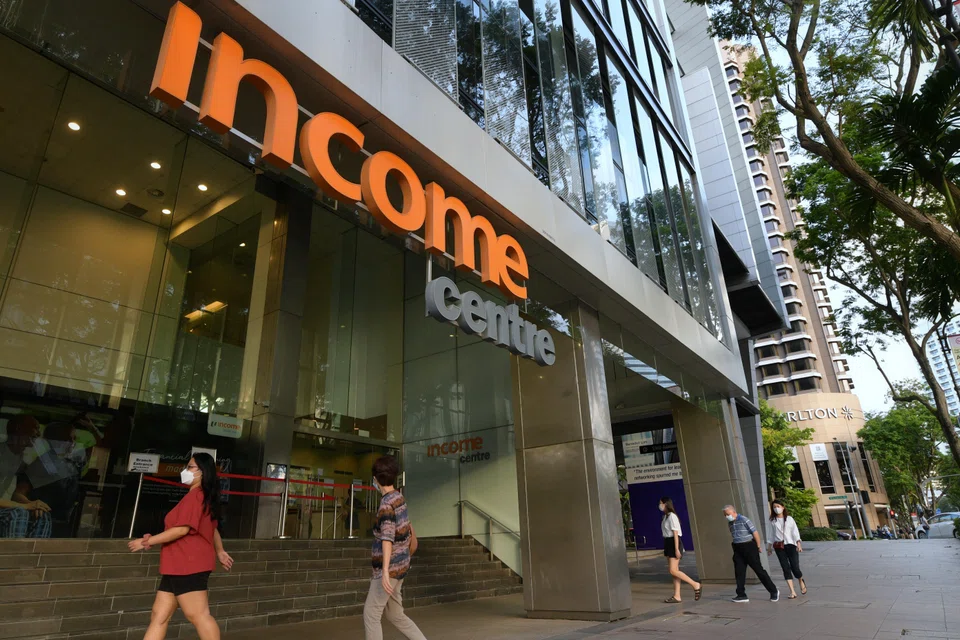
WHEN Income Insurance announced its intention to corporatise in 2022, the exercise was positioned as an effort to achieve “operational flexibility” to enable it to compete in the mature domestic market that is Singapore.
Who could have predicted that a mere two years later, it would be poised to cede 51 per cent of its shareholding to a German giant?
Just this week, Allianz announced a pre-conditional general offer for 51 per cent of Income Insurance at S$40.58 per share, in a deal valued at S$2.2 billion. The offer represents a premium of 37.3 per cent over Income’s net asset value per share of S$29.55 as at December 2023.
Allianz will need to acquire 54.7 million shares to reach the 51 per cent stake. If acceptances from minority shareholders fall short of this, NTUC Enterprise Co-operative, Income Insurance’s largest shareholder, has given an irrevocable undertaking to accept the offer – up to the number of shares required to make 51 per cent.
NTUC Enterprise Co-operative currently owns 72.8 per cent of the insurer, or 78 million shares out of the total 107.2 million shares as at Dec 31, 2023. Minority shareholders account for 27.2 per cent.
Liquidity avenue
The offer provides a liquidity avenue for minority shareholders at a significant premium.
For both Income and Allianz, the deal makes strong business sense. For Allianz in particular, Income is a gem of a business, even though the Singapore domestic market is mature. In 2022, Income was the sixth-largest life insurer in Singapore and the third-largest non-life insurer, according to GlobalData.
Income’s latest accounts, the first since its corporatisation, reflect gross premiums of nearly S$4.9 billion, where life and health accounted for 87 per cent or S$4.2 billion. Profit after tax came to about S$60.4 million. The accounts reflected an 18-month period – July 2022 to December 2023. Based on the full-year accounts for 2021, gross premiums from life and health came to S$4.2 billion.
That gross premiums from life and health appeared to plateau likely reflects a saturated life insurance market. Still, there is room to grow, particularly in the wealth space where Income Insurance has yet to make its mark, and clients’ appetite for higher-yielding options remains insatiable.
But one intangible factor looms large. Income’s origins go a long way to deepen the well of customer goodwill that surely helps to reinforce its strong franchise. Income was established around 1970 as part of NTUC labour unions’ efforts to address the needs of labourers and lower-income workers. It was set up as a co operative to provide affordable insurance. So far, it has demonstrated willingness to stretch into areas that other insurers may deem unviable for lack of market size or viability.
These efforts include cover for older people; for children with autism and Down’s syndrome; and protection for migrant workers for non-work-related death, total and permanent disability and critical illness, among others
In a letter to shareholders in the latest 2023 accounts, chairman Ronald Ong and chief executive Andrew Yeo wrote: “From the get-go, our purpose is to make insurance inclusive and accessible. In this regard, we have always done more for our customers simply because we believe that it’s the right thing to stand by them.”
The big question, which is the same question that arose when the corporatisation exercise was announced, is whether this ethos would be diluted. If so, something would surely be lost in Singapore’s insurance landscape.
Havend chief executive Eddy Cheong said: “Income was known to introduce products that may not be profitable, but to achieve a certain social outcome. With the recent corporatisation and the impending deal, this may become less of a possibility in the long run.”
Allianz has said that it intends for Income Insurance to continue to participate in national insurance programmes. Income is also to continue its social commitment and pledge of S$100 million over 10 years from 2021 “to promote social mobility among the low-income, support the well-being of seniors, and champion environmental causes”.
MoneyOwl chief executive Chuin Ting Weber said: “Given how capital intensive the insurance business is, Allianz’s proposal reflects the fact that the Singapore consumer market is attractive to a large global financial institution. It is a natural evolution, as we become a highly developed country and global financial hub, that global companies would come into the financial services scene, and it is positive that this takes place not just in the high-net-worth space but also in the mass-market space.
“I would not be overly concerned about the impact on the broad mass market from the shareholding change. Over the years, many more options for low-cost insurance for the everyday person, such as direct purchase insurance and cost-effective term insurance, have been made available across many insurance companies regardless of shareholding composition. The company would also naturally want to remain competitive for its customer base and might even be able to offer more varied products and services to benefit consumers.”
Earlier in June, S&P Global Ratings put Income Insurance’s financial strength and issuer credit rating of AA- on “CreditWatch” with negative implications. S&P said that the CreditWatch opinion reflected the possibility of a decline in “extraordinary support” from the Singapore government to Income Insurance through NTUC Enterprise. “We believe this potential privatisation showcases the government’s intention to dilute its shareholding in Income Insurance. Such a move could lead to a gradual decrease in the likelihood of support.”
S&P said that it expects Income Insurance to maintain “satisfactory” capitalisation commensurate to its risk profile and strong business position over the next two years. “That said, we believe a potential privatisation may distract management attention from the insurer’s growth strategy over the next few quarters or until the transaction materialises.”
TRENDING NOW

Britain’s mansion tax shows the difficulty of targeting wealth

Once staunchly pro-China, Malaysian Chinese businesses are now distancing themselves from Beijing

The only common thing in S-E Asia is that we all eat rice: Cisco’s Asean president

Singapore data centre operator DayOne opts for US IPO at likely US$20 billion valuation

