Analysing bulls in China’s shop
In the context of a multi-asset portfolio, it is important to distinguish between a tactical short-term rally and longer-term performance of the Chinese market
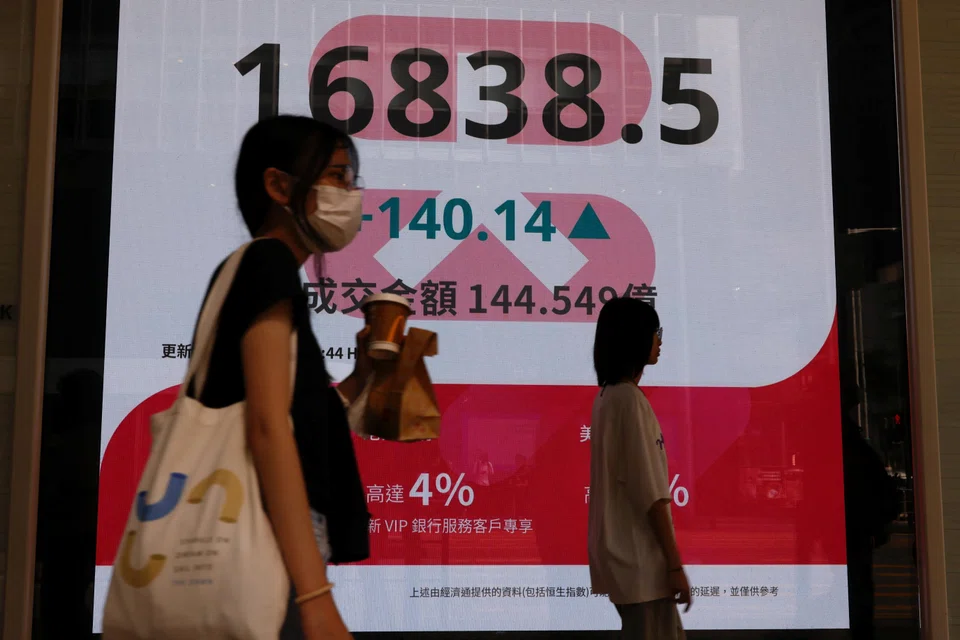
AHEAD of the Golden Week celebrations marking the 75th anniversary of the establishment of the People’s Republic of China, capital markets rose to the sound of bullish calls as the country unleashed a multi-prong policy blitz that drummed up investor and consumer sentiment.
On Sep 24, China’s policymakers signalled a coordinated “whatever it takes” stimulus with a three-pronged approach comprising monetary easing, real estate policy support, and a 500 billion yuan (S$92 billion) liquidity facility for the stock market. President Xi Jinping chaired the Politburo meeting on Sep 26 and pledged further fiscal easing and support to stabilise the real estate sector.
Investors around the world swiftly recalibrated their stance towards China. Short covering by hedge fund and institutional investors drove one of the largest weekly rallies in more than a decade. The policy blitz also triggered a rethink by offshore investors of the consensus underweight positions on Hong Kong and China equities in their portfolios.
In contrast to its piecemeal policy approach earlier, China’s latest coordinated approach was a positive surprise for investors, setting off a rally in Hong Kong and China equities as well as a renminbi appreciation.
This market rebound supports the Bank of Singapore’s May 2024 upgrade of Hong Kong and China equities in our tactical asset allocation, on the premise that a definitive policy boost could pose upside surprise for an under-owned market that had priced in excessive pessimism.
Despite last week’s pullback, the Hong Kong and China equity markets have risen sharply since the announcement in September. Between Sep 23 and Oct 10, the Hang Seng, HSCEI, CSI 300 and SHCOMP indices gained 16.5 per cent, 19.3 per cent, 16.5 per cent, and 19.3 per cent, respectively, on record volumes.
The next shoe to drop on the policy front is widely anticipated to include a substantive fiscal package to the tune of a one trillion yuan injection into state banks and an increase in the issuance of special sovereign bonds.
Investors’ short-term euphoria has faded into realism in the absence of greater clarity from two key press conferences last week, by the National Development and Reform Commission (NDRC) on Oct 8 and the Ministry of Finance on Oct 12. Nevertheless, the NDRC reiterated the policy tone to accelerate the implementation of incremental policies for economic development, focusing on household conditions and consumption.
What does this mean for investors? Will the significant rally in Hong Kong and China risk assets be sustained for the rest of the year and beyond?
In the context of a multi-asset portfolio, it is important to distinguish between a tactical short-term rally and longer-term performance of the China market, supported by positive economic and earnings fundamentals.
Impact of policy stimulus on China’s real economy
Prior to signs of fresh policy stimulus to boost economic activity and avert deflation, investors had questioned the efficacy of supply-side credit stimulus to address China’s deflationary issues and consumption malaise.
As the country’s economic recovery has been weighed down by cautious domestic consumption, lacklustre credit demand, and the overhang of unsold properties, economists were wary that lower interest rates may not be sufficient to revive credit growth.
We downgraded China’s gross domestic product forecasts for 2024 from 5 per cent growth to 4.7 per cent, and for 2025 from 4.8 per cent growth to 4.5 per cent, following weak August data and the absence of a clear shift by policymakers.
China’s economy was at risk of entering a prolonged deflationary cycle, where households delay purchases and firms postpone investment, before this was addressed by the latest wide-ranging easing measures by the Chinese government.
Looking ahead, if substantive government bond issuance and fiscal boosts in the form of a supplementary Budget or large-scale stimulus materialise, this may catalyse upward revisions in 2025 gross domestic product forecasts by economists. Otherwise, China’s growth may continue to slide next year on lacklustre consumption and investment demand.
Differentiated approach across equities, fixed income and currencies
We maintain an overweight position since our May 2024 upgrade of Hong Kong and China equities, as part of an overall overweight stance on Asia ex-Japan equities, in our tactical asset allocation.
After the sharp rally, we may see near-term consolidation in the stock market but further upside could resume if meaningful fiscal stimulus measures come through. Relative to the past four market rallies over the last decade, most Hong Kong and Chinese equity indices have recovered to the peak of the reopening rally in 2022-2023, except for the ChiNext Composite Index.
However, they are still below the levels in the 2016-2018 earnings-driven rally and the 2020-2021 post-Covid rally. Relative to emerging markets, the MSCI China Index is still trading at around a 9 per cent discount to MSCI Emerging Market Index, in contrast to an average discount of 5 per cent over the past five years.
Positive earnings revision momentum is emerging, with MSCI China’s estimated 2024 earnings per share being revised up by 3.8 per cent since May.
After the sharp rally in MSCI China, the risk-reward of the onshore A-share market appears relatively more attractive, especially due to its sensitivity to policy stimulus and momentum-driven nature with higher levels of retail investor participation.
We favour large-cap, index-heavy Internet and platform companies as well as leading consumption names, including consumer discretionary, consumer staples and communication services. Also, we believe the Ministry of Finance’s fiscal support direction – addressing the risks of local government debt and real estate – will benefit Chinese banks.
The step-up in local government debt resolution and use of local government special bonds (LGSB) to fund housing inventory de-stocking will lower banks’ interest-rate risks and asset-quality risks.
In fixed income, we maintain our overall neutral view on China credit and prefer quality names such as investment grade-rated Chinese asset management companies, high-quality state-owned or privately owned enterprises, and selected bonds in the high-yield and Hong Kong insurance sectors.
For China property issuers, we remain neutral and continue to favour central state-owned enterprise-linked names and/or developers with quality land bank and large-scale quality unencumbered investment properties.
A fundamental change in our view on China property will require game-changing measures such as the set-up of a well-funded stabilisation fund to purchase inventories at reasonable valuations.
We revised our 12-month US dollar/renminbi forecast to 7.15 (from 7.25) amid lower downside risks to the Chinese currency and a still-uncertain medium-term outlook.
China in global portfolios: opportunities and risks
The recent unexpected sharp rally in Chinese equities highlights the importance of maintaining a diversified approach to asset allocation across geographic and sector exposures. In an increasingly multipolar world, geopolitics, domestic economies and regulatory uncertainties can drive idiosyncratic economic and market outcomes.
Within a global portfolio, China offers exposure to the second-largest economy in the world, a vast consumer market, and technological innovations, notwithstanding the risks in consumption, real estate and deflationary concerns.
While the market narrative is currently focused on China stimulus and easing measures, geopolitics could return to the forefront in the run-up to the US presidential elections next month. US-China tensions will likely persist, especially with potential outcomes relating to tariff increases on Chinese goods and restrictive trade policies.
On a broader level, it is important to build well-diversified global investment portfolios with exposure to the drivers of economic growth and innovation. This includes overall Asian exposure comprising China, Japan, India and South-east Asia, as well as alternatives and gold for sustainable and resilient multi-asset portfolios.
The writer is global chief investment officer, Bank of Singapore