Are low fees a kiss of death for robos and advisory firms?
For wealth firms with a low-fee or commission-free model, achieving scale is key, alongside patient capital

Genevieve Cua
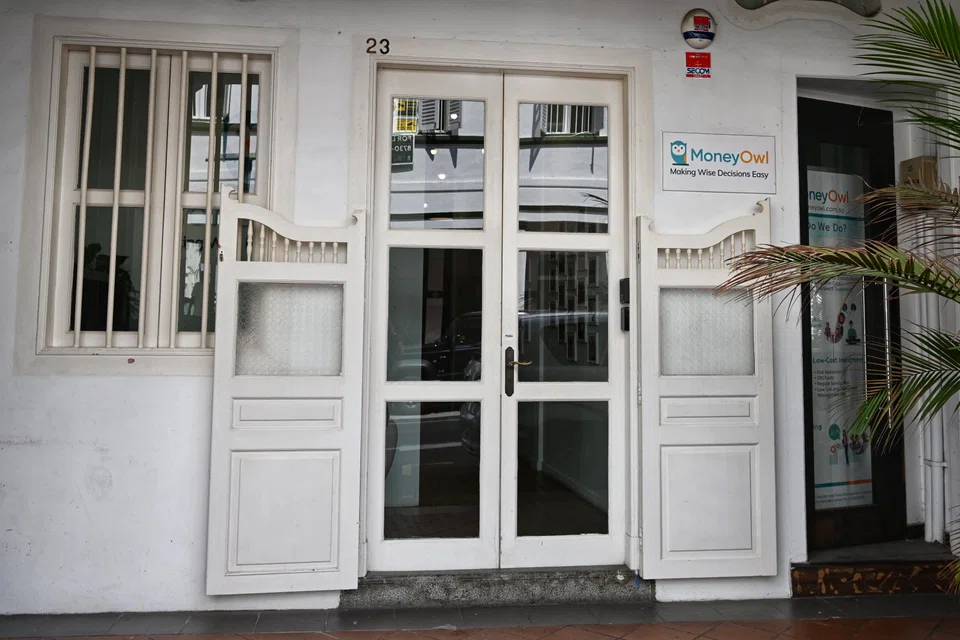
THE failure of robo advisory MoneyOwl, announced late last week, raises afresh a knotty question: Is a low-fee business model that’s good for investors and clients necessarily a path to failure for the service provider?
Is this gap intractable?
More than 10 years ago, I was a member of a panel put together by the Monetary Authority of Singapore, called the Financial Advisory Industry Review (Fair), which sought to address some key issues, including how the industry could lower distribution costs and promote fair dealing.
The panel comprised representatives from consumer and industry associations and the academe. As a media representative, I had no vested interests. By then I had written frequently to advocate transparency and lower costs of investments.
My most distinct memory was the pains taken to balance the sometimes heated discussions on the issue of commissions. Commissions were then the lifeblood of literally every player in the product distribution food chain, including banks, insurers and financial advisory (FA) firms.
The thinking then was that a heavy hand to restrict commissions would decimate the FA segment, then a speck in a distribution landscape dominated by banks and tied agents.
If the unbundling of retrocessions from advisory fees were mandated and commissions banned, what cost might that wield on FA firms’ viability and their representatives’ livelihoods? What about the cost to retail investors accustomed to “free” advice? Fear of negative unintended consequences loomed large.
At the time of the Fair review, developments in the UK were in view. The UK banned product commissions at end-2012. In 2020, a study by the UK’s Financial Conduct Authority found improvements in customer satisfaction and access to financial advice, compared to 2017.
In Singapore, a sea change in the funds distribution landscape has taken shape since the Fair review. Robos offering low-cost options emerged over the past five to six years. In 2020 the CPF Investment Scheme capped wrap or advisory fees for portfolios at 0.4 per cent, from 0.7 per cent in 2018. Banks have chimed in with low-cost digital portfolio offerings.
Yet the question of the financial viability of FA firms – and now, robo advisers – is as germane as it is urgent. Financial statements of robos, including Stashaway and Endowus, reflect ongoing losses. For robos, it is surely a volume and scale game; the greater the inflows and assets, the greater the revenues and chance of profitability, as long as costs are reined in.
Platforms also need third-party investors willing to fund them with patient capital. Endowus boasts a blue-chip roster of investors. Since it launched around 2018, it has garnered an estimated S$130 million in capital; the most recent exercise raised US$35 million.
But unlike robos and FA firms, MoneyOwl is a social enterprise backed by NTUC Enterprise. Its mission was to cater for the financial planning needs of lower-income households. It is not a non-profit. From the outset, its goal was to grow to become financially self-sustaining.
As at end-2022, its accounts reflected share capital of S$12 million, but revenues of S$2.9 million barely inched up from 2021. Operating losses deepened from S$536,000 to S$1.49 million in 2022. It has a staff count of 40, so staff costs must comprise a major share of expenses.
MoneyOwl chief executive Chuin Ting Weber remarked to me, wearily: “There is a gap in the market, but no market in the gap.” MoneyOwl offered four services: comprehensive financial planning, investments, insurance and will writing.
The decision to wind down after five years of operation, she said, was borne of a poor prognosis in the medium term. “We must have confidence, but I couldn’t see viability. Social enterprise money is not for burning… Can we have confidence that we would be commercially viable with enough paying demand at a sufficient level?”
Of around 91,000 in its contact base, only roughly a 10th or about 9,700 took some action on their financial plans – too few in number and too paltry in revenues. The firm failed miserably to achieve scale. This was despite offering comprehensive financial planning services at heavily subsidised prices, and access to union members and unionised companies.
This brings us to the perennial question: Will investors pay a fee for advice? Commissions bundled into products make it seem as if advice is free. But of course, it isn’t. Commissions run the risk of skewing advice in favour of the firm or bank that collects it. After all, low or no commissions threaten FA firms’ viability and institutions’ targets. To be sure, there are rules to ensure fair dealing such as fact-finding and disclosures.
Yet there is ample evidence that clients are willing to invest via a model that unbundles advice from commissions. That is, many are willing to pay for advice. The investing public has also grown in sophistication. Many understand the dilutive impact not just of upfront commissions but of unnecessarily high ongoing charges.
Pure advisory fees vs trail fees and commissions
By far the most eloquent champion of a fee-only model must be Providend, set up more than a decade ago by founder Christopher Tan. It faced an uphill climb against naysayers who believed its model would fail. But Providend turned profitable three years after securing its FA licence in 2003. It currently manages S$1 billion in assets, not chump change.
“We experienced exponential growth in the last seven years… Our clients are the more affluent because only families with more wealth have financial situations that require them to pay us a fee for advice. For a fee-only practice to be successful, I believe we need to focus on the mass affluent to the ultra-high net worth families,” said Tan.
He believes a financial planning model can work for lower-income families, but not via a digital route. “The human adviser model is still better.” Providend charges a one-time fee of S$2,000 for a wealth plan. For clients in its private-wealth segment, fees start at S$5,000. MoneyOwl’s charge was S$99 for a financial plan. With heavy subsidies available, the fee payable by most was a small fraction.
Endowus blazed a trail with its trail-free model. Trail fees are the portion of funds’ annual management fees paid to distributors. The firm seeks to onboard institutional share classes of funds. Where this is not available, it rebates trail fees back to investors. This model has proved popular; its investor base spans the less wealthy to high and ultra-high net worth individuals. Its assets under management have crossed US$5 billion to date.
But a trail-free model is not the norm. IFast has achieved immense success as a platform catering to FA firms and directly to investors. At end-2022, its assets under administration exceeded S$17.4 billion, of which Singapore’s share was 72 per cent. Of total recurring net revenue of S$83.9 million, trail fees’ share was 56 per cent. Trail-free funds are likely a no-go for iFast. It needs to offer enough margins for itself and its business customer base of FA firms.
IFast Financial is taking over the assets of MoneyOwl clients, however. As I understand it, iFast will maintain MoneyOwl fees for these clients, including access to the trail-free funds of Dimensional Fund Advisors (DFA). DFA funds are available on iFast’s B2B platform for FAs, but not for the B2C platform under FSMOne.com.
Endowus chairman Samuel Rhee believes the low-income market is serviceable and profitable, but would take time. He maintains that scale is the most important success factor in wealth management. Endowus, he said, has a track record of achieving scale through tough market conditions, “but we still have a long way to go to match the incumbents in size”.
“The goal is for a company to grow to reach breakeven against operating costs to ensure sustainability of its business, or have a sustainable funding source that will plug the hole until you scale enough to achieve profitability. No one will continue to fund you forever if there is no path to profitability. It’s not just about the size of the losses, it’s the scale that makes (companies) profitable.”
A commission-free, fee-only model is anathema for most wealth firms. But investors would be worse off should this model disappear from Singapore’s investment landscape.