

AVPN aims to mobilise more Asian donors for philanthropy to fill US$26 trillion financing gap
The non-profit has introduced two new membership tiers: Discovery and Vantage
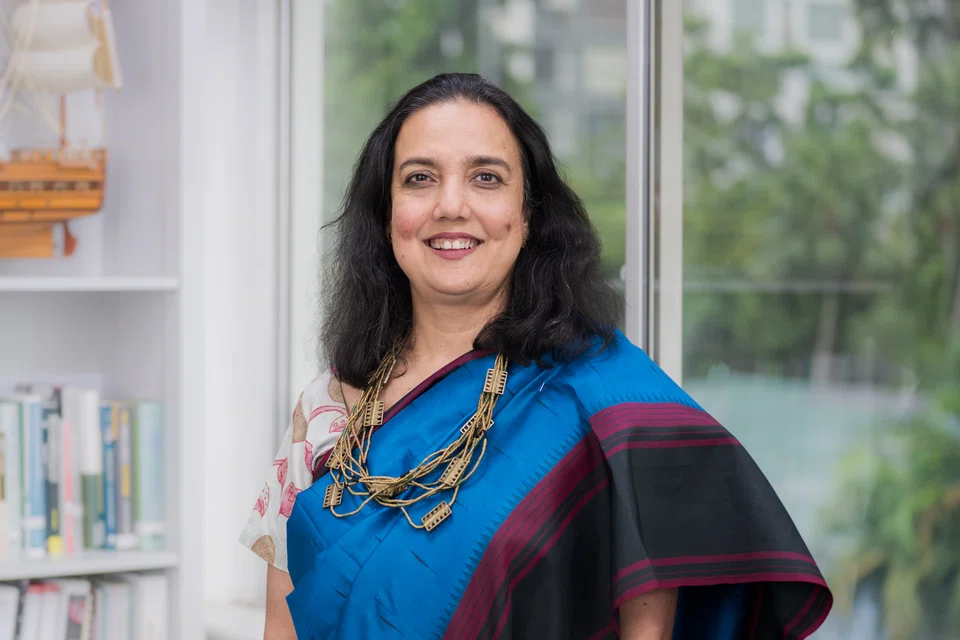
[SINGAPORE] AVPN, Asia’s largest network of social investors, has adopted a new strategy in efforts to mobilise more Asian donors for philanthropic giving.
Currently, nearly two-thirds of AVPN’s membership are not Asian. While the majority of AVPN’s members are based in Asia, many are also part of global organisations and multinational corporations. The non-profit noted that there are opportunities to unlock more capital and action from within Asia.
The new strategy aims to fill a US$26 trillion financing gap to meet United Nations’ Sustainable Development Goals, against a backdrop of shrinking development aid, the Middle East conflict, geopolitical tensions and climate change.
Naina Subberwal Batra, AVPN CEO, said: “The Asian Development Bank estimated that developing countries in Asia-Pacific require US$26 trillion up to 2030 to really look at poverty eradication, climate change, healthcare challenges.”
Based on the Organisation for Economic Co-operation and Development, Official Development Assistance fell 23.1 per cent in 2025, with further declines projected this year.
On top of USAid shutting down in 2025, she noted that many governments have cut their development budgets, and geopolitical tensions have led to higher fuel prices and food security issues across Asia.
With a goal to mobilise more Asian donors to give within Asia in the next five to 10 years, AVPN hopes to reduce reliance on Western aid, which can be pulled back or cut entirely during times of macroeconomic uncertainty. Instead, Asian capital is more long term.
“If you can get more local organisations to give in their own communities, that capital doesn’t go away. In fact, that capital doubles down when times get hard,” she added. “It’s important for us to increase our own giving in a much more structured, strategic fashion.”
Instead of donor fatigue, Batra said that there is “donor paralysis” – where donors freeze and pause giving efforts during turbulent times. They become risk averse.
SEE ALSO



For example, if philanthropic money only comprises 5 per cent of a donor’s portfolio, the donor becomes worried about the remaining 95 per cent that may be going through volatility, leading them to freeze.
Batra said that Asia does not have a capital shortage – it has a coordination challenge.
“We hear all the time (that there are) Asian philanthropists, millionaires, billionaires, but the quantum of Asian giving and Asian money coming into the development space is still not where it can and should be. So our new strategy intentionally looks at tapping into these pools.”
For example, the US has sustained philanthropic giving at around 2 per cent of its gross domestic product for decades. Batra pointed out that Asia has an opportunity to reach these levels and even exceed this level of giving, and AVPN’s goal is to mobilise more capital for impact across the continent.
To date, AVPN and its network have deployed around US$500 billion. Its network includes policymakers, family offices, philanthropic foundations and private-sector companies, and AVPN works with charities and local communities on the ground.
Fresh strategy
AVPN has introduced two new membership tiers: Discovery, which is free, and Vantage, which costs US$10,000 annually.
Discovery allows members to engage with AVPN’s network and participate in events and community activities in a self-directed manner.
Batra hopes that Discovery membership being free of charge will encourage more Asian organisations to join the non-profit’s network.
Meanwhile, Vantage members receive guidance from an AVPN representative and more curated, customised support. It is redesigned from the previous Vision membership but provides a more “high-touch” and “intentional” way of engagement.
Batra said: “The idea of Vantage is that we build a longer-term relationship with these organisations, and we actually work closely with them to achieve their goals, and hopefully for us to unlock more Asian capital.”
AVPN members will have access to more hands-on engagement under this new strategy – more workshops, brainstorming sessions, training programmes and learning journeys.
“We feel that this new membership strategy allows us the luxury of working more closely with those who have displayed a stronger intention to deploy capital, but just don’t know how,” she noted.
Different pools of capital
AVPN is looking to connect and coordinate different pools of capital, as well as utilise more specific structures to deploy capital.
For example, AVPN hopes to create a “pooling fund structure that will pool philanthropic and/or catalytic capital – capital that is willing to come in with a lower expectation of return – that can attract more commercial capital for larger-scale development or infrastructure projects”, said Batra.
It also aims to tap faith-based organisations and launch Asia’s first multi-faith pooled fund. She noted that every faith talks about poverty alleviation, which is a common goal they can work towards.
Although other organisations may shy away from engaging with faith-based organisations because they feel like it may be a sensitive topic or difficult to navigate, Batra said that this is where AVPN is different. “The fact remains that faith-based organisations are there to do good, and by not engaging with them, we are leaving out a very significant pool of capital.”
Amid the “hatred and conflict” in the world now, Batra explained that networks such as AVPN can create structures for multi-faith organisations to come together and create even more impact. “My metric of success will be a greater percentage of deployment actually coming from Asian organisations,” she said, adding that ultimately charities on the ground will benefit from higher capital flows.
“We keep saying ‘in Asia by Asia for Asia’. We need to develop the ‘by Asia’. We need to have stronger Asian voices, commitments and pledges.”
Decoding Asia newsletter: your guide to navigating Asia in a new global order. Sign up here to get Decoding Asia newsletter. Delivered to your inbox. Free.
Copyright SPH Media. All rights reserved.
TRENDING NOW

Singapore identifies 7 firms responsible for haze fires, notices issued urging action: Grace Fu

DBS remains analysts’ pick ahead of Q3 earnings after Singapore banks’ share slump

High Court rules against Julius Baer’s Singapore trust arm in US$50 million family trust dispute

Could stablecoins be the future of money?

