

Beware of 10-year US Treasury yields at 5%
Several factors may push longer-dated Treasury yields towards 5%, raising the prospect of a third straight year of negative returns
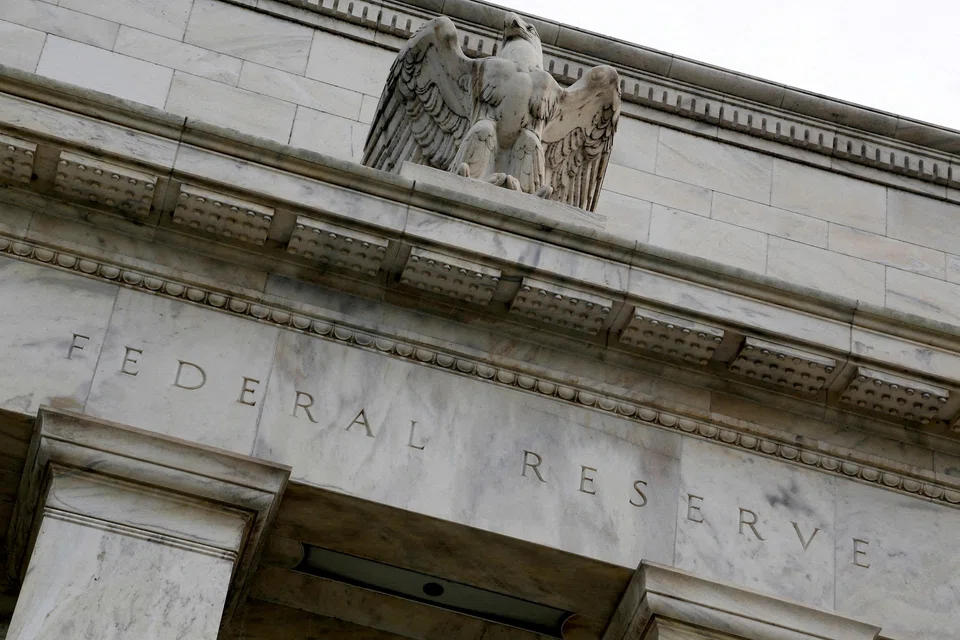
THE hawkish pause by the Fed’s Federal Open Market Committee has worried investors that more rate hikes may be in the offing from the US central bank.
However, we believe investors should be increasingly concerned that longer-dated yields, comparatively well-behaved for much of the year, will continue to rise.
Several factors are set to push such yields towards 5 per cent and potentially beyond as we enter 2024, we predict.
First, investors must recognise that the normalisation of longer-dated yields, which started in 2022, is only partially complete. Indeed, the move from sub-1 per cent yields on 10-year US Treasury bonds reflects the rise in short-term policy rates which has put upward pressure across the entire yield curve.
The risk premium – called the “term premium” – for uncertainty about the longer-term trajectory of interest rates and inflation remains negative. In other words, investors are not being compensated (and instead are paying) for the interest rate and inflation risk associated with owning long-term bonds.
When the world was facing deflationary risks and global central banks were engaging in quantitative easing, the need to price in either risk that future inflation might be high or policymakers would need to respond with high and volatile interest rate policies was low.
Hence, unsurprisingly, the 100 to 300 basis points (bps) in risk premium that bond investors were paid in the mid-1990s began declining in 2008, with the structural fall in inflation and the onset of central bank bond-buying programmes. This culminated in actual negative term premia with the deflationary shock of the 2020 global pandemic.
According to the Federal Reserve Bank of New York’s estimates, investors in five and 10-year US Treasury bonds were overpaying by as much as 130 bps to 170 bps – effectively pricing no risk of either inflation or interest rate surprises over the life of the bond.
Markets have rightly begun to unwind this mispricing as inflation rose above target in 2021 and Fed policy started to tighten in 2022. Despite that, five and 10-year term premia remain at minus 10 to 30 bps, suggesting that a return to zero-bps bond risk premium would push five and 10-year Treasury yields towards 4.75 per cent.
However, a full normalisation of the five and 10-year bond risk premia to the pre-global financial crisis (GFC) level would suggest that even at yields at 4.4 per cent to 4.5 per cent, risk to five and 10-year bond yields remains asymmetric for investors, skewed towards higher rather than the lower yields ahead.
Compounding this negligible risk premium built into current bond yields is the growing funding needs of the US government. Prior to the GFC, the US budget deficit averaged about US$200 billion per year. This expanded to nearly US$1 trillion per year in the aftermath of the 2008 recession.
While growth of five times in the deficit might normally be a problem, the fall in 10-year Treasury yields from 6 per cent to 7 per cent at the turn of the century to 2 per cent to 3 per cent from 2009 to 2019 was facilitated by central bank bond buying.
Indeed, despite the expanding deficit and growing stock of US government debt, debt service – the interest cost on US debt – fell from above 6 per cent in the run-up to 2000 to less than 5 per cent as quantitative easing came to an end in 2015.
Understandably, the budget shortfall reached more than US$3 trillion at the height of the pandemic. However, after a brief return to US$1 trillion in deficit in 2022, the Congressional Budget Office has forecast the federal deficit to rise to US$1.7 trillion in 2023 (or 5.9 per cent of gross domestic product), before hitting US$2.9 trillion (or 7.3 per cent of GDP) over the next decade.
With the Federal Reserve having ended its quantitative easing programme and central banks around the world seeking to diversify their holdings away from US Treasuries, Treasury yields will become much more reliant on private market buyers. These buyers will likely require higher risk premia to factor in the inflation and interest rate uncertainty that have returned to the global economy in recent years.
Indeed, this is what investors experienced over the summer as the US debt ceiling was lifted, and the US government issued nearly US$200 billion in long-dated bonds for the first time this year. So, with yields having declined as long-dated bond supply was constrained by the debt ceiling in January 2023, the new issuance in the July-September 2023 period sparked the rise in US 10-year yields from the 3.5 per cent to 4 per cent range of the first half, to as high as 4.5 per cent in recent weeks.
With more than US$200 billion in long-dated bonds set to be issued in the fourth quarter, and pre-election fiscal largesse looming on the horizon in 2024, bond investors once again face the risk of higher rather than lower yields moving into the new year.
This fiscal spending that the US government has embarked upon is one key reason that the widely anticipated recession in the economy has not materialised.
Indeed, the yield curve has been signalling the prospect of recession through its inversion (that is, short-term yields higher than long-term yields) since late-2022. Should the US economy in fact skirt recession, this inverted yield curve should normalise to unprice recessionary risks.
Looking back to the 1960s, such a normalisation process (that is, long-dated yields rising back above short-dated yields) typically results in 10-year yields rising by an average of 50 bps above the level they were at when they first inverted – in this cycle 4.1 per cent to 4.2 per cent. However, in periods of elevated inflation, 10-year yields rise by closer to 110 bps above their starting level.
With the duration and depth of yield curve inversion having started in 2022, we see the risk that 10-year yields will continue their push higher. This suggests a rise of as much as 110 bps from their starting level of 4.1 per cent to 4.2 per cent in late-2022, and opens the door to yields closer to 5 per cent as we move into 2024.
Thus, investors are still uncompensated for the increased inflation and interest rate uncertainty looking into the future. They are also not paid for the prospect of persistently large debt issuance from the US government; and the prospect that the inverted yield curve moves to price in a soft landing rather than a recession in the US economy.
In short, multiple catalysts could spur bond yields to approach 5 per cent. Investors face the prospect of a third straight year of negative returns, which is unprecedented.
The writer is group chief strategist at Union Bancaire Privee, a private bank and wealth management firm
TRENDING NOW

Britain’s mansion tax shows the difficulty of targeting wealth

Once staunchly pro-China, Malaysian Chinese businesses are now distancing themselves from Beijing

The only common thing in S-E Asia is that we all eat rice: Cisco’s Asean president

Singapore data centre operator DayOne opts for US IPO at likely US$20 billion valuation

