BlackRock’s retail private-credit hopes run into market’s angst
Eight months after it bought HPS for US$12 billion, the money manager is facing a rush for the exits by some existing clients
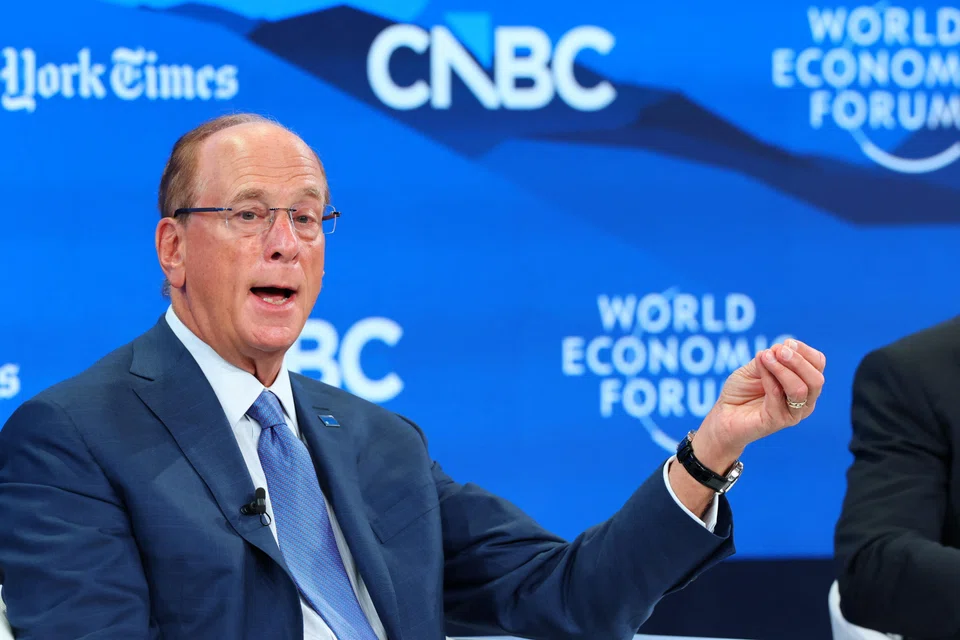
[NEW YORK] It looked like a golden age of private credit when BlackRock plunked down US$12 billion to buy HPS Investment Partners and crowed about the prospect of selling millions of retail investors on juicy returns from complex debt.
But eight months later, BlackRock is facing a rush for the exits by some existing clients.
On Friday (Mar 6), for the first time, HPS enforced limits on withdrawals from its flagship vehicle open to wealthy individuals: a US$26-billion non-traded direct-lending fund. BlackRock gave some clients back their capital, totalling around half of the US$1.2 billion they sought to take. Those that could not get what they wanted can submit in a future tender offer.
Shares of BlackRock, a US$14 trillion colossus of retail and institutional money, tumbled to their lowest since May, about two months before chief executive officer Larry Fink and other executives completed the HPS acquisition.
The anxiety sweeping the US$1.8 trillion private credit market is forcing a reckoning across Wall Street. It is underpinned by worries that lending was too easy for years and that retail investors do not fully grasp the finer points of investment funds designed to tie up cash for longer periods in order to hold trickier and non-traded private loans.
It also comes as the biggest investment houses try to sell individuals saving for retirement on adding private credit to 401(k)s.
“The question some investors may be asking is: ‘Did BlackRock overpay for HPS based on current industry dynamics?’” Larry Herman, a managing director at Raymond James Financial, said in an interview. “HPS is a solid platform with a good reputation, and I don’t think they are thinking about this in the short run. BlackRock wants to be in the private-credit business for the long term.”
A BlackRock spokesperson declined to comment.
Wall Street leaders have been quick to point out that the recent cracks in credit are idiosyncratic and represent a sliver of the market. But individual cases of souring loans – whether from banks or private-credit platforms – have been dramatic.

First came the collapses last year of auto-parts supplier First Brands Group and subprime lender Tricolor Holdings and then a surge of redemption requests across the biggest alternative investment firms. Sudden markdowns of holdings from 100 to zero have spooked investors and analysts, and asset managers have taken extraordinary steps to halt or meet client demands.
JPMorgan Chase & Co CEO Jamie Dimon has warned that at least some firms have allowed weaker underwriting standards amid competition from non-bank lenders, and even Apollo Global Management’s Marc Rowan predicted last week at the Bloomberg Invest conference in New York that more pain lies ahead.
BlackRock’s top private-credit executive, HPS founding partner Scott Kapnick, said at the same event – just two days before Friday’s disclosure – that there were “pockets” of difficulty from smaller borrowers and software investments. But he predicted the private-credit business overall will continue growing and that the largest firms – like his – will capitalise on the current turmoil.
“Most of the big managers are very good at managing risk,” he added, “and the scaled players are going to continue to benefit from this period.”
In a letter on Friday to shareholders of the HPS Corporate Lending Fund, executives said that the ability to restrict redemptions is “foundational” to the investment and would serve clients well. The fund, which has generated a 10.7 per cent annualised total net return since debuting four years ago, is “diversified and conservatively positioned”, according to the letter.
“Historically, periods of uncertainty and volatility have created some of the most compelling investment opportunities within private credit markets,” the company said. “We believe that we are entering into that type of environment.”
BlackRock’s decision to grow in private credit hinged on managing assets for insurers, pensions and its biggest institutional clients as well as persuading individual investors to switch from the traditional 60/40 portfolio of stocks and bonds to a 50/30/20 mix that includes 20 per cent alternative assets. At the end of December, retail investors accounted for about 10 per cent of the total amount of private assets managed by BlackRock.
No money manager is bigger than BlackRock, but almost all the assets it oversees are stock and bond funds sold to institutional and retail investors. After long trailing the leaders of private markets, Fink spent about US$28 billion over the span of almost two years to transform BlackRock into a top competitor in the market for private assets as well as data.
The HPS deal made BlackRock a top-five private-credit manager, and the firm paid about 30 times HPS’ estimated 2025 fee-related earnings to buy one of the longest-standing credit boutiques.
BlackRock executives combined HPS into a broader Private Financing Solutions division and made it a key component of its 2030 targets for private-market capital, revenue and earnings – as well as doubling its stock market value.
Extending BlackRock’s reach into the retail wealth market is central to the strategy. The company aspires to generate at least US$60 billion of fee-paying assets from the wealth business through a combination of HPS funds such as HLEND, pre-existing BlackRock debt funds and additional vehicles that are in the works.
The company is in the early stages of rolling out an “H series” of retail wealth funds, anchored by HLEND. And it is preparing to add private credit to target-date retirement funds for 401(k) plans.
The asset manager is already selling the idea that savers living longer lives would benefit from private credit in their retirement accounts and that they need more than the index funds that helped propel BlackRock’s last wave of expansion. BLOOMBERG
Decoding Asia newsletter: your guide to navigating Asia in a new global order. Sign up here to get Decoding Asia newsletter. Delivered to your inbox. Free.
Share with us your feedback on BT's products and services