

A Brics alternative to the dominance of the US and the dollar
The bloc may not succeed in its aim, but investors should pay close attention to developments
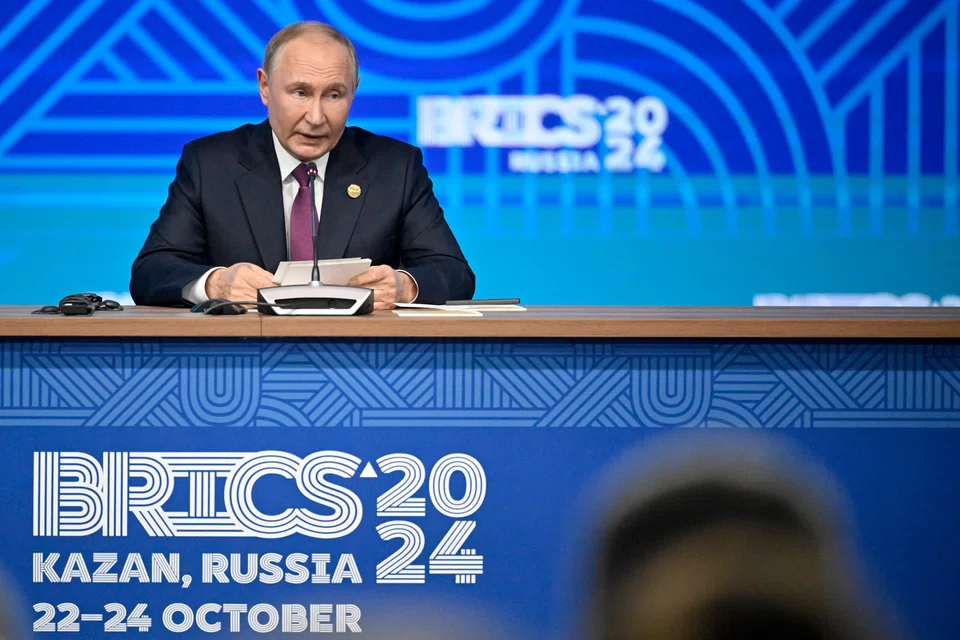
THE 16th annual Brics summit was held in Kazan, Russia, in October. The event was not given a lot of coverage. The “B”, Brazil, did not attend in person. The country’s president attended remotely after having suffered a head injury.
The members of Brics initially comprised Brazil, Russia, India, China, and South Africa, and now include Egypt, Ethiopia, Iran, and the United Arab Emirates, among others.
The Brics Kazan declaration featured the following two paragraphs:
“We note the emergence of new centres of power, policy decision-making and economic growth which can pave the way for a more equitable, just, democratic and balanced multipolar world order.”
“We welcome the use of local currencies in financial transactions between Brics countries and their trading partners, calling for the establishment of a Brics Cross-Border Payments Initiative.” The declaration also supported the Bric’s New Development Bank financing projects in local currencies, and its growth into a premier multilateral development institution.
Potential ramifications
While this is only an initial step, there are potential ramifications for the current world order and for investors.
The apparent goal of this organisation is to establish an alternative structure to the global order that America and its allies have dominated since World War II.
One of the targets is to establish a Brics currency with underlying assets of 40 per cent gold and 60 per cent local currencies. Is it any wonder that gold prices are in a strong bull market, and have outperformed every major equity index this year?
More importantly, this strong uptrend has occurred along with a strong US dollar and higher interest rates, which have historically been headwinds for the precious metal.
Faced with this large wall of central bank buying – it’s not just the Brics, but many other Western central banks have also been accumulating gold – it’s little wonder that the yellow metal is in a bull market. The total global value of above-ground gold is approximately US$15 trillion. Almost half of this is in the form of jewellery.
Some US$2.2 trillion worth of gold is tied up in industrial use, and US$2.5 trillion is locked away in central bank vaults. That leaves tradable gold stock at just US$3.4 trillion. The annual mine production of gold is approximately US$250 billion, less than 2 per cent of the total gold available.
All these pale against a combined market capitalisation of global equities and bonds of US$260 trillion. A 1 per cent shift in global allocations from stocks and bonds into gold would amount to 76 per cent of the tradable pool of gold.
Ray Dalio, founder of the world’s largest hedge fund, said it best: “If you don’t own gold, you know neither history nor economics.”
A new Brics currency would establish an investment and payment structure that bypasses the US dollar. Approximately 59 per cent of global reserves are currently in US dollars, and world trade is dominated in this currency.
However this means that every dollar payment has to go through the US banking system, giving America the ability to police and (most importantly) stop such payments.
According to Brics Chairmanship research, as published by the Russian Ministry of Finance and the Bank of Russia, around US$300 billion of Russia’s assets have been frozen since 2022.
Venezuela had 31 tonnes of gold frozen in 2018. Iran had over US$100 billion frozen in 2018. Libya had US$68 billion frozen in 2011.
Does the Brics project have any chance of displacing the dollar as the global reserve currency, and reducing the global influence of the United States as the sole global superpower?
The combined gross domestic product of the Brics countries in 2021 was 35 per cent of world GDP, overtaking the G7’s 30 per cent share. Brics comprises faster-growing countries, and the bloc’s share of world GDP will increase in the future.
Many of the agricultural goods and natural resources that the world needs are produced in the Brics+ countries, which include the original Brics members, plus those who have lodged requests to join the organisation, as well as an additional 12 partner countries.
Still too early
It is still far too early to see whether this initiative will come to fruition, given the disparate goals of many member countries. The Brics+ initiative will need to surmount extremely large hurdles; just recently Brazil expressed its interest in withdrawing from China’s Belt and Road Initiative.
The US dollar’s share of global reserves, currently at 59 per cent, has fallen from 72 per cent in 2000. However, at this current level the dollar is still by far the world’s reserve currency. During this period China’s yuan grew from zero to just 2.6 per cent; it is not a threat to the dollar’s supremacy anytime soon. But this Brics initiative could put a larger dent in the dollar’s supremacy.
While the project’s success may not be a high-probability event, investors should pay attention to the developments. A world where the US currency is no longer the world’s reserve currency would have significant implications for investors’ portfolios over the coming decades.
The writer is head of investments for Singapore at AlTi Tiedemann Global. The views are solely his, and do not reflect the views or positions of AlTi Tiedemann Global or its subsidiaries. This content should not be considered as financial advice.
TRENDING NOW

Once staunchly pro-China, Malaysian Chinese businesses are now distancing themselves from Beijing

Looking beyond looming CEO succession, should UOB potentially pursue a transformative merger?

Could stablecoins be the future of money?

Grab CEO’s wife Chloe Tong on life with Anthony Tan and finding her purpose

