

Can Japan’s stock market scale new highs?
THIS has been a monumental year for Japan.
For the first time in 17 years, the Bank of Japan (BOJ) raised its key interest rate from minus 0.1 per cent to between 0 and 0.1 per cent, closing the chapter on its negative-interest-rate policy.
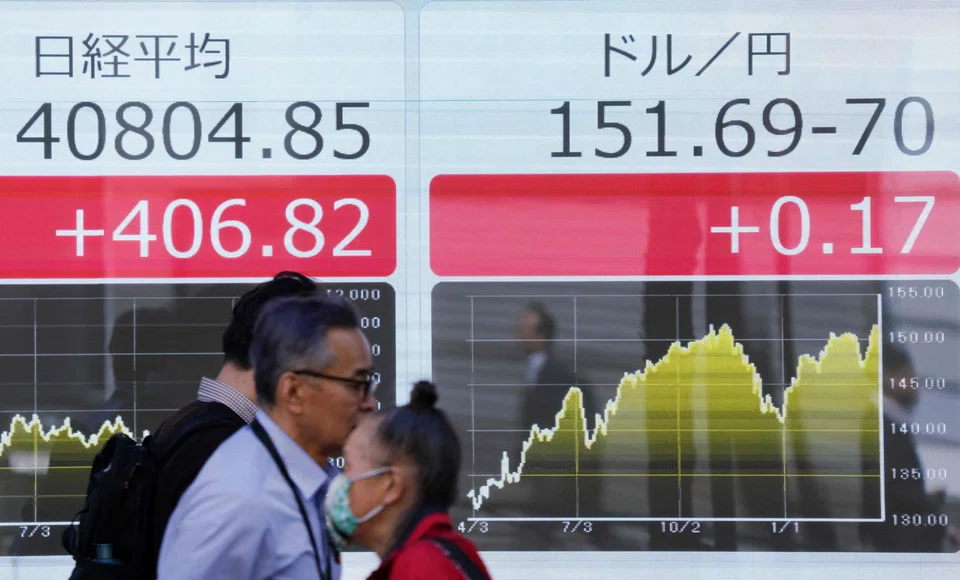
At the same time, the Japanese equity market has continued its record-setting streak. On Mar 22, the Nikkei 225 Index closed at a new all-time high of 40,888.43, surpassing its previous peak of 38,915.87 in December 1989.
Members of the iFast Research Team are among the optimists who believe in Japan’s resurgence. We have been bullish on the market since the second half of 2022, encouraged by robust corporate earnings, driven by strong pricing power and a weakened yen.
Last year, we predicted that the Nikkei 225 Index would reach 40,000 by 2025. We highlighted Japan’s impending structural changes as a catalyst for reclaiming decades of lost performance. Factors such as the shift towards inflation, corporate governance reforms, and the country’s revival as a semiconductor powerhouse serve as forces propelling share prices to new heights.
Evidently, the Japanese equity market’s performance has even surpassed our expectations.
Sayonara to Japan’s ‘lost decades’
Is the Japanese equity market getting ahead of itself? We doubt so.
Structural factors, not cyclical ones, are propelling its growth. We believe this will drive the market from strength to strength.
The end of negative interest rates signals economic shifts, with confidence in sustainable inflation. Of course, one of the key factors behind the resurgence of inflation in Japan is wage growth. Talks between the largest union organisation Rengo and major companies have produced pay hikes of 5.28 per cent, marking the highest increase in 33 years.
Higher wages encourage greater private consumption, which ultimately promotes economic growth. Additionally, companies should feel more comfortable raising prices in an inflationary environment, which should positively impact margins and earnings.
Rising inflation may also motivate domestic investors to explore riskier investments, such as equities, to protect their asset values. This is supportive of equity prices. Japan’s roaring stock market after decades of lacklustre returns also provides a compelling incentive for domestic investors. Furthermore, the Japanese government has overhauled the Nippon Individual Savings Account programme this year to spur greater investment activity.
Overall, we believe that investors should embrace the BOJ’s policy pivot as a sign that the country’s struggle with deflation is finally coming to an end – a change that should bring positive implications for its economy.
Japan to do well even with policy normalisation
The monetary environment remains supportive of Japanese equities, as the BOJ has shifted from a “very accommodative” stance to one that is still “accommodative”. Policymakers are expected to proceed cautiously, mindful of the potential adverse effects of rapid increases in borrowing costs on the economy.
Gradual rises in borrowing costs are unlikely to pose a significant burden on households and major corporations, given their robust balance sheets. Cash constitutes 54 per cent of household financial assets in Japan as at end-2023, significantly higher than in the US (where it is slightly over 10 per cent) and Europe (under 40 per cent).
At the same time, slightly over 30 per cent of non-financial companies in the Nikkei 225 Index maintain net-cash positions, a percentage that is double that in developed markets.
Besides, long-term structural drivers for Japan such as corporate reforms are still underway, driven by the Tokyo Stock Exchange’s call for companies to disclose plans to improve capital efficiency. Japan also continues to strive to reclaim its lost status as a semiconductor powerhouse, leveraging its expertise in advanced manufacturing, as global chip companies diversify supply chains amid ongoing geopolitical tensions between the US and China.
Yen to strengthen
Following the BOJ’s rate hike, the yen weakened despite expectations of strengthening. On Mar 27, the currency fell to its weakest level against the dollar in 34 years.
But we believe this trend will reverse over time, with the yen potentially emerging as one of the top-performing major currencies by the end of the year.
Concerns about the yen’s decline have prompted the authorities to consider intervention. Masato Kanda, the country’s top currency official, stated that the current weakening of the yen “is not in line with fundamentals and is clearly driven by speculation”. Similarly, Finance Minister Shunichi Suzuki declared that the government is “watching market moves with a high sense of urgency” and is prepared to “take bold measures”.
More importantly, with a greater likelihood of interest-rate hikes and higher Japanese government bond (JGB) yields, yield differentials are poised to narrow, potentially leading to yen appreciation.
BOJ’s Governor Kazuo Ueda mentioned that the central bank would act if upside risks to inflation rise, suggesting that the bank remains data-dependent. Wage developments are significant. Small and medium-sized enterprises (SMEs) will finalise pay agreements between April and June.
Should the positive momentum of wage increases extend to the SMEs, the BOJ may enact further hikes this year. The central bank also plans to gradually reduce bond purchases and allow market forces to determine long-term interest rate movements.
Multi-year growth story
We have revised our estimates to project that the Nikkei 225 Index will reach 48,000 by 2026. Investors who opt for an unhedged exposure can potentially unlock greater gains.
Over the long term, we believe Japan still offers ample growth opportunities. If you’ve missed the first leg of what is likely to be a multi-year rally, don’t miss your second chance.
Long-term investors can capitalise on short-term market corrections to bolster their Japanese equity holdings. Alternatively, consider the benefits of a dollar-cost averaging strategy through a regular savings plan.
The writer is an assistant manager with the research and portfolio management team at FSMOne.com, the B2C division of iFast Financial, a subsidiary of iFast Corporation






