
China in your tactical portfolio: the market is now investible
Current low valuations present a golden opportunity for potential gains
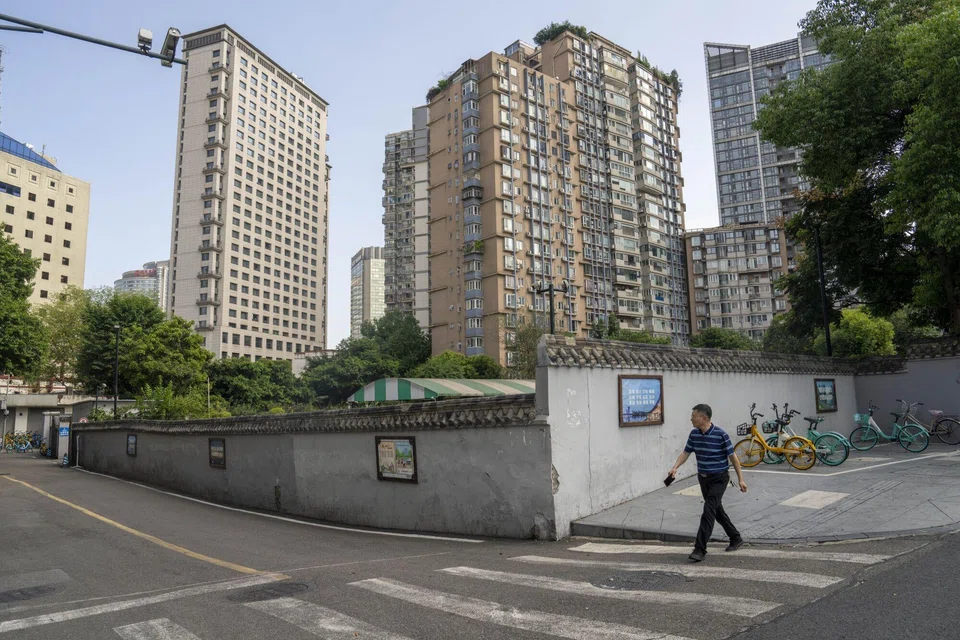
OVER the past two years, China’s economy has encountered many challenges, including a severe property market crisis, weak employment prospects, deflationary pressures, declining consumer confidence and escalating tensions with Western countries.
On the global stage, investor sentiment towards China has also soured, resulting in significant foreign capital outflows in 2022 and 2023.
Opportunities in dirt-cheap valuations
The exodus has resulted in a significant drop in the value of Chinese shares. As at Aug 30, the 12-month forward price-to-earnings (PE) ratio of the MSCI China Index was at a 21.5 per cent discount compared with its 10-year historical average. Additionally, the market valuation reflects a considerable discount relative to its emerging market peers and the global market overall.
Overall sentiment towards China remains bearish, but we believe the current valuations may be overly pessimistic. The market has likely already factored in the impact of the country’s longstanding economic challenges and policies that have stifled industry growth. Also, as the recent waves of economic policies become more sentiment-focused, these low valuations may present an opportunity for correction.
Property market may have bottomed
In terms of the property market, we do not foresee any strong catalysts on the horizon that could fully resolve its issues, particularly given China’s reluctance to use substantial stimulus measures to boost consumption.
The reduction of the five-year Loan Prime Rate (LPR) by 10 basis points to 3.85 per cent and adjustments to down payment requirements offer little relief for homebuyers. While the government’s push to convert unsold properties into affordable housing might assist financially distressed property developers, it does little to address the sector’s fundamental issue: weak demand.
With property prices remaining stubbornly high in first and second-tier cities, and a dim employment outlook amid an economic downturn, low-income families remain hesitant to make significant purchases.
We believe that a full recovery in the property sector will require more aggressive measures to address the underlying demand challenges. Without such interventions, the sector’s drag on gross domestic product growth is likely to persist. In tier-1 cities, housing inventory continues to accumulate, reaching 38,300 units by the end of July, as government and bank funding supports new completions.
The inventory absorption period remains high at 31.2 months for Beijing and 24.7 months for Shenzhen. This prolonged destocking cycle means that new investments will not drive recovery and growth until substantial inventory is absorbed.
While we do not anticipate a full recovery in the property market, there are signs of stabilisation. Sales declines have slowed since hitting their biggest fall in February this year. Additionally, although the inventory absorption period in tier-1 cities remains high, it has decreased from its peak of 42.1 months in April 2024 for Beijing and 29 months in March 2024 for Shenzhen.
We view property demand in major cities as a leading indicator for the broader housing market, given their better employment opportunities, amenities and appeal to younger populations. Consequently, while we expect a prolonged property market slump due to limited demand-side policy interventions, the worst may be behind us.
Policy shift: sentiment plays a part
In response to a struggling economy, China has been gradually relaxing policies that previously prioritised control over growth. Sentiment is now playing a more significant role in shaping China’s policy framework. This shift has been evident since January this year when China withdrew proposed video game regulations and dismissed Feng Shixin, whose draft rules caused billions of losses in the video gaming industry. Feng was head of the publishing unit of the Communist Party’s publicity department.
Since then, the government has refrained from further industry crackdowns, signalling a renewed focus on fostering entrepreneurship. At the Third Plenary Session, China pledged to treat private companies equally with state-owned enterprises, support their share listings, bond sales and international expansion, and involve entrepreneurs in policy discussions.
Despite this shift, the impact of crackdowns on the technology, education and gaming sectors has extended beyond individual sectors. The cautious sentiment is shared across all business segments, as evidenced by the minimal 0.1 per cent year-on-year growth in private investments for the second quarter.
In July, non-financial corporations in China increased their fixed deposits to 55.5 trillion yuan (S$10.2 trillion) while reducing cash holdings in current accounts. To restore business confidence, China will need several market cycles to prove its commitment to long-term support for the private sector.
China as tactical investment
China’s recovery may be protracted due to ongoing structural issues, but the signs of stabilisation should not be overlooked. Current low valuations present a golden opportunity for potential gains.
While China might not be a core investment allocation, it certainly deserves a spot in a tactical investment portfolio. A tactical strategy involves higher risk and requires more frequent monitoring, but it offers opportunities for bullish investors to capitalise on valuation gaps by adjusting their positions accordingly.
Navigating economic challenges is not easy for China, and finding the right investments during turbulent times is equally tough for investors. For those eager to re-enter the China market, we urge you to pursue active management and focus on quality businesses. China remains investible, and investors should actively monitor the market to seize potential opportunities.
The writer is a research analyst with the research and portfolio management team of FSMOne.com, which is the B2C division of iFast Financial, the Singapore subsidiary of iFast Corp



