

IMF warns tokenised finance risks amplifying market crises ahead
Banks and companies such as BlackRock and JPMorgan test tokenisation to trade stocks and boost fee revenue
 Add BT as a preferred source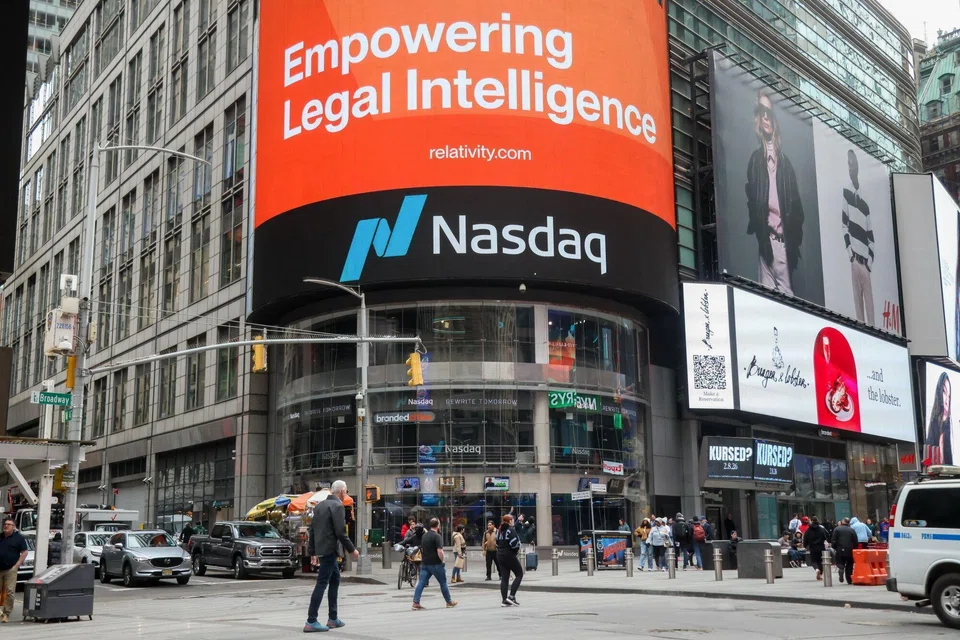
[SINGAPORE] Moving Wall Street’s trading infrastructure onto blockchain-based systems could accelerate financial crises beyond regulators’ ability to respond, even as the technology promises to cut costs and eliminate settlement delays, the International Monetary Fund (IMF) says.
Tokenisation – the act of representing assets such as stocks, bonds and cash as digital tokens on shared ledgers – is a structural overhaul of financial architecture rather than a marginal efficiency gain, the IMF’s Tobias Adrian wrote in a report published on Thursday (Apr 2).
Banks, clearing houses and asset managers including BlackRock and JPMorgan Chase are already running live pilots to test a technology that they hope will boost fees by making it easier to trade traditional assets like stocks and bonds.
In September, Nasdaq sought approval from the US Securities and Exchange Commission (SEC) to allow stocks to be tokenised and traded on regulated venues like itself.
Earlier this year, the New York Stock Exchange said it is building a venue using blockchain technology to allow for trading tokenised stocks and exchange-traded funds around the clock.
SEC chairman Paul Atkins has supported tokenisation.
The technology will allow for trades to move more quickly through the system, but what some see as a feature is also a vulnerability, said Adrian.
“Stress events are likely to unfold faster, leaving less time for discretionary intervention,” he wrote. Settlement delays serve as buffers that give central banks and regulators time to intervene during crises, he noted.
In a system that settles instantly and therefore continuously, there is little time for regulators to intervene before margin calls hit. A tokenised system also functions around the clock – but central bank emergency lending facilities were built for business-hour crises, he said.
SEE ALSO









He also compared privately issued stablecoins, increasingly used as settlement assets in tokenised markets, to money-market funds: functional in calm conditions but vulnerable to runs.
The note mapped three scenarios for how tokenised finance develops: a coordinated system anchored by central bank digital currencies, a fragmented patchwork of incompatible national platforms, or a world dominated by private stablecoins where public backstops weaken.
Policies must respond to the structural reallocation of trust and risk that tokenised infrastructures entail, Adrian said, suggesting solutions like anchoring settlement in safe money and clarifying the legal status of tokenised assets.
“Achieving this outcome requires policymakers to engage proactively with the structural implications of digital transformation, rather than respond reactively to its manifestations,” the note said. “The window for shaping the architecture of the tokenised financial system is open, but it will not remain so indefinitely.” BLOOMBERG
Decoding Asia newsletter: your guide to navigating Asia in a new global order. Sign up here to get Decoding Asia newsletter. Delivered to your inbox. Free.
Share with us your feedback on BT's products and services
TRENDING NOW
Singapore private housing is ‘decoupling’ from HDB market as buyer pools diverge: NUS survey

Simba’s 5G spectrum hurdle may accelerate Singapore’s telco market reset

Yen hits 40-year low in historic slide that’s rattled Japan

Malaysian tycoon Vincent Tan’s sell-downs point to pruning rather than an exit plan

