Debris from the US debt-ceiling resolution
The US debt-ceiling deal staved off a default, but debris scattered through the economy has the potential to undermine market confidence in the long term
THE sky is not falling, and neither is the US debt ceiling. All the “Chicken Little” bears have been punished in their rush to cover short positions.
But although the sky did not fall, there is still some debris scattered through the economy that has the potential to undermine market confidence in the longer term.
There are two main overarching questions.
The first: What is causing the US’ continual deficit? There are structural economic issues, distorted by exceptionally high levels of military expenditure. There is little serious discussion about resolving these issues and currently the domestic market seems to ignore them.
The second question: How much longer will the world be willing to fund this addiction to debt? The answer will lie in the level of yield necessary to sell future bond issues. The threat comes from the development of alternative bond markets and de-dollarisation.
The weaponisation of the US dollar through increasing use of sanctions and freezing assets is an uncomfortable direction which abuses the outsized privilege of the greenback as a reserve currency.
Big importers of Russian oil, such as India, are keeping a cautious eye on the wisdom of keeping reserves in US dollars. Add to that the willingness to go to the very edge of the debt cliff and this uneasiness may impact the US dollar.
The US dollar index retreated from its high near US$1.15 to parity support. The accompanying chart scale is shown in cents.
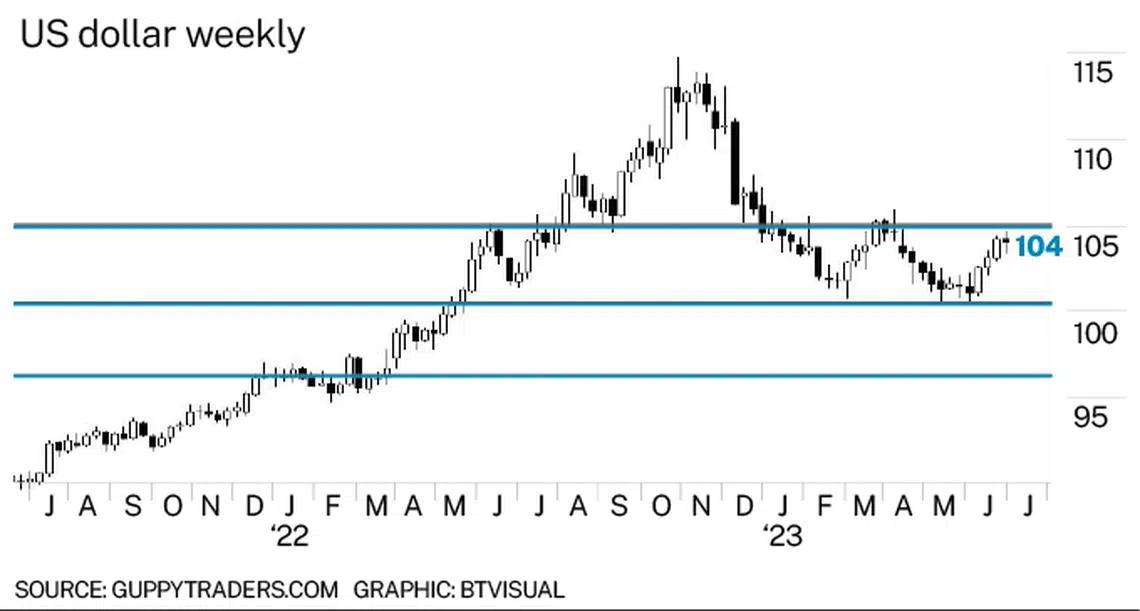
In 2023, the index traded in a narrow band between parity at US$1.00 and resistance near US$1.05. The resolution of the debt crisis has not interrupted the rally towards resistance.
However, there is no indication of momentum strong enough to break out above the resistance level near US$1.05. Should a breakout develop and move above this level, then it has an upside target near US$1.10.
The key indicator of significant long-term debris comes if the US dollar index falls below US$1.00 parity. Long-term support is near US$0.96.
In the short term, traders look for continued trading within the trading band.
Domestically, the US seems distracted by the glitter of the next newest thing.
The tech-heavy Nasdaq has cast aside the so-called FANG stocks in favour of ChatGPT and others claiming artificial intelligence (AI). FANG refers to Facebook (now Meta Platforms); Amazon; Apple; Netflix and Google (now Alphabet). A small group of companies exposed to AI has triggered what some might call an unintelligent and irrational rally in the Nasdaq.
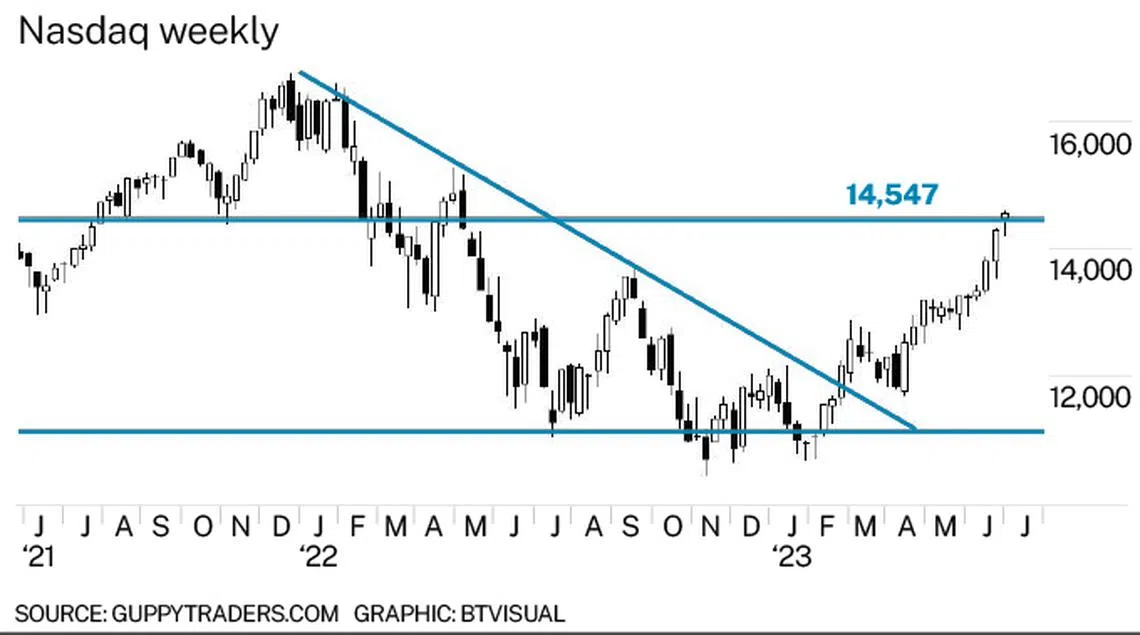
The Nasdaq chart simply ignores the debt-ceiling debate with a strong and sustained rally, following the breakout above the downtrend line.
The index has reached a minor resistance level near 14,500. This is the upside target we set in our April notes. This level formed the base of the previous consolidation area that developed between July 2021 and March 2022. It is not a well-defined support feature, so it is unlikely to offer strong resistance to continued upward momentum.
The obvious resistance target for the current uptrend is near 16,700, but this is based entirely on the previous high. This will be a psychological pause point, but there are no strong barriers to inhibit the rising trend.
It’s going to take more than AI to wean the US off the drip feed of debt. The domestic market apparently doesn’t care. Internationally, global markets are sorting through the debris to decide if the damage is fleeting or prolonged.
The sky didn’t fall this time, but the debt-ceiling deal gives two years to prepare for the future possibility that it might.
The writer is a financial technical analysis specialist, equity and derivatives trader, and author. He has developed several leading technical indicators used by investors in many markets