

Decoding the economic fallout from DeepSeek and US tariffs
Investors need not shun regions outside America, despite escalating trade tensions, since Trump has been shown to be a pragmatist more than an ideologue, and could always pivot towards a deal that benefits his country
THE US tariffs are intensifying global trade uncertainties and rattling supply chains, compelling policymakers and investors to reassess the economic landscape. Amid the simmering geopolitical tensions, a relatively unknown Chinese artificial intelligence (AI) startup, DeepSeek, is emerging as a disruptive force, which has prompted a fundamental rethink of how AI will evolve.
As US tariffs ramp up and supply-chain pressures mount alongside a paradigm shift in technological innovation, this column explores the potential implications for investors.
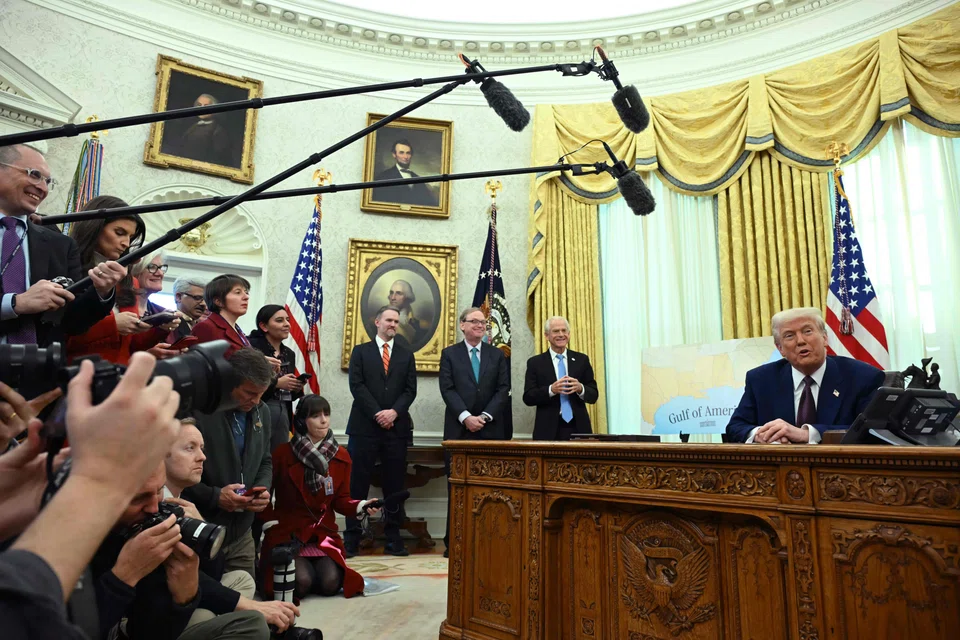
These fees are a central pillar of President Donald Trump’s “America First” agenda. As it stands, the trade war rhetoric is gaining strong momentum, kicking off with tariffs on imports from China, Canada and Mexico.
While Canada and Mexico received a 30-day reprieve, the odds of certain tariffs turning permanent remain high. Meanwhile, the tax threats have shifted to steel and aluminium.
The Trump administration has so far avoided the more extreme tariff scenarios mentioned during the election campaign, and instead exploited the fees as leverage in negotiation on matters unrelated to trade. Moreover, the Trump team comprises several high-profile entrepreneurs who are committed to a supportive business environment.
As a result, non-US regions, even though more directly exposed to tariffs, have outperformed year to date, suggesting that part of the tariff threat has been priced in.
DeepSeek and the US$600 billion question
DeepSeek’s open-source large language models were reportedly developed at a fraction of the cost required by its US competitors, challenging the entrenched notion that breakthrough AI demands massive capital outlays due to intensive computing and memory resources.
Given DeepSeek’s advanced implementation of “mixture-of-experts” method and recurrent scaling, the reported costs of training and inferences are substantially lower.
Capital expenditure by large-cap technology companies exceeds US$600 billion a year. In just a single day, DeepSeek’s announcement wiped out more than US$1 trillion in leading tech companies’ market capitalisation, as investors grappled with the question of whether DeepSeek is a “Sputnik moment” that fundamentally changes the demand assumption for computation resources.
However, that may not necessarily be the case in the long run. The Jevons paradox states that as technological improvements increase the efficiency of resource use, overall consumption of that resource may increase rather than decrease. This happens because greater efficiency reduces costs, which in turn drives increased demand.
However, it could introduce some uncertainties which may limit further upside valuation re-rating in the short term.
The breakthrough innovation also highlights the difficulty in sanctioning technology in a porous globalised world. It should not come as a surprise that DeepSeek originated from China, which is denied access to the most advanced graphic processing units.
This mitigates the impact of US export restrictions on China’s own AI aspirations, which will be positive for Chinese technology companies and the broader adoption of AI. It also suggests further upside for Chinese technology companies, given their huge valuation discount and poor price performance in the past years.
The emergence of DeepSeek may shift price performance gains from front-end “pick-and-shovel” companies to those that benefit from the wider adoption of AI, or those that generate incremental profits through new products and productivity gains.
In the long run, margins for front-end computing oligopolies could fall, while those for the end-users may improve meaningfully.
Finally, it is noteworthy that falling costs of open-source AI models will raise productivity growth across various parts of the economy, leading to lower inflation and, eventually, a disinflationary boom. This will be a positive development for many equity sectors.
Investment positioning
Firstly, gold and the US dollar are poised to be the primary beneficiaries of protracted US tariff threats and global trade uncertainties. Gold’s demand will be anchored by central bank purchases, as such institutions continue to diversify their foreign reserves away from the greenback given the geopolitical tensions.
Meanwhile, the US dollar will likely benefit from safe-haven demand and carry trades amid the tariff headline risks and the Federal Reserve’s high-for-longer narrative.
Secondly, investors should consider software companies as opposed to just hardware stocks in the “new” AI wave. Businesses with proprietary AI software, algorithms, or platforms with strong monetisation efforts and potential may thrive, as costs of accessing AI models fall.
Hardware-makers could face increasing headwinds, especially as newer models may rely on less advanced chips and as the US administration further tightens restrictions on chip sales to keep Chinese competition in check.
Thirdly, market volatility can be expected in the current economic backdrop. Any downside surprise to global trade growth would hit emerging Asian equities the most, followed by European equities and US securities.
Investors should consider gaining defensive exposure. For the S&P 500, diversifying to the other 493 stocks outside of the Magnificent Seven would be a prudent strategy, especially as forward-looking earnings growth will be incrementally driven by these names.
Investors need not shun regions outside the US, despite the potential of escalating trade tensions. Trump has been shown to be a pragmatist more than an ideologue, and could always pivot towards a deal that benefits his country.
Moreover, any growth or inflationary backlash that hurts the consumer will not be in the US’ best interest.
In Europe, banks and defence sectors could outperform, while China’s domestic sectors could benefit from a more supportive policy environment in response to the tariff drags.
In terms of sector allocation, financials, software service providers, as well as defensives such as utilities are preferred, while cyclicals like automobile, metals and mining, and industrials would be most negatively impacted under Trump’s tariff regime.
AI-related technology stocks remain in play, but selectivity and caution are warranted as certain valuations rise to elevated levels.
Lastly, investors should maintain an allocation to fixed-income instruments and private-market assets, as they act as effective portfolio stabilisers and diversifiers. The all-in-yield remains attractive for US dollar bonds, especially considering the backdrop of a supportive greenback.
The writer is chief investment officer, UOB Private Bank
TRENDING NOW

Government to bring forward raising of retirement age, give employers more financial support to create flexi-load jobs

Former minister Maliki Osman, Revolut chairman join Asia Gulf Holdings advisory board

Is Manila Asia’s new dining hot spot?

Simba at risk of losing operating licence over spectrum misuse

