Dividend appeal of Singapore banks remains compelling
Sora is forecast to stay above the pre-pandemic level of 2%, providing a supportive macroeconomic environment for the local lenders
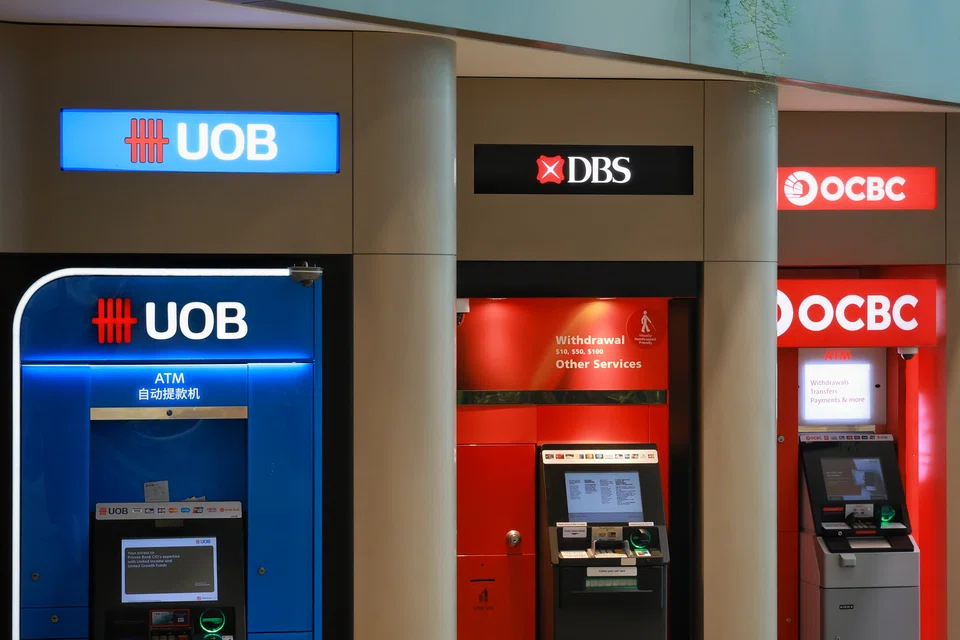
SINGAPORE’S three largest banks – DBS, UOB and OCBC – rallied strongly in 2024. Even though the US Federal Reserve started cutting interest rates in September, the banks had already taken proactive measures to cushion any impact on their earnings.
Their share prices rose broadly, thanks to the full-year results released last month and greater certainty on their capital management plans to reward shareholders.
The outlook for the banking sector is further supported by US President Donald Trump’s policies, which are expected to keep inflation elevated and slow the pace of the Fed’s interest rate cuts. Higher interest rates (compared to pre-pandemic levels) help to support banks’ net interest margins (NIM).
A positive earnings season
All three banks delivered positive net profit growth for 2024, due to higher net interest income (NII) and non-interest income, led by their wealth management arms. As interest rates gradually declined last year, all three managed to mitigate NIM compression through various strategies to minimise their balance sheet sensitivity to interest rate fluctuations.
These moves include managing deposit costs, increasing investments in fixed-rate assets and lengthening their portfolio durations.
As for their asset quality, we observe stable non-performing loan (NPL) ratios across all three banks, further cementing their status as companies with robust balance sheets.
All of them announced plans to reward their shareholders in the form of dividends, as well as capital return. This has boosted investor sentiment; the focus now moves to whether this growth trajectory can be replicated in 2025.
Rates to remain higher for longer
While headline and core inflation have managed to fall below 2 per cent in late 2024 and in the first month of 2025, we believe that the battle against inflation is not yet over.
Domestically, a resilient labour market continues to drive wage growth, prompting the Monetary Authority of Singapore (MAS) to maintain a cautious stance and avoid aggressive easing to prevent a resurgence in inflation.
Elsewhere, persistent US inflation – with core personal consumption expenditures holding at 2.8 per cent year on year in the last three months of 2024 – has led the Fed to signal slower rate cuts in 2025. Moreover, heightened geopolitical risks and trade frictions may continue to drive inflation.
As a result, we expect Singapore’s three-month compounded Singapore Overnight Rate Average (Sora) to decline at a more gradual pace. We forecast Sora to stay above the pre-pandemic level of 2 per cent, providing a supportive macroeconomic environment for local banks.
Stable net interest income and growing wealth management fees
Higher-for-longer interest rates support banks’ NII. However, as interest rates decline, banks face downward pressure on their NIM as loan growth may still be subdued. We expect NII growth to be limited and, overall, to remain stable in 2025.
We see greater growth potential in wealth management fees. Since 2018, Singapore has grown to become a family office hub. The number of single family offices granted tax incentives by MAS has surged fivefold between 2020 and 2024, bringing the total count from just 400 to 2,000.
MAS has also continued to encourage the establishment of family offices here through better incentives. With strong government support, a stable political and economic landscape, and a business-friendly environment, Singapore is expected to remain highly attractive to ultra-high-net-worth individuals, particularly as geopolitical tensions among major powers continue to rise.
Overall, we expect stable NII and higher wealth management fees to support modest growth in banks’ earnings in 2025. Although banks’ growth outlook appears softer than in 2024, we expect their earnings to remain resilient.
Thanks to substantial excess capital above regulatory requirements, investors may expect another year of strong shareholder returns.
With dividend yields of more than 5 per cent and additional share buybacks, the banks will continue to appeal to dividend-focused investors.
Load up positions if you love dividends
While growth may moderate in 2025, stable NII, booming wealth management fees and attractive dividend yields position the banks as compelling investment opportunities.
Our projections indicate that the three banks will sustain dividend yields of 5 to 6 per cent over the next three years, far exceeding the average 2 per cent yields of US banks after withholding taxes.
As interest rates gradually decline, dividend stocks are expected to become more attractive compared to savings accounts and money market funds.
The robust financial positions of Singapore banks will stand out, offering investors a stable income stream at lower volatility.
For those who prioritise income generation through local investments, Singapore banks remain a compelling choice.
The writer is a research analyst with the research and portfolio management team of FSMOne.com, a Singapore subsidiary of iFast Corporation
TRENDING NOW
Grab CEO’s wife Chloe Tong on life with Anthony Tan and finding her purpose
He built the Vingroup empire. Now South-east Asia’s richest man is handing some key roles to his sons
HDB reviewing ‘jumbo’ flat scheme after Telok Blangah unit listed for sale at S$2.18m
What role can Japan play in Asean’s future?