

French banks offer a bright spot: resilient results and stable credit profiles
The country’s four major lenders reported growth in revenue and net income, with elevated policy rates helping to sustain net interest income
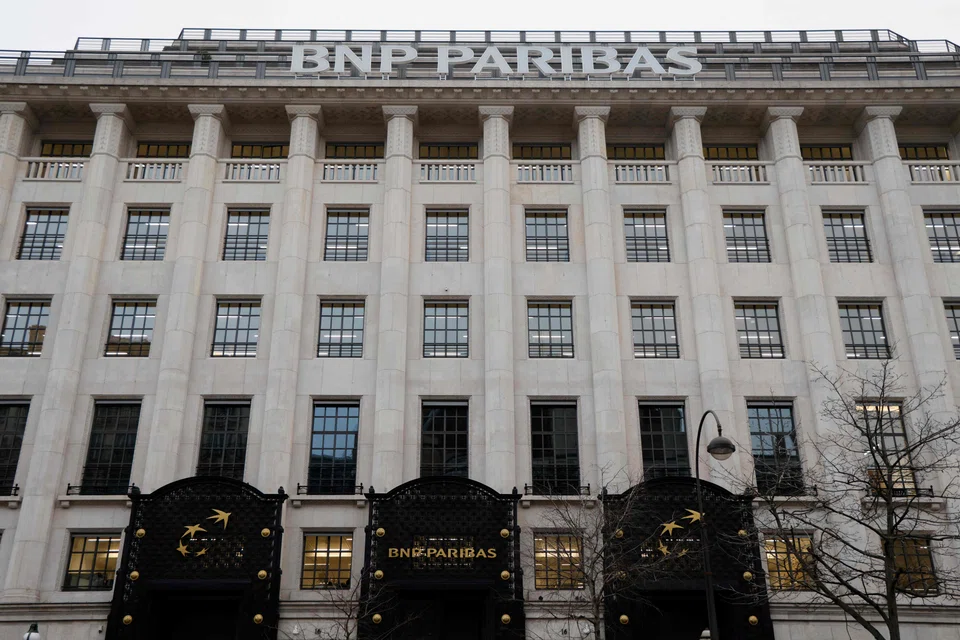
[SINGAPORE] Fitch’s recent decision to affirm France’s sovereign credit rating at “AA-” offers momentary relief amid ongoing concerns over the nation’s financial stability.
The country’s outlook remains firmly in negative territory, reflecting the uncertain political and economic landscape.
While political turmoil may dominate headlines, Fitch’s assessment reveals a more positive picture for the French banking sector – one marked by resilience, owing to banks’ diversified business profiles and cautious approach to risk.
French banks: casualties of political instability
French banks were among the first to feel the tremors of political instability. When President Macron called for a snap election in June 2024, the share prices of major French banks took a hit – those of BNP Paribas and Societe Generale (SocGen) fell by double digits.
Similarly, the bonds of the major French banks were also affected as prices were hit by bouts of volatility.
Things took a turn for the worse in December 2024. Moody’s downgraded the issuer ratings of seven French banks following the downgrade of France’s sovereign rating. The move was intended to reflect a weakened capacity of the French government to support the banks if necessary.
Fuelled by concerns surrounding France’s political state and Moody’s downgrade, the French banks’ credit spreads surged. Spreads rose to levels in line with last June, before the snap election was announced.
Resilient FY24 results with stable credit profiles
Despite the recent market concerns, FY24 proved to be a great year for the French banks.
All four major institutions – BNP Paribas, SocGen, Credit Agricole, and BPCE – reported growth in revenue and net income while the credit profiles remained stable. Elevated policy rates have helped in sustaining net interest income, while the heightened market and trading activities were a boost to investment banking fees.
The European Union’s banking giant, BNP Paribas, stood out for its stable profit growth amid changing macroeconomic conditions.
Anchored by a strong and globally diversified business franchise, BNP Paribas reported another year of revenue and net income growth, rising 4 per cent year on year in FY24. As at end-December, it reported a Common Equity Tier 1 (CET1) ratio of 12.9 per cent, which decreases to 12.4 per cent after accounting for Basel IV requirements.
Relative to other European banks, BNP Paribas has one of the lowest CET1 buffers (to regulatory requirements) at about 210 basis points (bps). Still, its strong profitability greatly reduces concerns over the relatively lower buffer.
SocGen saw significantly improved results in FY24, with net banking revenue and net income rising 6.7 per cent and 48.7 per cent year on year, respectively.
Earlier last year, the group’s outlook was revised to “negative” by Moody’s, with a possible rating downgrade if profitability remains weak.
However, given SocGen’s strong recent performance, we believe a revision to a “stable” outlook seems likely. As at end-December, SocGen’s CET1 ratio stood at 13.3 per cent, approximately 310 bps above the regulatory required levels. The bank intends to maintain the CET1 ratio above 13 per cent across 2025 following the adoption of Basel IV, with a target of 13 per cent by 2026
FY24 was also a strong year for Credit Agricole. At the group level, revenue and net income were up 4.3 per cent and 4.7 per cent year on year, respectively. Similar to BNP Paribas, Credit Agricole has demonstrated stable growth over time, with a nearly 6 per cent compound annual growth rate in underlying revenue from FY15 to FY24.
It reported one of the highest CET1 ratios across the European banks, with CET1 ratio at 17.2 per cent as at December 2024, and 740 bps worth of buffer to regulatory required levels.
BPCE recorded a 5 per cent year-on-year increase in net banking income and a larger 26 per cent increase in net income. Its strength lies in its diversified financial services offerings in France, which have helped to mitigate the impact of slower traditional banking growth.
About 50 per cent of its net banking income is derived from non-traditional sources, such as insurance, asset management and trading activities. We believe these businesses are likely to continue to drive growth in the near term.
As at December, its CET1 ratio stood at 16.2 per cent, with a pro forma ratio of 15.6 per cent after accounting for upcoming acquisitions. At the pro forma level, BPCE’s CET1 ratio holds a significant buffer of around 500 bps to the regulatory requirements.
Bond opportunities amid political instability
At the moment, credit spreads of French banking bonds are wider than their European peers, likely reflecting the premium which markets have assigned for the banks’ business exposure to France. But given supportive credit and financial fundamentals, we believe this creates a favourable opportunity for bond investors.
We like the US dollar senior non-preferred (SNP) papers from French banks. In particular, we see opportunities in BNP Paribas and SocGen, which offer relatively attractive yields for their respective investment-grade ratings.
Due to their higher seniority compared to Tier 2 subordinated and Additional Tier 1 bonds, the risk of loss absorption is lower for SNP bonds, making them more suitable for conservative investors.
For Singapore dollar notes, we like the Tier 2 investment-grade options by BPCE and Credit Agricole, both of which offer above 4 per cent yield to call – which is increasingly hard to find in the SGD corporate bond universe.
We focus on the yield to call for the SGD Tier 2 subordinated bonds, as regulations incentivise issuers to redeem and refresh Tier 2 capital at an earlier date.
The writer is a fixed-income analyst with the Bondsupermart team at iFast Financial, the Singapore subsidiary of mainboard-listed iFast Corporation






