

Fresh scrutiny on CoCo bonds: Wealthy families advised to tread carefully
Forced write-down of Credit Suisse’s CoCo issuances has made investors wary; spreads on CoCo debt set to widen, making it more costly for bank to go to market


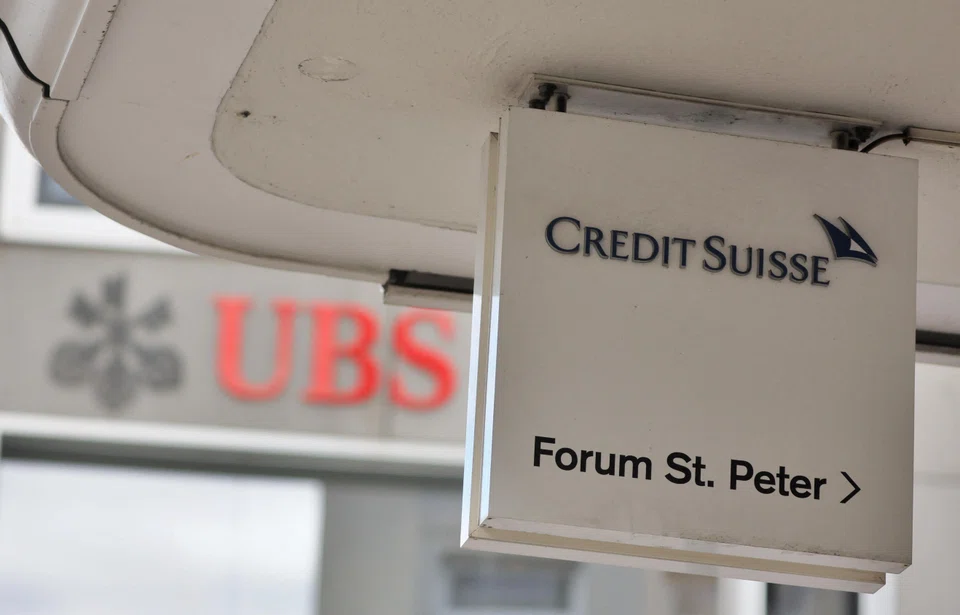
THE riskiest segment of bank debt, called contingent convertible bonds or CoCos, is coming under renewed scrutiny among advisers to wealthy families.
Most heads of multi-family office firms contacted by The Business Times said portfolio exposure to banks’ CoCo issuance is zero. Those whose clients have some exposure cite a range of 2 to 4 per cent. They also have no exposure to Credit Suisse’s CoCo debt.
CoCo bonds, which are Additional Tier-1 (AT1) in banks’ capital structure, were widely recommended by some private banks – even as recently as January and February – due to their higher yields. Private banks have declined comment.
Some strategists, however, cautioned that while the Credit Suisse case sets a precedent in AT1 debt, investors should not be too quick to spurn this segment of the bond universe.
Following the takeover of Credit Suisse by rival UBS for three billion Swiss francs (S$4.3 billion), the Swiss regulator Finma (Swiss Financial Market Supervisory Authority) has ruled that the bank’s CoCo bonds will be written down to zero.
This has sparked widespread dismay, as it means that shareholders who typically rank last in the capital stack now rank ahead of junior bondholders. Shareholders benefit from the three billion Swiss franc deal, albeit at a substantial loss.
In a statement, the Monetary Authority of Singapore said in exercising its powers to resolve a financial institution, it intends to abide by the hierarchy of claims in liquidation. This means equity holders will absorb losses before holders of AT1 and Tier-2 instruments.
Globally, there is an estimated US$260 billion of AT1 issuance. Credit Suisse’s issuance is around 16 billion Swiss francs.
Morningstar’s associate director for fixed income strategies, Shannon Kirwin, said: “Investors should not jump to the conclusion that this event has destroyed the viability of AT1s as an asset class. We will likely see markets as a whole regard AT1s with more skittishness than in the past. But at the same time, regulators in both the EU and UK have come out and forcefully stated that this kind of event would not happen in their jurisdictions...
“Financial regulators view AT1s as an important tool for maintaining the health of the banking system, so they have an interest in ensuring that this market continues to function.”
CoCo bonds are perpetual securities which are callable. They emerged following the 2008 financial crisis to serve as a capital buffer for banks. When the issuing bank becomes insolvent, CoCo bonds suffer the first loss: they are either converted to equity or suffer a principal write-down. The bank’s debt is reduced and capitalisation gets a boost.
Credit Suisse’s CoCo issuances feature two write-down triggers. One occurs when Common Equity Tier 1 (CET1) capital falls below 7 per cent. The second is a “viability event” where the regulator may decide that the bank has become unviable. The latter happened with UBS’ acquisition. At end-2022, Credit Suisse’s CET1 ratio was 14.1 per cent.
Following Finma’s ruling on Credit Suisse’s AT1 debt, eurozone regulators quickly clarified their stand. A joint statement by the Single Resolution Board, European Banking Authority and the ECB Banking Supervision said: “Common equity instruments are the first ones to absorb losses, and only after their full use would Additional Tier One be required to be written down. This approach has been consistently applied in past cases and will continue to guide the actions of the SRB and ECB banking supervision in crisis interventions.”
Switzerland is not part of the eurozone. AT1 issuance by UBS also allows Finma to declare a viability event.
Leonardo Drago, co-founder and chief investment officer of multi-family office AL Wealth Partners, said the firm’s discretionary mandates have no exposure to AT1 debt. Advisory mandates have a small exposure – not to Credit Suisse’s issuance – which he is advising clients to sell.
“We avoided AT1s from day one, and would definitely tell all investors to avoid them now. Some commentators say the Swiss central bank action has dealt a killing blow to the whole AT1 sector. I agree, but time will tell if this is true. Investors will start demanding much higher yields in view of the risks, so this will become an unattractive vehicle for raising capital for banks.”
Kerry Goh, Kamet Capital’s founder, chief executive officer and chief investment officer, said: “We have not invested in AT1 and would exercise caution, as there are details which investors have to understand prior to investing in AT1. They are not as straightforward as equity or a regular corporate bond.”
But full avoidance, he said, may not be appropriate. “There could be good market pricing compared to regular longer-dated bonds. As investors, we should always ask if we are compensated well enough to take on the coupon-cancellation and non-call risks, for fixed income on a subordinated level close to equity risk.”
For now, investor fear is expected to cause credit spreads to widen in the AT1 segment. Goh said wider credit spreads could make it more favourable for banks not to call their AT1 debt, given the market repricing of the sector. “Investors have often treated AT1 NC5 (non-call period of five years) with a view that it would be called after five years, despite it being a perpetual instrument... The potential extension in duration might still have some drag on the instrument.”
Vishal Nanwani, Golden Equator Wealth senior portfolio manager, said most client portfolios have zero or low levels of exposure of between 2 and 4 per cent. He believes the reaction to the Credit Suisse AT1 write-off has been “overly strong”.
“Given that our exposure is low, we are happy to wait for a compression of the spreads and a pull-to-par effect given that the reset durations are now about one to 1.5 years for us, so there’s enough room for appreciation. As a multi-family office, our investment horizon is longer, and our exposure is to high-quality AT1, so we are in a comfortable spot to wait these out.”
Raffles Family Office deputy CEO William Chow said the firm does not have any direct exposure to Credit Suisse AT1 bonds. “We sold all Credit Suisse AT1 in 2022. In fact, we have been reducing exposure to the financial sector in 2023, as part of our ongoing focus on diversifying the sources of risk and return in our portfolios.”
TRENDING NOW

Government to bring forward raising of retirement age, give employers more financial support to create flexi-load jobs

If Europe goes to war, the fallout will be felt in East Asia

Indonesia stocks suffer worst plunge in nearly 30 years as MSCI proposes standalone status

Vietnam’s northern provinces, not Hanoi or Ho Chi Minh City, are powering near 10% GDP growth

