

Fundamental question for crypto: Does it have any real-world value?
Is crypto a store of value, vehicle for speculation, or an asset with productive use? More investors have become disillusioned about crypto’s prospects as an investment that gains in value
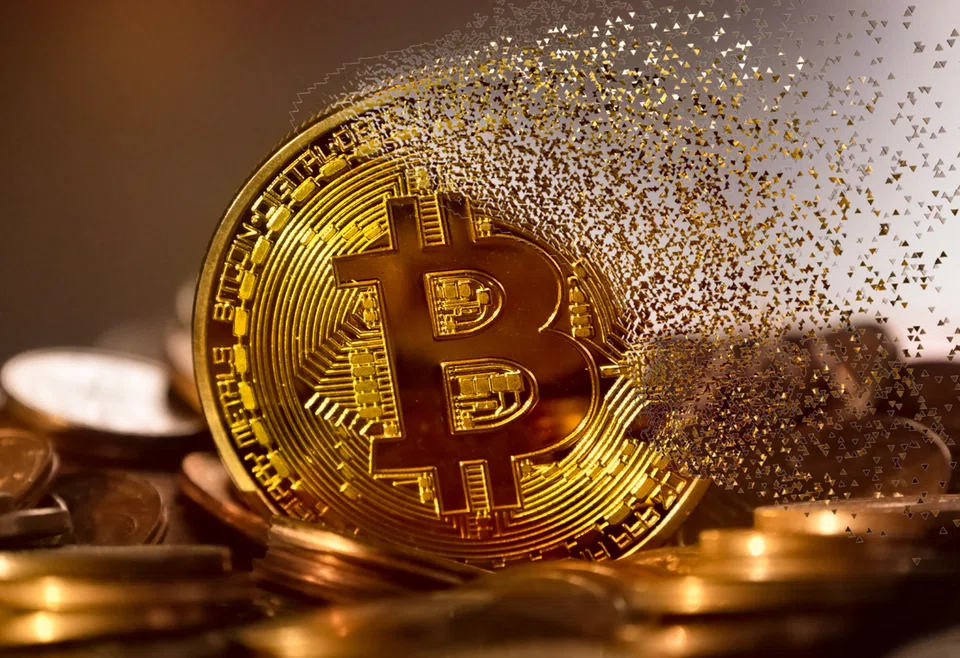
IN less than a year, Bitcoin has fallen by 77 per cent from its peak, and Ether has lost 82 per cent. If crypto were an established asset class, this would look like a time to add it to a portfolio. Falls of 80 per cent, which occur only after speculative bubbles, often mark the ultimate bottom. Japan’s three-decade bear market and the Nasdaq’s tech bubble bursting in 2000 both bottomed near the minus-80 per cent mark.
In big bear markets, excesses are wrung out of the system, as time exposes companies that were frauds and Ponzis, like FTX. The problem with crypto is that it is still not clear whether this is a real asset with underlying value.
For most of human history, there was no long-term inflation. Interest on savings involved a high degree of risk where your capital might not get paid back, often commanding rates of 10 per cent or more to compensate for the risk of the borrower running off with your cash. In such an economy, it made sense for people to keep their savings in assets which compressed value into a portable medium, like gold and silver. These assets were kept safe buried in a backyard and utilised, there was little growth in the overall economy.
In 17th century England, a series of innovations in finance and law created a new economy, transforming saved monetary capital into investments. Savings were invested or deposited in banks, which in turn lent them out and paid interest to the owner of the savings, while charging a higher interest rate to the borrower. This system transformed savings into investments that funded the creation of new businesses and the expansion of existing ones, increasing labour productivity. Savings were no longer a zero-sum game, morphing from being only deferred consumption to a driver of increases in productivity.
Applying the above framework to the crypto universe yields a fundamental question that I have not yet seen appropriately answered. Is it at best only a store of value like gold, or at worst merely a vehicle for speculation, like a casino where everyone eventually is a loser? Or, is there a productive use that will eventually increase the productivity of the economy?
If it is a store of value, returns would approach the long-term inflation rate; at worst, crypto scams would result in losses. Increased regulation following FTX’s collapse will result in fewer scams, but also lower returns. Time will tell if the latter comes true. The initial results do not look good, and it is telling that many of the large companies that announced blockchain initiatives years ago have quietly shelved the projects.
Last year’s crypto winter has vindicated sceptics. Multiple companies have gone bankrupt as excesses and frauds were revealed, culminating in FTX’s implosion. And now questions are swirling around the largest exchange, Binance, and its native BNB coin (remember that FTX’s FTT coin is what brought the whole thing down).
The fundamental question for all of crypto is whether crypto has real-world value. Is the whole crypto universe fundamentally a closed-loop system which doesn’t create real wealth, unlike shares in a company which has earnings in fiat currency that are either distributed as dividends or re-invested to grow further? Does crypto only generate more crypto and nothing else? If so, meaningful profits can only be extracted from the system by exiting crypto and going back into fiat.
If this is the case, then the crypto ecosystem can only result in profits by continuing increases in prices of the underlying coins, which can only happen if more people enter the ecosystem with real fiat money. By now you’ve figured out that this is the exact definition of a Ponzi scheme, which would be permanently at risk if there were numerous sellers, like what ensued following Binance’s announcement that it would sell FTX’s native coin, causing FTX to quickly go bankrupt. The total value of the ecosystem can never be more than the amount of money that was put inside in the first place, if there’s no value creation.
For crypto to be considered a long-term asset with investment qualities worthy of inclusion in a portfolio, it must be able to counter the above argument. Otherwise, it is just a vehicle for speculation with the end value of the whole ecosystem possibly being zero. I have asked many crypto backers to refute the above argument against crypto, and so far have not yet heard a good rebuttal. If you’re a crypto fan and have a good counter for why the underlying crypto ecosystem has any value in fiat money terms, please let me know.
On top of the questions now surrounding Binance, another source of concern is the Tether stablecoin, which so far has held up well despite all the sceptics. This has been analysed at length with many people concluding it is a fraud and not fully backed by real assets. Despite the crypto winter, it has still held its peg at US$1 or close to it with minimal fluctuations.
This may be ending. As more investors are growing disillusioned with crypto’s prospects as an investment that gains in value, Tether has been increasingly lending its own coins to customers, rather than selling them for dollars. Tether says it only lends against extremely liquid collateral and only to eligible customers, but refuses to give any details on this.
During a bull market red flags are ignored, but time always reveals the truth. The latest financial reports from Tether, which need to be taken with a grain of salt given the company’s reputation, show that this lending grew from US$4.1 billion to US$6.1 billion as of Q3 2022, making up almost 10 per cent of the company’s total assets.
These are secured loans, but secured by what? Other tokens? Tether has no audits, no financial statements, and no balance sheet. Tether doesn’t pay interest, which was fine when interest rates on cash were also zero. Now that cash pays 4 to 5 per cent, Tether’s business model should be to simply take its US$65 billion supposedly on the balance sheet, park it in Treasury bills, and earn more than US$3 billion a year for itself by doing nothing and taking no risk. Why is it not doing this, and instead lending its stablecoins out? Maybe most of Tether’s dollars (if not all) are actually there and really in safe instruments. An alternate bearish argument for the whole crypto space (and Bitcoin in particular) is that Tethers are printed out of thin air with the purpose of propping up the price of Bitcoin. Sort of a form of reverse fractional reserve banking in crypto. If this is correct and there’s a run on Tether’s assets, it could spell the final death knell for the whole sector.
The answers to all these questions will come in time. Meanwhile, Bitcoin is below its 2017 peak, so over the past five years it has underperformed all other investments, including cash. It’s worth remembering the fundamental rule to investing that is forgotten every few years as a new mania takes over: There are no shortcuts to investment riches.
The writer is co-founder and chief investment officer of AL Wealth Partners, an independent Singapore-based company providing investment and fund management services to endowments and family offices, and wealth advisory services.
TRENDING NOW

Olivia Lum, ex-CFO not giving evidence in their Hyflux trial

Bank on AI-resilient Singapore property via deep-value listed property groups

Positive pivot or premature? Analysts split on Keppel Reit’s S$610.9 million buy

Once staunchly pro-China, Malaysian Chinese businesses are now distancing themselves from Beijing

