

Geopolitics and markets in 2024: Brace for the unpredictable
Investors should prepare for geopolitically induced volatility, and hedge their portfolios via diversification and assets like oil and gold
GEOPOLITICS is set to play an outsized role in 2024.
Geopolitical tensions are ratcheting up again with renewed force, following Russia’s invasion of Ukraine in February last year, Hamas’ attack on Israel this year and the new uneasy equilibrium between China and the US. Such tensions are already affecting trade and financial flows, as well as asset prices.
Looking ahead, the growing fault lines between two major blocs – the Global South versus the West – will have major implications for the macro and investment outlook of both developed and emerging economies.
Greater uncertainties from both the geopolitical and policy angles will likely accelerate the pace of supply-chain diversification, with efficiency usually sacrificed.
But geopolitics is not the only reason for the increasing divide between the Global South and the West. Globalisation is reshaping along multiple dimensions. For instance, the rise of robotics, artificial intelligence and automation means that more production can be done by machines in advanced economies, where infrastructure is more advanced.
This, coupled with the fact that mainland China is no longer the low-cost manufacturing base it once was, means that we are witnessing an acceleration of the shift in manufacturing activities into markets like Vietnam, Cambodia and Indonesia. This has a downside, because the global economy is worse off when companies shift or “re-shore” their operations, not due to cost considerations but for risk management, encouraged by protectionist industrial policies.
Complicating matters further, in 2024, nearly half the world’s top 20 largest economies will experience leadership elections, representing over 40 per cent of global gross domestic product. The most impactful elections for geopolitics globally will be in the US, Russia, Taiwan, India, South Korea, Indonesia, and the UK (no later than January 2025).
Over the short term, political elections are generally known to be a source of volatility. But the prospect of deep polarisation, rising populism, and nationalism has further raised the level of uncertainty typically associated with elections.
In fact, a study conducted by the US’ National Bureau of Economic Research shows that uncertainty rises significantly in the months leading up to elections. Moreover, the increase is much higher in polarised elections, with the volatility reflected in asset prices and a slowdown in investment, as the option value of waiting to decide whether to invest or not, based on the outcome of the election, is higher.
In the US presidential elections, if Joe Biden secures re-election, we would expect a continuation of the status quo, under which the US supplies financial and military support to Ukraine. However, if Donald Trump runs on an “America First” platform and is victorious, we would expect US financial and military support for Ukraine to significantly decline. This would leave European governments needing to materially increase spending – a fiscal risk – or accept potential Russian military gains.
The Taiwanese presidential election on Jan 13, 2024 is likely to be most closely watched in Asia. The run-up and aftermath of the elections will be a risk to monitor, as Taiwan’s relations with mainland China will partially depend on the outcome of the polls. Cross-strait elections are likely to remain a constant source of tension in the coming years. But as long as no apparent changes occur post-election, a significant escalation in the next five years is unlikely, given China’s other priorities and challenges in domestic growth and self-sufficiency.
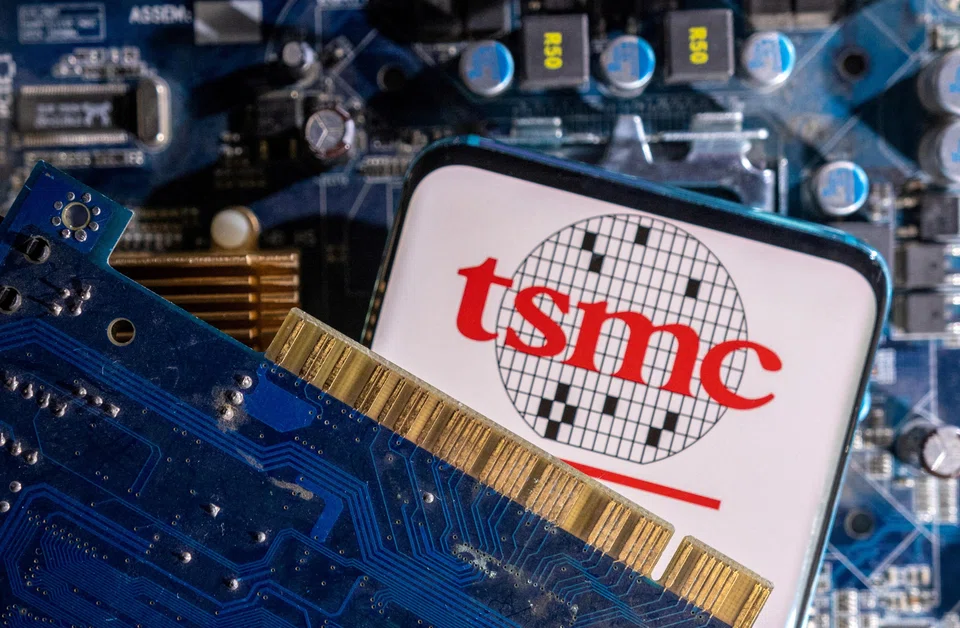
Meanwhile the US will continue to engage with Taiwan and especially increase collaboration in technology sectors, as Taiwan remains a critical participant in advanced semiconductor manufacturing, and the Taiwan Strait and its surrounding waters are a key artery for international trade. However, the US is also actively trying to diversify production of advanced semiconductors out of Taiwan into the US and close allies.
We expect the status quo of China-Taiwan relations to remain, given the complexity of cross-strait political issues and China-US competition in technology and trade. If the opposition Kuomintang party wins in the election instead of the incumbent Democratic Progressive Party, we could expect better cross-strait ties and possibly lower geopolitical tension/risk in the region.
Accordingly, global investors will likely continue to price geopolitical risks into their long-term allocation to Chinese assets in their portfolios. Global investment flows to advanced technology sectors in mainland China could continue to be affected by US policies. That said, onshore investors in mainland China will likely focus more on the economic trajectory of the country than on geopolitics. The rest of Asia should be a beneficiary of supply-chain diversification, given rising production costs in China beyond geopolitical risks.
The US government will likely continue the current approach of tightening export controls and imposing restrictions on outbound investments in advanced technology against several countries, including China. Individual markets and companies that count mainland China among their key markets should continue to view the geopolitical situation as an ongoing risk.
In short, investors should brace themselves for an ambiguous and unpredictable world in 2024, and be prepared for geopolitically-induced volatility. This can be done by hedging market risks, not just through diversification, but also by shielding portfolios through asset-specific strategies such as alternatives, or oil and gold.
The writer is the chief investment officer for south Asia-Pacific at UBS Global Wealth Management
TRENDING NOW
Easy to rent out, hard to sell: Are buyers losing interest in Singapore’s one-bedroom condos?

GovTech retrenches another 38 staff in second round of layoffs

Stocks to watch: Seatrium, CapitaLand Investment, Keppel DC Reit, Suntec Reit, CLCT, TSH Resources
World’s largest offshore wind platform by Seatrium consortium on track to be completed by 2028

