

Getting real about ESG
Sustainable investing has been challenged on many fronts over the last 12 months, but the climate crisis is here and there can be no turning back
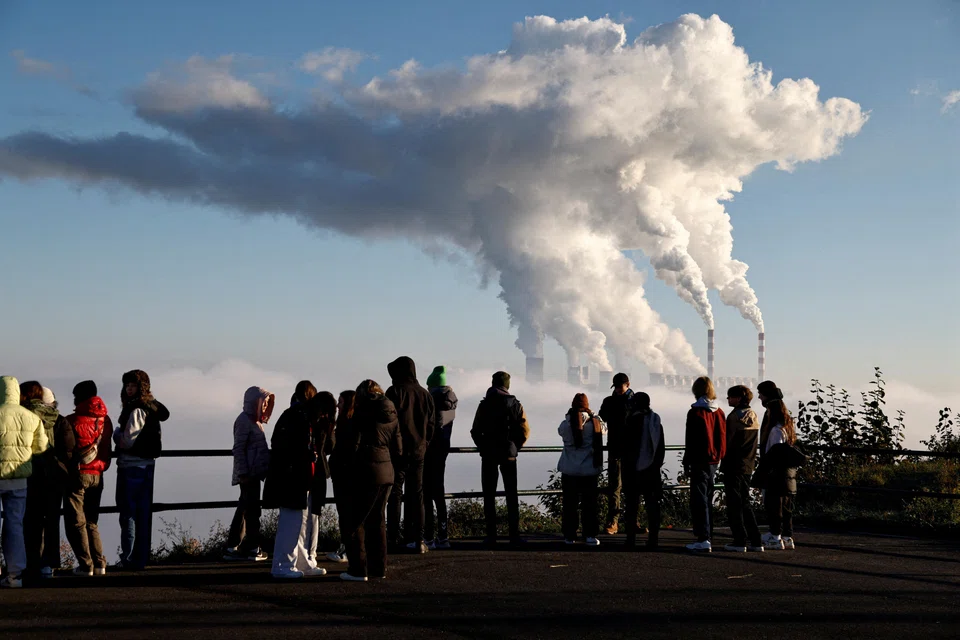

THE war in Ukraine, rising inflation and dramatically higher fossil fuel prices have made many investors question the underlying values and financial performance of ESG (environmental, social and governance) investing. Indeed, the very idea of investing sustainably has come in for criticism in many parts of the world.
But the evidence of large-scale natural disasters linked to climate change won’t go away, and the energy crisis has refocused minds on the need to think for the long term – and may even speed up investment in renewables.
In many markets, regulation targeting sustainability is already coming into force or is on the horizon.
As a result of this context, I expect firms to “get real” on ESG in 2023 with a focus on corporate resilience, the just transition and natural capital.
A balancing act
Volatile markets create a stark contrast between the needs of different stakeholders and the choice they face of integrating ESG for value or for values.
As a result, a new, more mature approach to ESG integration is emerging – one that acknowledges the necessary trade-offs between the short-term decisions required to remain in business, and the longer-term needs of customers, employees, and communities.
Some companies with net-zero plans have found them harder to implement in 2022 due to higher material and energy costs as well as disrupted supply chains, while others have benefited from clean energy investments already made.
This is repeated at the government level, where many nations have had to revert to fossil fuel power generation to keep the lights on – literally – and to protect the economy, while still planning for a more secure, affordable, and sustainable energy future.
For asset owners and managers, sustainable investing remains a priority because of – not despite of – the current environment, given the physical and transition risks that companies face.
Investors continue to support capital allocation towards the energy transition where it produces long-term positive returns and creates competitive advantage.
But they too have become more focused on the reality of reaching net zero, especially in relation to sector materiality (for example, that higher emitters could pose greater risks), scenario analysis (such as economic effects of climate scenarios), product suites (ways to decarbonise portfolios), public policy monitoring (sectors exposed to policy changes) and active ownership (where investors can have the biggest impact).
System-wide issues require broader engagement
It is essential for asset managers to broaden the ways in which we try to influence sustainable outcomes for clients.
At Fidelity International, for example, we’ve increased our engagement with company value and supply chains on material risks to sectors, particularly biodiversity; and with policymakers on system-wide risks that require macro stewardship, such as climate change and biodiversity loss.
This is particularly relevant for high emission industries such as steel and mining that are core to the transition but rely on capital-intensive emerging technologies to decarbonise. It is also important for sectors such as coal that must be phased out in a just manner but at speed.
We have now built our thermal coal transition framework and begun intensive engagement with major players.
We have developed new sustainability tools, including one that measures corporate revenue generation against the metrics and targets of the Sustainable Development Goals, and extended our impact and nature product ranges.
Effective regulation and data
The more standardised and aligned regulation is, the more effective it should be.
Global initiatives such as the Taskforce on Climate-related Financial Disclosures and the International Sustainability Standards Board are good first steps, and we hope for better coordination across jurisdictions.
However, in a fragmenting geopolitical world, differences will persist, and green product labelling is likely to remain country-specific.
Regulation will drive greater transparency through common frameworks and underlying data standards, increasing the amount of sustainability data available to investors.
But simply having the information is not enough. What matters is how investors use and interpret this data to drive meaningful analysis of, and engagement with, companies to generate real-world outcomes.
Moreover, different sectors may require different metrics and methods of comparison to understand how quickly they can and should achieve sustainability goals. The industry should resist the temptation to reach for one-size-fits-all solutions.
Natural capital
The loss of biodiversity is unprecedented and is accelerating, posing a serious threat to global economic prosperity and supply chains, made worse through its connection with climate change.
As policymakers wake up to this systemic risk, regulatory and disclosure frameworks for natural capital – including the European Union taxonomy and Taskforce on Nature-related Financial Disclosures – are being developed, with more to come.
The financial industry needs to extend our work to understand the real price being paid for nature loss, and how we can help our clients mitigate this risk and capture opportunities.
Getting real on climate means getting real on nature too, both to mitigate and to adapt to a changing world.
Where we go from here
Despite the multiple challenges going into 2023, there are plenty of ways that sustainable investing can be adapted to help solve these problems.
The most obvious of these steps would be the faster deployment of renewables and storage to increase energy security.
We need to support the real economy’s transition by having the right building blocks for clients, engaging with heavy emitters, and leveraging research.
The environment for ESG may remain tough in 2023, but the climate crisis is here.
Many areas of the transition are starting to accelerate as companies and investors increasingly realise that, whether for energy security reasons or to avoid future climate disasters, there is no turning back.
The writer is the global head of stewardship and sustainable investing at Fidelity International
TRENDING NOW

Two Singapore-listed palm oil firms named in Greenpeace report on Indonesian plantation fires

Singapore Airlines flight returns to San Francisco after ‘unruly’ passenger incident

Singapore looking into which companies responsible for haze-causing fires: PM Wong
Deluge IPO 3.86 times subscribed ahead of SGX debut

