

Golden Equator Group to focus on asset growth, building inter-generational ties
The company has made key hires for its wealth business, and aims to expand assets under management to US$1 billion
Genevieve Cua
THE Golden Equator Group has refreshed its business structure, putting a renewed focus on building linkages between the older and younger generations of wealth owners.
It aims to grow its assets under management (AUM) to US$1 billion over the next couple of years, from the current “integrated” asset size of US$600 million, which includes wealth assets and private capital funds.
Golden Equator Group has two main business pillars – capital and community. Most of the AUM sits in the capital segment, comprising the multi-family-office (MFO) service under Golden Equator Wealth, and private capital funds under Golden Equator Capital.
To beef up the MFO business, the firm roped in two finance veterans last year. Formerly with Credit Suisse, Rai Rummaan Kharal joined as a managing partner of wealth and capital, and Haroon Tufail as an executive director. They are part of a plan to grow the team of family office advisers.
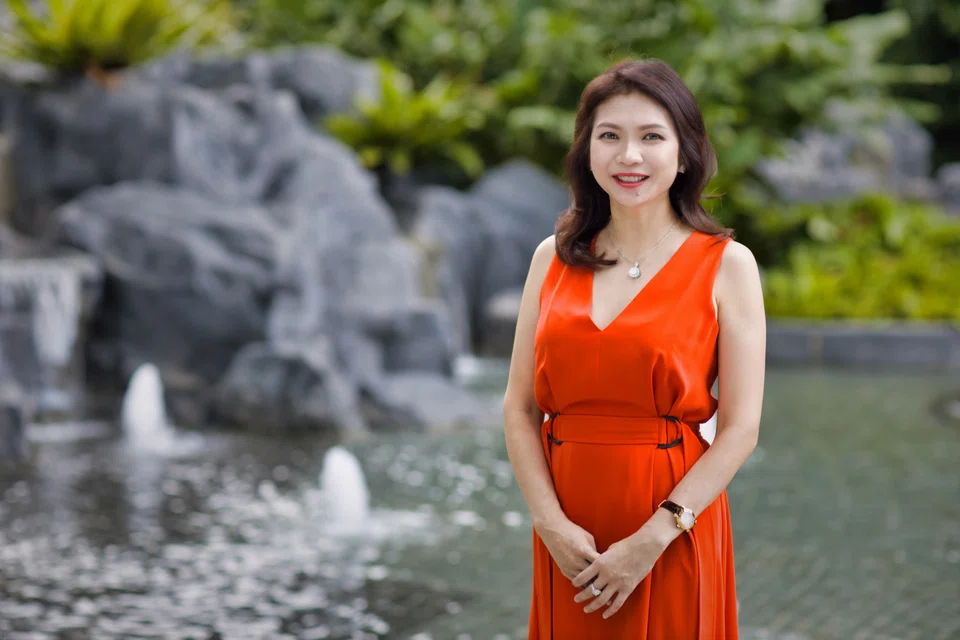
Says Golden Equator founder and group chief executive Shirley Crystal Chua: “With more senior family office advisers on board, they bring strong in-market and regional experience, and, where it makes sense, they will explore the possibility of establishing our presence in other markets.”
The firm sees itself as a bridge between the current generation of wealth owners and their scions. “We have a key focus on the next generation or multi-generational integration. How do we assimilate the current generation of wealth owners with the next, so they can achieve family cohesiveness? The next generation already participates in decision-making, and they understand technology very well.
“We care about cultivating the next generation, which is why our funds invest in entrepreneurs who can solve the problems of the future, or make this world more effective or efficient.” The group has an overall staff strength of 75, of whom 20 are in the wealth business.
The firm’s ambitions come amid an expected tidal wave of wealth transfers from one generation to the next. The UBS Billionaires Ambitions Report 2023 estimates that globally, more than 1,000 of today’s billionaires will transfer over US$5.2 trillion to their heirs over the next two to three decades.
Golden Equator was established in 2012, initially with around a dozen clients and roughly S$30 million under management. The “capital” pillar of business has a third component, The Simple Sum, a personal finance and investing site for young adults. “We want to help them increase their resources through earnings and growing their assets.”
The “community” pillar taps technology and physical facilities to build interconnectedness. “We believe in technology, and we also use a tech platform to grow the community,” said Chua.
The businesses in this pillar comprise Spectrum, a co-working and networking space; Swish, an employee engagement app still in the beta or testing phase; and Pinnacle, which focuses on next-gen empowerment and entrepreneurship boot camps. Pinnacle will be renamed Golden Equator Learning. The group is also organising a next-gen club, which is to be launched in the first quarter.
Chua said all the businesses are revenue-generating. “We’re building ecosystems supported by capital and finance. We’re into our next decade, and so we want a refreshment of our brand.”
Movement restrictions imposed during the pandemic were an opportunity to rethink and regroup. “I hope that the clarity we bring to our resources, whether it’s technology or the use of capital or building communities, can help us to become a household name in Singapore. I hope we can be the leading MFO for the region.”
Chua believes she has found a sweet spot to connect Baby Boomers (born 1946 to 1964) with younger generations, such as the Millennials (born 1981 to 1996) and Generation Z (born 1997 to 2012). She herself was born 1979, and identifies as Generation X (born between 1965 and 1980).
Prior to founding Golden Equator, she worked for eight years as a private banker with Citi. “If you’re willing to listen and understand what’s needed across generations, it will drive the right kind of business ideas and propositions.”
Golden Equator Capital is positioned as a conduit to support not just next-gen aspirations, but also to channel funds into entrepreneurs with disruptive and innovative businesses. At the moment, there are three funds. The Golden Equator Technology & Innovation Fund (GE T&I Fund) is an early-stage technology-focused fund investing in South-east Asia-based startups. Its portfolio companies include 17Live and OxPay Financial, an enabler in the payment ecosystem.
A second fund, GEC-KIP Technology & Innovation Fund (GEC-KIP Fund), is a tech fund managed jointly by Golden Equator Capital and Korea Investment Partners. It invests in Series A and Series B stage companies.
A third fund, Golden Equator Private Capital Funds, comprises late-stage asset-backed private capital with a primary focus on the infrastructure, energy and financial sector.
More recently, the group announced a Web3 fund in partnership with Snoop Dogg’s son Cordell Broadus, called Welcome To The Block (WTTB). Fundraising has paused “due to the overall digital assets climate”. The group aims to revisit the strategies in the first half of the year. The aim was to raise US$40 million to US$50 million to invest in early-stage businesses in the blockchain and Web3 space.
Chua said the take-up of private market deals rose from around 5 per cent a decade ago, up to 20 per cent in the past few years, “largely driven by the need for diversification and return enhancers”.
The firm is also looking into asset-backed private investments. “While the focused strategy has changed from highly illiquid, high-growth categories with long extended periods for exits (such as venture, direct-equity deals) to private, asset-based or collateralised credit and value opportunistic investments, we observe that allocation into the private sector remains at relatively similar levels.”
TRENDING NOW

Inside Jensen Huang’s last hours as Nvidia CEO

Higher rates, weaker spending: Is the Philippines entering stagflation?
‘I’ll be buying more’: Singapore investors pour into Nvidia shares on Jensen Huang’s exit

Demand, tech capabilities position Apac and AI as Skyscanner’s next growth frontiers: CEO Bryan Batista

