WEALTH & INVESTING

The great Singapore wealth transfer

Singapore’s Millennials are set to be the wealthiest generation ever
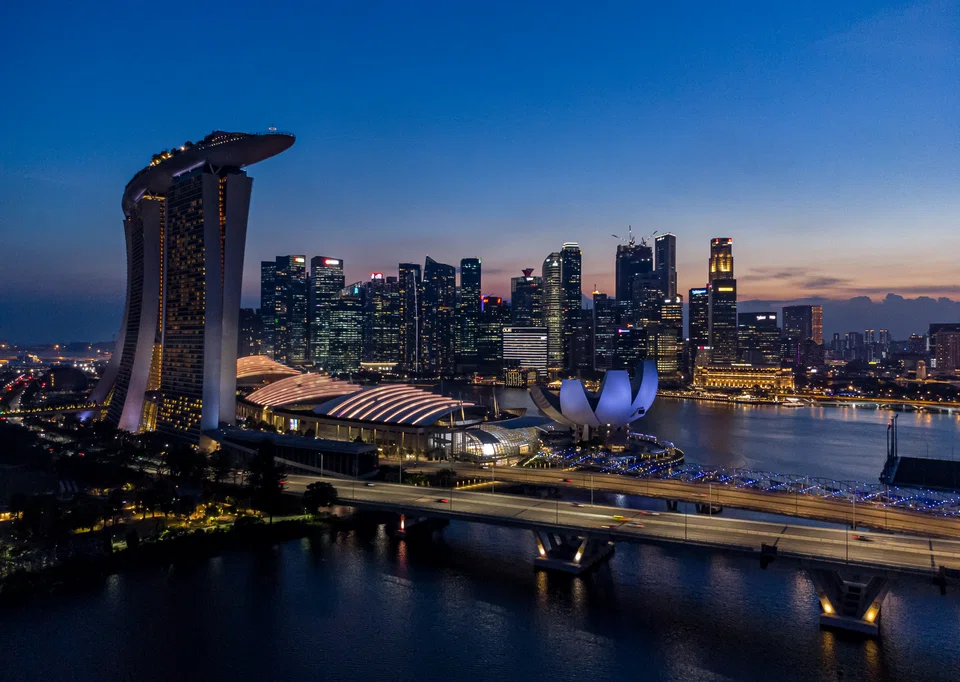
    • HSBC’s 2022 report on the rise of Asian wealth forecast the number of millionaires in Singapore rising to 700,000 by 2030.
    • HSBC’s 2022 report on the rise of Asian wealth forecast the number of millionaires in Singapore rising to 700,000 by 2030. PHOTO: BT FILE
    Published Fri, Aug 2, 2024 · 06:21 PM

    THOSE of us who watched the Crazy Rich Asians movie may recall scenes of wanton spending such as Chijmes being transformed into a wedding runway with water features and flowers, and a cargo ship with containers converted into a private pool and dance floor.

    While Kevin Kwan’s plot was dramatised for the big screen, it highlights a socio-economic force that will shape Singapore over the next 20 years.

    I see it as a pack of Crazy Rich Young Singaporeans getting ready to run the Singapore Marathon – their momentum fuelled by the great wealth transfer from a million Baby Boomers (born between 1946 and 1964, who make up about one-third of Singapore’s population) to Millennials (born between 1981 and 1996) and Gen Zs (between 1997 and 2012).

    Globally, this generational shift in wealth will amount to some US$90 trillion over the next two decades. A 2019 DBS report has estimated the magnitude of wealth transfer in Singapore to be over S$2 trillion. With the bulk of these riches going to Millennials, they will be the wealthiest generation ever.

    How crazy rich are we talking about?

    The UBS 2024 Global Wealth Report places the number of millionaires in Singapore at 333,204 as at 2023. These are individuals with net assets – cash, stocks, debt-free residential properties – of at least US$1 million.

    Henley & Partners’ World’s Wealthiest Cities Report 2024 provides another guesstimate of the number of Singapore’s most affluent: It cites 336 centi-millionaires, each with a minimum of US$100 million, and 30 billionaires, who each has at least US$1 billion of liquid investable wealth.

    If we multiply the lowest investable wealth of millionaires, centi-millionaires and billionaires by their numbers, the minimum amount of wealth available for transfer in Singapore totals a staggering US$396.4 billion.

    Assuming only 30 per cent of that belongs to Baby Boomers, we are still dealing with a ballpark figure of US$118.9 billion. That’s enough to run Bulgaria, based on the country’s 2024 gross domestic product, or start an airline with 528 new Boeing 787 Dreamliners.

    And the wealth figures only get better, with the number of millionaires in Singapore expected to grow to 375,725 by 2028, according to the UBS Global Wealth Report. That’s an additional 42,521 crazy rich folks over the next four years.

    What about the rich?

    HSBC’s 2022 report on the rise of Asian wealth forecast the number of millionaires in Singapore rising to 700,000 by 2030. This can’t all come from net immigration of high-net-worth individuals. Therefore, we shall assume that many of these new millionaires will rise from the upper-middle and middle-class populace.

    They may not have gold Bentleys and Good Class Bungalows, but most will own a mortgage-free public flat or condo apartment, stocks, Central Provident Fund savings, and cash worth over S$1 million, which will be passed entirely to their children. While not crazy rich individually, their collective numbers are tremors within the seismic financial shift in Singapore society.

    The sheer volume of wealth transfer that will also take place at the upper-middle and middle-income Baby Boomer levels in Singapore is not going unnoticed.

    HSBC has already seen growth in client numbers for its mass affluent segment from 2019 to 2023, and is opening three wealth centres in Singapore by the first quarter of 2025. There’s also AIA Singapore’s AIA Wealth Centre, dedicated to serving regional and domestic moneyed individuals and families as a strategic response to the projected surge in Singapore’s affluent population.

    How will society be changed?

    The great Singapore wealth transfer will produce a generation born with golden spoons and silver chopsticks, who are used to handouts from parents, poor in personal finance knowledge and prone to overspending.

    Euromonitor International’s 2023 research suggests as much, finding that Gen Z and Millennial households spent an average of US$106,045 and US$92,528, respectively, versus the Baby Boomers’ US$58,468. While their Baby Boomer parents are known to save and preserve wealth, Millennial and Gen Z millionaires may already be spending their inheritance away.

    Singapore workforce competitiveness may also hang in the balance as more Millennials and perhaps even some Gen Zs quit their jobs on the back of a cushy inheritance. If the number is significant, this phenomenon of mass early retirement by young Singaporeans will present an unprecedented challenge for Prime Minister Lawrence Wong and his team over the coming 10 to 20 years.

    On the other hand, social responsibility and sustainability may take centre stage as more rich young Singaporeans allocate their inheritance to this agenda, seeing it as a way to improve the world and create positive change that eluded their Baby Boomer parents.

    At the socio-economic level, the collective impact of young millionaires on Singapore society will be felt sooner rather than later. And the impact will depend on how these individuals’ attitudes towards money are shaped, their personal finance education, and the reinvestment of wealth back into the economy.

    Managing the resulting wealth divide and ensuring financial inclusiveness of the lower-income segments will be another challenge for the Singapore government.

    Will old money be wasted on the young?

    Much depends on whether Baby Boomer parents have educated and prepared themselves, as well as their children, for the wealth transition. While some ultra-high-net-worth families have put systems and programmes in place to ensure their scions inherit effectively, many haven’t even sat down to a money talk.

    But Singaporean Baby Boomers have already started passing assets to their children. Millennial kids are inheriting private apartments, while the Gen Zs get luxury cars. The fact is: the Crazy Rich and Rich Young Singaporeans movie is already playing in a cinema near you.

    The writer is a personal finance expert with The Better Foundation. He speaks on private wealth management, family offices and philanthropy at events in Asia, Australia and the US.