High-tech solutions for a net-zero world will come from Asia
In terms of cost, renewables are on par with or cheaper than fossil fuels to generate electricity. Asia offers a spectrum of sustainable investment opportunities
THE growing momentum behind the global energy transition should give us hope that we can create a net-zero world.
The transition will be costly, requiring total annual clean energy investment of US$5 trillion by 2030, said the International Energy Agency (IEA). But the investment will potentially create millions of jobs in renewables, energy efficiency, and in the engineering, manufacturing and construction industries, boosting global gross domestic product.
Previously, Asia was seen as a climate-change laggard. A predominantly coal-powered region, Asia needed to develop significantly more energy-generating capacity as it sought to catch up with more advanced economies.
One major problem is that for many Asian countries, while gross carbon emissions are high, per-capita emissions are still low. There is a risk of significant growth in carbon emissions as countries grow their economies.
Take India as an example. India is the third-largest emitter of carbon by volume (fourth, if we include the European Union as a bloc). Yet per-capita emissions remain very low: Compare the 6,992 kilowatt hours (kWh) used per person in India over 2021 with the 76,634 kWh used per person in the US.
If the world is to stay below the agreed 2 deg C of global warming, then the carbon intensity of Asia’s energy consumption needs to decline. Otherwise, all hope of keeping the planet at a tolerable level of warming will be lost.
There are still reasons to be optimistic. The leading Asian economies have announced ambitious net-zero goals (2060 for China, 2070 for India). While there will be tensions around the energy “trilemma” – energy reliability, affordability and sustainability – for now all the major Asia economies, including South Korea, Japan and China, have committed to net zero.
Regulations and guidance are also improving, particularly relating to disclosure. Last year, China saw the publication of The Guidance for Enterprise ESG Disclosure by the China Enterprise Reform and Development Society.
Importantly, the Guidance had input from stakeholders including private and state-owned Chinese companies, financial institutions, universities and government bodies. China’s burgeoning environmental, social and governance (ESG) data industry is developing, with particular focus on gathering proprietary China-focused ESG data. Much is being done to close the information gap.
Asia-based solutions
Increasingly, Asia is where we find the high-tech solutions that will power the net-zero world. For investors, there is now a spectrum of sustainable investment opportunities, from the financing of renewable energy projects and innovative energy-generating companies, to advanced technology solutions that support the United Nation’s Sustainable Development Goals (SDGs).
Governments and private capital are spending millions on lower carbon development, supported by government policy. The solutions are becoming better, cheaper – and they are being developed in Asia.
Up until now, renewables were much more expensive to produce and to run, so it was difficult to transition without massive government subsidies – a political and economic challenge. Now, we are at a point where renewables are on parity or even cheaper than fossil fuels in terms of the cost of electricity.
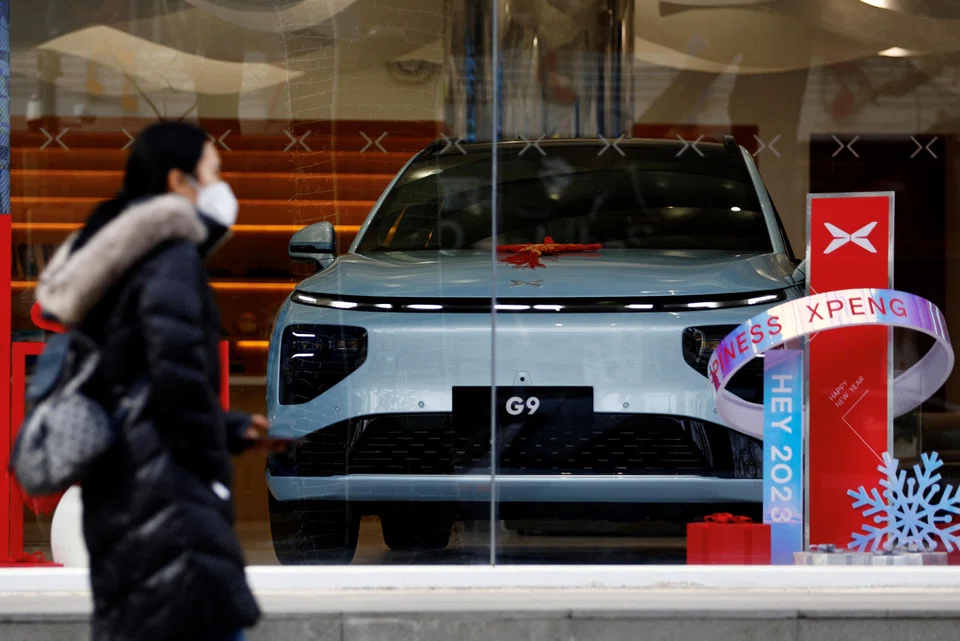
Solar, wind, and electric-vehicle (EV) batteries are already areas where Asia leads the world. The batteries powering the globe’s EVs are generally powered by Korean, Chinese and Japanese technology. The largest battery company in the world by capacity is CATL in China, followed by LG Energy Solution in Korea.
Chinese companies make up 56 per cent of the EV battery market, followed by Korea at 26 per cent, then Japan; American and European countries are well behind. Given the clear policy direction from governments now around energy transition in transport, this is an area where Asian companies will benefit, as more countries phase out internal combustion engines and focus on electric-powered public transport.
Where the opportunities are
We see a great deal of opportunity, particularly in China, where there are leading companies in fields including renewable energy components, EV batteries, and more energy-efficient data centres.
The point on data centres is an important one. According to the IEA, data centres accounted for around 300 tonnes of carbon dioxide equivalent in 2020 (including embodied emissions), equivalent to 0.9 per cent of energy-related greenhouse gas (GHG) emissions (or 0.6 per cent of total GHG emissions).
As the stringency around the energy efficiency of data centres increases, efficient owners and operators will gain a competitive advantage.
Here we would mention CATL, a Chinese company which is among the global leaders in enabling EVs and the broader renewable energy industry. It makes and sells lithium-ion batteries and energy storage systems globally.
Technological advances are improving the range and lowering the cost of EVs, ultimately allowing electricity to replace oil as the energy feedstock for light vehicles. The lithium-ion battery industry is therefore powering the much-needed shift to global EVs, given that the transport industry contributes a quarter of GHG emissions across the globe.
Another mainland company is Nari Technology, a leading provider of power grid technology in China. It provides equipment and software that help distribute electricity from primary power suppliers to the electricity meters of end customers, such as households. It supplies to State Grid and South Grid, which dominate the domestic electricity distribution market.
This company is well positioned for clean-tech opportunities, as China seeks to transform its power distribution network to a smart grid that is more efficient, more reliable and more green. It contributes to China’s decarbonisation efforts and benefits from accelerating structural investments, as the focus on renewable energy and the roll-out of EVs will demand a full-suite upgrade of the grid to address power curtailment and safety concerns. This aligns with the country’s pledge to become net carbon-neutral by 2060.
In India, Power Grid is a company that manages the country’s national grid network and several regional ones. It transmits about half of all electricity used domestically. This provides access to India’s renewables capacity over the longer term.
The company stands to benefit from infrastructure spending as well as from India’s push towards renewables and associated infrastructure. Already, the majority of its capital expenditure is focused on connecting and transmitting renewable energy through the development of “green corridors” – transmission lines connecting urban areas to renewable energy generation capacity.
Running an SDG-aligned fund requires a great deal of research because it can be hard to find good disclosure from companies around their ESG credentials. But with due diligence and by engaging with companies, there are quality opportunities to be found. We are pleased to see some companies blazing a trail to net zero with detailed, clear and credible pathways.
By 2050, the world will be different. Global energy demand should be around 8 per cent less than today, but powering an economy twice as big and a population with two billion more people. Asia is already showing us that most of our energy can come from renewables, and many of the best solutions may well come from this future-forward region.
The writer is senior investment director, abrdn.