

How to get the most out of annual general meetings
You can learn a lot by attending them and asking the right questions
SINGAPORE companies’ annual general meeting (AGM) season is winding down. The good news is that physical events are back again after a three-year hiatus.
There is a difference. Gone are the days of large buffet spreads typically found in high-end hotels. In their place are bento boxes.
But as an investor, attending AGMs should be about more than just filling up your tummy. Instead, you should be thinking about how to load up on the latest business developments and find out how a company plans to grow.
After all, this is the key reason you are a shareholder. You desire higher profits, cash flows and dividends – these will translate into a steadily rising share price that generates capital gains to grow your wealth.
AGMs are a perfect avenue to meet the people running the companies you are investing in, and to clarify any doubts you have about corporate strategy or any aspects of the business. These events are also a once-a-year opportunity for you to query management on its business plans, and how it intends to tackle challenges or headwinds.
Here is what you can do to maximise your time at AGMs.
Size up the business
When you buy a stock, you are taking part-ownership in a business. Hence, your main objective in attending an AGM should be to understand the business better. In that vein, it is useful to come prepared with questions or doubts to clarify.
Currently, most companies request shareholders to write in before the AGM. Answers to questions are consolidated and posted on the company’s website and the Singapore Exchange’s SGXNet. There is, however, no fixed rule on how these queries should be tackled.
Management uses its discretion to provide a detailed or cursory, generic response. Some replies may even be superficial and fail to provide any insight on the state of the business or future growth strategies.
By attending AGMs, shareholders can ask questions in person, and the CEO and board of directors will have to answer on the spot. For instance, at the recent AGM of Mapletree Industrial Trust , a unitholder queried management on the fall in valuations of specific properties in the annual report.
The leaders proceeded to explain the rationale behind the valuation decline of each property in question, leaving the shareholder satisfied with their reply.
AGMs also provide the chance to clarify specific aspects of a company’s annual report, such as accounting treatments, assumptions and areas that may require further explanation. It is much easier to clarify a response in real time, as shareholders are unable to provide feedback on, or respond to, management’s written replies.
Hence, the importance of shareholder engagement cannot be understated, as it allows shareholders – who own a slice of the business – to clarify their doubts and obtain satisfactory responses from the people running the business.
Management may also shed light on why it undertook certain corporate decisions, such as acquisitions, mergers or divestments. These explanations elucidate the rationale behind major corporate moves and enable shareholders to understand management’s thought process.
The AGM is also a good venue to challenge management on issues that you feel strongly about. For instance, the company could be taking on more debt at a time when interest rates are soaring to multi-year highs. Shareholders can ask them to justify this move, as it may not seem prudent. If you are displeased with the response, you may choose to pare down your stake or even exit the investment entirely.
Hence, the AGM helps you to refine your investment process and to dig into issues that management may otherwise skip over.
Tackling challenges
AGMs are a good place for assessing how management deals with tough questions. In the corporate world, things sometimes go wrong even with the best of intentions. Possible mistakes include a failed new product, or an acquisition that went sour.
Management needs to deal with shareholder frustration by detailing what went wrong, the lessons learnt, and what is being done to address and not repeat the problem.
Back in 2011, Boustead Singapore had to pull out of Libya due to an outbreak of civil war. During this time, the conglomerate had to evacuate its staff from Al Marj and restructure its joint venture. At Boustead’s AGM that year, CEO Wong Fong Fui provided a detailed explanation of what went wrong and what the company did to salvage the situation. The explanation went a long way in reassuring shareholders that management had tackled the situation expediently and professionally, with staff safety always prioritised.
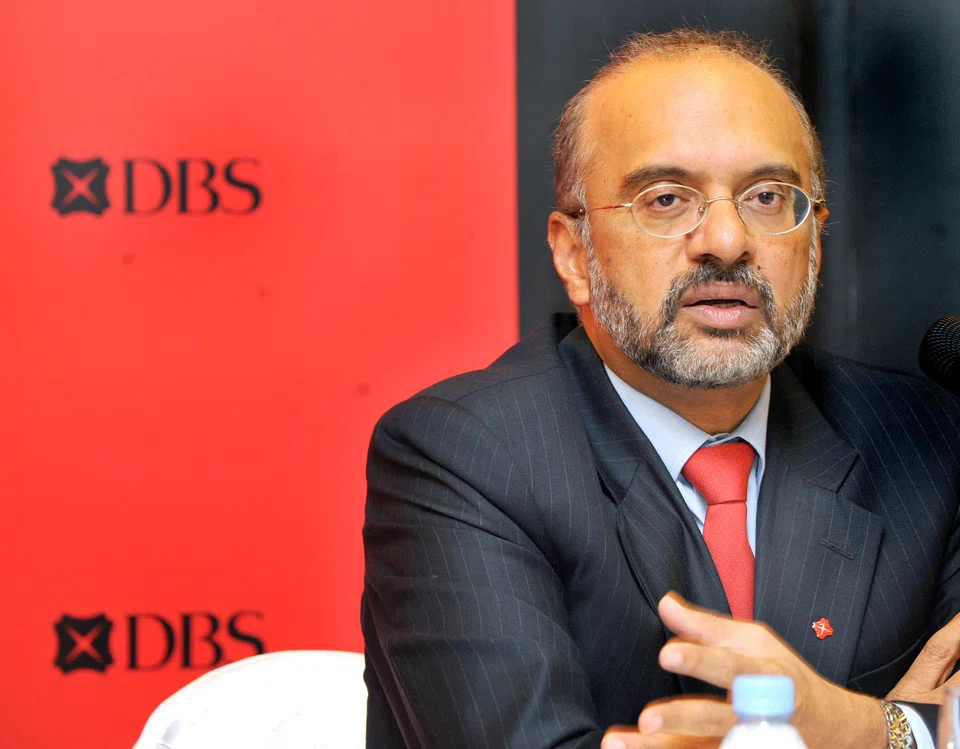
A more recent example was DBS , which suffered a disruption to its digital services on Mar 29 that lasted most of the day. At the company’s AGM just two days later, both CEO Piyush Gupta and chairman Peter Seah apologised and promised to set up a special committee to investigate what happened. Seah also bowed to shareholders in apology, while the CEO called the incident “sobering”, underscoring how sorry they were over this incident.
These examples demonstrate how candour and contrition can reassure shareholders. The company’s leaders may make mistakes, but their attitude will demonstrate that they are professional enough to recognise these errors and take corrective action to make things better.
Strategic plans and targets
Finally, AGMs are a great place to find out about management’s plans and strategies to grow the business. You should treat this as a once-a-year chance to pick the leaders’ brains.
Before the pandemic, Raffles Medical Group CEO Loo Choon Yong spoke about plans to expand further into China during the company’s AGM. He echoed this in an interview with CNBC in early 2020, in which he projected that revenue from China would eventually take up half of the group’s revenue.
At Mapletree Industrial Trust’s AGM, CEO Tham Kuo Wei conveyed management’s intention to raise the data centre share within the real estate investment trust’s portfolio (currently, it is at 56 per cent post-acquisition of a Japanese data centre), although no timeline on when this can be achieved was given.
Another useful reason to attend an AGM is to compare management’s promises with actual results. But to do so, you will have to attend several consecutive AGMs while closely observing the business. If you find out that management consistently over-promises but under-delivers, or fails to carry out promised initiatives, it could be time to part with the stock.
People behind the business
Ultimately, stocks are more than just prices jumping up and down on a screen. They represent businesses that sell goods and services. Allocating money to a stock means that you implicitly need to trust that the people running the business are competent and can make good capital deployment decisions. They should also be prudent stewards of shareholders’ capital.
AGMs help you find out more about management’s intentions for the business, how it hedges against risks, and its reasons for various corporate initiatives. Armed with the right questions and an inquisitive attitude, you can maximise your time at any AGM and emerge with additional knowledge that will help you become a smarter investor.
The writer owns shares of DBS, Boustead Singapore, Mapletree Industrial Trust and Raffles Medical Group. He is portfolio manager of The Smart Investor, a website that aims to help people invest smartly by providing investor education, stock commentary and market coverage.
TRENDING NOW

OCBC mobile, online banking services restored after Friday afternoon disruption

SGX CEO Loh Boon Chye to step down; succession planning under way

Waymo founder predicts ‘landslide’ robotaxi adoption in Singapore, driven by high car costs

Vietnam’s northern provinces, not Hanoi or Ho Chi Minh City, are powering near 10% GDP growth

