CIO CORNER

Investment-grade bonds are the next yield play

Investors should take the opportunity to switch from cash to high-quality credit. Deposit rates have likely peaked
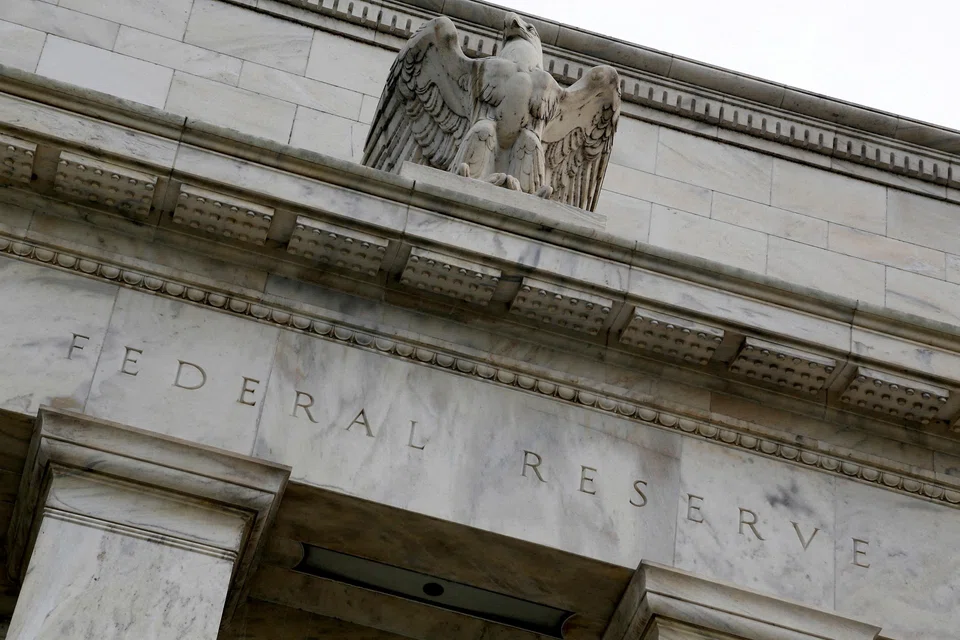
    • Fed tightening slows private money creation. But as long as deficit spending persists, money supply continues to grow in different forms.
    • Fed tightening slows private money creation. But as long as deficit spending persists, money supply continues to grow in different forms. PHOTO: REUTERS
    Published Tue, Nov 7, 2023 · 05:43 PM

    LAST year, policymakers embarked on one of the most aggressive rate-hiking cycles to deal with an inflation problem that the world had not seen in more than 40 years. Conventional wisdom would assume that high interest rates would fix the soaring levels of inflation. Tighter policy would deter economic activity; credit becomes more expensive for consumers to spend and companies to invest; and saving is incentivised.

    But these are not conventional times. The mechanisms above are largely effective in stymying private-sector credit creation.

    However, what if private-sector money creation was not primarily responsible for the inflation observed today? What if the supply side is more impacted, as geopolitical tensions impede the free flow of goods, labour and capital? What if demand was more fuelled by rates-insensitive deficit spending rather than private sector/household borrowing?

    A better solution for today’s inflation

    The above questions are rhetorical once we observe the large role played by fiscal policy in this post-pandemic inflation.

    Such inflation should be better addressed via a mix of austerity and diplomacy, yet interest rates continue to be the instrument of choice. This is perhaps because the Federal Reserve does not have the appropriate tools for deficit-driven inflation.

    Fed tightening works insofar as high rates slow the pace of private-money creation. But so long as deficit spending persists, money supply continues to grow in different forms, and hence inflation volatility remains. Rates may have to stay high for longer than investors expect, so that a slowdown in the private sector compensates for the stimulative deficits in the public sector.

    How should investors ride this period of high interest rates?

    Favour investment-grade credit

    As government spending “crowds out” private-sector demand for money, investors need to be positioned in credit issuers that have the financial health to tide over this period of high rates without running into liquidity risks. This favours high-quality investment-grade (IG) issuers at the margin due to two factors.

    Firstly, IG issuers have extended duration to a much larger degree, minimising exposure to rising rates. Corporate issuers took advantage of the zero-rates environment from 2020 to 2021 to lock in low funding costs for the long term. The average duration of IG issuers in the US peaked at as high as 8.8 years in 2021. This means that, on aggregate, these companies would not face refinancing strain in their bonds for much of the remainder of this decade.

    The same, however, cannot be assumed for high-yield (HY) markets. HY issuers have, on average, half the duration of IG issues, as investors prefer not to have long-duration exposure to junk risk. Moreover, these issuers did not meaningfully extend duration during the low-rate years of 2020 to 2021, implying that refinancing at much higher rates is a risk as we approach 2024-2025.

    Secondly, ratings agencies are already anticipating rising default rates in 2024. As Fed tightening aims to suppress the private sector to offset the stimulative deficits in the public sector, bank lending standards have consequently been tightened, hindering access to liquidity.

    The Commercial & Industrial loan standard survey – typically an accurate leading indicator of the default cycle – is already pointing to a much higher default rate in 12 months, in line with forecasts by credit ratings agencies. This again supports investor positioning in much higher-quality credit to avoid a turn in the credit environment.

    Stay with high-quality credit

    We continue to reiterate a high-quality bias for credit investors. We believe the rate-hiking cycle is nearing its end, which gives us confidence that headwinds for credit in the short end have abated. Investors should therefore take the opportunity to switch from cash to short-term credit, with the view that deposit rates have probably peaked.

    IG credit retains dual advantages of (a) stronger balance sheets to tide through an elevated-for-longer rates environment; and (b) a technical tailwind of diminishing issuance and supply. Should a slowdown become more material than anticipated, quality credit may even experience additional flight-to-quality demand.

    Stay cautious on HY credit, however, which could see spreads widen as defaults are expected to pick up come 2024.

    The writer is chief investment officer, DBS Bank