

Investment longevity: the secret behind Warren Buffett’s success
This requires avoiding unnecessary risks, not maximising portfolios for gains, but minimising for fatal downside risk
AT A charity dinner last month, the investor seated next to me gave a long soliloquy about his investment outlook and his portfolio, concluding with the proclamation that every investor should be “all in” on technology and artificial intelligence, and have no less than 50 per cent of their portfolio in Nvidia.
He was surprised that I did not ask any questions, and finally asked me what I thought.
“Good luck. Nvidia may not exist 20 years from now, so you better have an exit plan if things don’t go the way you expect,” I replied.
“I want the highest returns possible, don’t you?” he asked.
“No, I don’t want the highest return possible. I want the best return that can be sustained for the longest period of time.”
I added: “Half of all stocks eventually go bankrupt; 96 per cent underperform cash. By investing this way, you’re making a long-term bet based on what we see now – that Nvidia is in the special 4 per cent category of all stocks in history. You may well be right, but the odds are starkly against you.”
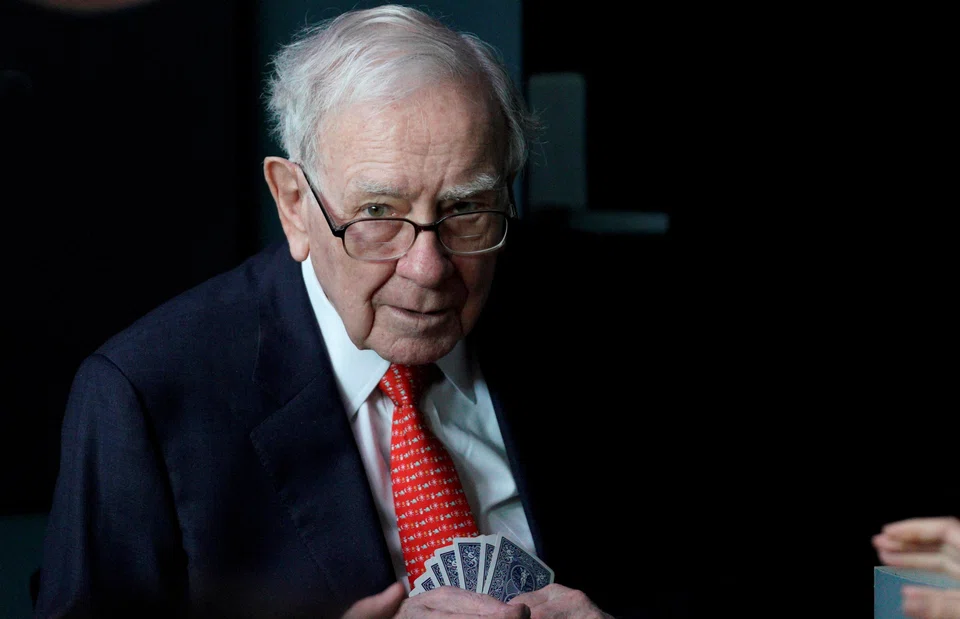
This conversation reminded me of Warren Buffett, widely seen as the most successful investor in history. With a net worth of over US$140 billion, even after making large charitable donations, there is no other investor that comes close.
Investment skill definitely played a part in this success – Berkshire Hathaway, Buffett’s investment vehicle, has gained 4,384,748 per cent since Buffett acquired it, compared with the S&P 500’s 31,223 per cent return. Berkshire just crossed the US$1 trillion market cap mark, the first non-technology company to do so.
But investment skill is not the primary reason for his success.
Over 98 per cent of his net worth was accumulated after the age of 65, when most people are contemplating retirement. The primary reason for his success is investment longevity, achieved by never interrupting the compounding of returns of his investment portfolio.
A rush to compound faster inevitably leads to taking too much risk. An investor may be successful in this in the short term, but with a long enough time horizon, it will inevitably lead to a fatal mistake.
Howard Marks, another billionaire investor, quotes the saying of the six-foot man who drowned crossing a river that was five feet deep on average. Investment survival on average is a useless concept; you must survive all the time, every single day. One critical mistake, one margin call, is all that is required to sink you.
Investment longevity requires avoiding unnecessary risks, not maximising portfolios for gains, but minimising for fatal downside risk.
Many investors start an investment portfolio only when they enter their prime earning years of their career, usually in their thirties as they break free from entry-level jobs and start to save more significant amounts of money.
Starting earlier makes an enormous difference. An extra $100,000 of net worth in your twenties can push your net worth from average to the top 5 per cent. To achieve the same jump in your thirties requires an additional $390,000. The earlier you start, the easier it is to make that jump.
In his HBO documentary from 2017, Buffett reminisces on the start of his investing career at the age of 10, by saving money from his newspaper delivery route. At 15, he had a net worth of US$6,000. By the age of 30, he had grown it to US$1 million after years of running a successful hedge fund, putting him in the 99.99th percentile of all people his age. He crossed the US$1 billion mark at 56 years of age.
What if he delayed his investment start by two decades, with the exact same track record? If we put him at age 30 in the 90th percentile, he would have had a net worth of US$34,000. Fast forward to today, he would be worth around US$1.5 billion. Still impressive, but not far ahead of the pack compared to many other successful investors. With this kind of result, we might never have even heard of Buffett.
The longevity principle that benefited Buffett can also be seen in individual stocks. What is the best performing stock over the last 100 years? It is not Berkshire, not Apple, Microsoft, Google, nor Amazon. In fact none of these stocks even make the top 30 of all-time best performing stocks. Even ChatGPT does not give you the correct answer.
The answer is Altria, formerly known as the tobacco company Philip Morris, where US$1 invested would be worth US$2.6 million today. A similar dollar invested in Berkshire (which ChatGPT picked as the best-performing stock in history) when Buffett took over would be worth US$43,848 today.
In annualised returns, Berkshire comes out slightly ahead, but Altria has been doing it for much longer. Time will tell whether the technology stock darlings of today will still be around 75 years from now, and whether they will beat Altria’s record. Chances are they will not.
Too many investors focus on the top-performing fund or the top-performing stock. Buffett and Charlie Munger had a third partner who is not well known, because he was in a hurry to get rich and suffered a fatal margin call in the bear market of the 1970s.
Buffett stayed patient and kept compounding consistently for 84 years, becoming the richest investor in history in the process. Wise investors can adopt the same principles for long-term success in their investments.
The writer is head of investments for Singapore at AlTi Tiedemann Global. The views are solely his, and do not reflect the views or positions of AlTi Tiedemann Global or its subsidiaries. This content should not be considered as financial advice.






