Investment noise versus useful information
Strategise by studying financial history, applying it to the current environment, and coming up with an educated forecast of what to expect in the future by putting a realistic probability on it
A “MUST read” e-mail hit my inbox, as it does every year. It contained the views of a fund manager who achieved notoriety for his correct call on the 2008 financial crisis. This commentary arrives like clockwork yearly from the same client. The views are well-articulated and thought-out, with plenty of data and charts outlining the author’s conclusion. In many cases, they are also entertaining, with interesting stories and analogies.
There is only one problem: The investment outlook has been wrong for 15 consecutive years. This fund manager maintained his negative stance on the stock markets since 2007, refusing to abandon the view that made him famous. His fund’s performance massively outperformed in 2008, but has lost two-thirds of its value from 2007, while global equities gained 249 per cent including dividends.
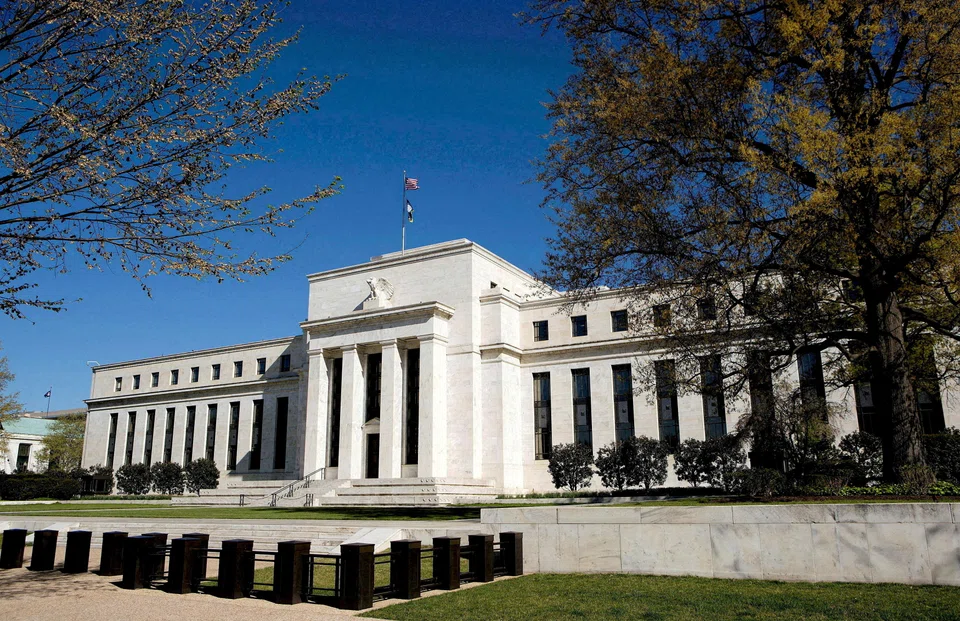
The most recent outlook argued that Fed rate cuts are often a precursor to negative stock market returns, concluding (as he has done every year since 2009) that valuations are unsustainable and that the current scenario now resembles the period before the 1930 depression. I stopped reading.
The fund manager’s analysis is correct. Interest rate cuts predominantly occur before bear markets. I have done the same analysis. In the last 60 years, the average change in S&P 500 earnings 12 months after the first cut was minus 9.7 per cent. Stock markets follow earnings, and on average made final lows of minus 23 per cent, 213 days after the first rate cut.
Further analysis from financial planner Strategas showed that we had positive earnings growth only two times: 1981 and 1995.
The prevailing narrative by analysts is that the current environment most resembles the 1995 soft-landing scenario, which led to further highs in equities.
History suggests investors should be wary of rate cuts. But currently markets are cheering them, with the strongest performance during a US election year in recent history. Are all these views useful to an investor?
The most common question posed to any investment professional is: What do you think will happen to markets/currencies/economy/a specific stock/etc? The questioner wants to hear something like: “A rate cut is positive for stocks since it engineers a soft landing, so we see a further 10 per cent upside until the end of the year.” This would make people more confident about their current positioning. However, every person you ask will have a different answer.
The best answer I ever heard to this question was from a top hedge fund macro trader: “Nobody knows. I have a strong opinion on the direction of markets based on a deep analysis of historical data, tempered by the differences in the current situation. But it is weakly held, as the current situation may change. Such a change can cause me to completely reverse my view. And since you will not know when that may happen, you should not incorporate my view into your investments. You should have a set of guidelines to form your own views, without needing to rely on what anyone else says.”
Everyone’s forecast is nothing more than today’s facts adjusted by a story about tomorrow. More fiction has been written in Excel than in Word. Everyone picks their own story: either what they want to believe will happen, or what they think makes the most sense.
Forecasts would be much more useful if they came with a warning label that assigned a probability to it. I remember at the end of 2022 an analysis posted on Bloomberg that put the probability of recession in 2023 at 100 per cent, because leading economic indicators had never been this negative this long without a recession. The recession never came. We all prefer certainty and conviction in one’s investment views, but in this business nothing is ever 100 per cent, and nothing is zero per cent.
The upcoming US presidential election is another frequently discussed topic. The more reliable polls put Republican candidate Donald Trump slightly ahead. Investors who itch to trade are shown baskets of stocks that may do well under Trump, versus ones that would do well under the Democrat candidate and current vice-president, Kamala Harris. What is the probability of a Trump win? I would guess around 55 per cent. Is that accurate? Possibly. Is it useful? Probably not.
What about last month’s interest rate cut in the US? Much ink has been spilled on whether the Federal Reserve would cut 25 or 50 basis points. It was half a per cent, and stock markets cheered. The 1995 playbook looks to be unfolding according to schedule.
Was all the attention paid by investors reading the opinions on what the Fed would do useful? Think back now on any time in the past where any Fed decision has made a difference to you. They all likely seem inconsequential now. In time, this one too will fade.
To take another example, consider China’s stimulus announcement at the end of September. The prevailing narrative was that China’s real estate debt problem was too deep, rendering the stock market uninvestable. Significant stimulus would be needed by the government, but they repeatedly failed to deliver.
The stimulus finally came, causing mainland China and Hong Kong stock markets to rally by more than 20 per cent in just a few days. Hong Kong is now this year’s top performing stock market. Despite this, the prevailing view post-stimulus announcement seems to be that the actions taken by the China central bank are insufficient, and that they do not compare to Europe’s “whatever it takes” bazooka moment. But Europe was facing an existential crisis with the risk of a eurozone breakup. China’s debt problems are significant, but not existential.
Instead of being confused by all these conflicting opinions, it is better to fall back on a small number of investment truisms. One that applies here is that bull markets are always born in an environment of deep scepticism. Think about former Federal Reserve chair Ben Bernanke’s widely ridiculed “economic green shoots” comment in 2009, and the doubt during the post-Covid rally while economies remained closed.
What about the outlook until the end of the year, especially with the risks of the most divisive US presidential election in recent history – the results of which will be extremely close and likely to be contested by the loser. Investors cannot be faulted for being positioned more conservatively for this risk. And yet stock markets in US, Germany, Italy, Spain and Australia are all at all-time highs. Most other countries are near their all-time highs, and mainland China and Hong Kong have started to join the party. Despite the escalating conflict in the Middle East, oil prices are near multi-year lows.
Another investment truism: Look at markets’ actual price action, not how you think they should be acting.
I decided a year-and-a-half ago that reading research, opinions and views about the future was not only not useful, but it was also actively reducing investment performance. Instead, I decided to fall back on a small number of investment market truisms that have stood the test of time, and the views of a very small number of writers that have consistently produced positive real-world results.
The next time you hear a forecast/story about the future for any investment, you may be better off not paying too much heed to it. A better strategy would be studying financial history, applying it to the current environment, and coming up with an educated forecast of what to expect in the future by putting a realistic probability on it.
Anything less than 70 to 80 per cent confidence level is not worth acting upon, and investors would be better off sticking to a good well-planned investment strategy.
The writer is head of investments for Singapore at AlTi Tiedemann Global. The views are solely his, and do not reflect the views or positions of AlTi Tiedemann Global or its subsidiaries. This content should not be considered as financial advice.