

Investors need a crystal ball for risk, not returns
Instead of asking what assets to invest in, they would be better off learning about the seismic shifts that could turn into big risks in the future
“LEO, what do you think of this CoCo?”
Like clockwork, every few weeks for the last decade, one of our clients would forward an e-mail recommendation from a private bank on the newest subordinated Additional Tier-1 (AT1) issue. CoCos are contingent convertibles, which qualify as AT1 capital. As it is frequently issued, there is little wonder that CoCos – a new hybrid instrument created in the aftermath of the 2008 great financial crisis – have ballooned to over US$250 billion.
My answer was always the same: “Don’t buy it. You’re not getting paid for the risk.” Why would you invest in a security whose sole reason for existence is to provide a source of bank equity in times of crisis at investors’ expense – especially since by their nature banks tend to fail in a financial crisis? And all this risk for a 2 per cent pick-up in yield?
Why is anyone surprised that some investors lost their investment the first time CoCos were stress-tested?
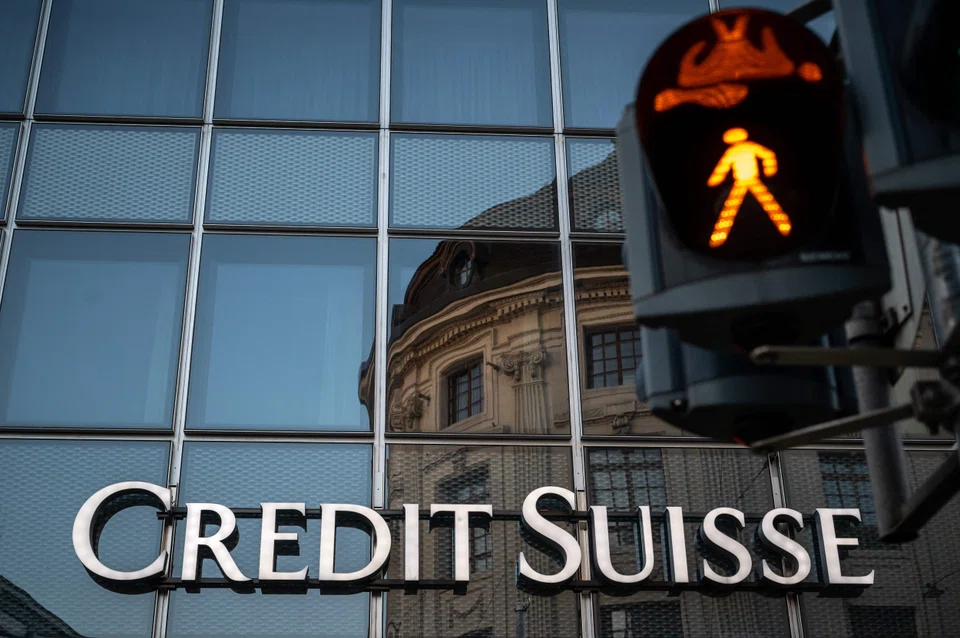
Now that the Credit Suisse AT1 investors have been wiped out overnight, some are complaining about being ranked below equity holders. The common equity investors in Credit Suisse aren’t a happy bunch either as they have been left with massive losses of over 90 per cent – a fate not materially different from that of the AT1 investors.
Yet the language was clearly stated in all the documentation and the marketing presentations that Credit Suisse did when they pitched their AT1s to investors. While I have yet to meet an individual investor who ever read an investment prospectus, it is inexcusable for a professional investor not to have known the underlying risks.
Credit Suisse’s AT1 bonds stated that “in the situation of a write-down event, the full principal amount will be written down to zero, holders will have irrevocably waived their right to the repayment of the notes, and the notes will be permanently cancelled’’. It doesn’t get any clearer than that.
For years, bank analysts bemoaned the 0 per cent interest rates we’ve seen for 15 years, citing that banks need higher interest rates to make money. Unfortunately, some banks also tend to blow up when interest rates move up sharply. Even with all the introspection that the regulators are conducting – as they do after every banking crisis – there is simply no way to regulate this risk.
The global systemically important banks (G-SIB) are fragile. Total G-SIB balance sheet assets come to US$64 trillion, but are supported by only US$4.4 trillion of balance sheet equity, giving a ratio of assets to equity of 14.4 times.
This risk is not evenly spread around the world. The eurozone’s seven G-SIBs average 19.7 times; Japan’s three G-SIBs are at 23 times; and at the lower end of the scale there are the US’ eight G-SIBs averaging 11.4 times; and China’s four banks at 12 times.
If 15 years of zero interest rates caused all these problems in the US and Europe, imagine the potential hidden bombs in Japan’s financial system – which has endured 30 years of zero rates – where banks have the highest leverage. Again, why would anyone invest in AT1s when the express purpose of these instruments is to provide banks with cheap financing to shore up their balance sheet in the next banking crisis – at the expense of investors?
While I believe that Switzerland’s decision to wipe out AT1 holders at the expense of common shareholders sounded the death knell for AT1s, some analysts take the opposite view, saying that the sell-off now makes AT1s attractive. While there are some more distressed CoCos that approach double-digit yields, I fail to see how an average of 3 per cent to 4 per cent additional yield compensates investors for the risk of a total, permanent loss in the next banking crisis. One of my colleagues put it well: “You’d have to be CoConuts to buy CoCos.”
However, the discussion on whether AT1s are now a buy misses the real point. The first question I get when people find out what I do is ask me what they should buy now. A much better question would be where the biggest risks are. Within a well-diversified portfolio, avoid the big risks that cause permanent loss; and the upside will take care of itself. This is what I’d like to devote the rest of this article to – the seismic shifts we are seeing in the world which will become the big risks for the future.
For decades, Switzerland has been seen as a haven of legal certainty for investors. In the Credit Suisse bailout, both shareholder rights and corporate seniority have been overridden. The bank could have made the determination that capital ratios were triggered and then forced a writedown. Instead, because of the urgency involved and at the insistence of the Swiss regulators, it skipped the trigger. The takeover was done over a weekend by skipping a shareholder vote, and surely lawsuits will follow.
The rule of law and protection of individual rights were supposed to be sacrosanct in Western economies. It was the reason why the West attracted capital from all around the world, especially from countries that were seen to lack the same levels of investor protection.
However, Western democracies have been systemically undermining these advantages – the most flagrant events happened in the last year, not just in financial markets but in politics as well.
Recently, French President Emmanuel Macron sought to raise the country’s retirement age from 62 to 64, but the motion faced last-minute dissention among its National Assembly members. Rather than face a political loss, the government rammed the measure through without a vote, using a procedural trick offered by article 49.3 of France’s constitution.
On top of the dissension within the French government, this was a deeply unpopular decision among French voters, and citizens protested on the streets. Bypassing the vote has been used multiple times in the past after the loophole was added in a 1958 constitution rewrite to keep the government working during times of gridlock. It’s one thing to use this to pass a budget, but quite another to push through major reform opposed by most French people. The motion passed without parliamentary majority.
Skipping the shareholder vote in the forced takeover/bailout of Credit Suisse may well be the straw that breaks the camel’s back in terms of the cosy relationship of the last 80 years, where countries with a trade surplus (primarily China and the Middle East) recycled the excess into Western financial markets (primarily the US) – thus perpetuating US hegemony and the greenback’s status as the global reserve currency.
Middle-East countries supplied large amounts of capital to Western banks during the 2008 financial crisis, as China created significant amounts of stimulus. Six months ago, the Saudi National Bank bought a 9.9 per cent stake in Credit Suisse and ended up suffering losses of over 80 per cent with the takeover, without being offered a say in the matter.
Would the Swiss government have acted differently if the investor was not Saudi Arabia, but Germany? You can be sure that in the next financial crisis there will be much less, if any, capital from the Middle East to bail out the Western banks.
In Western democracies, individual rights have become subordinated to the greater good. Is this so different from China’s common prosperity drive?
The weaponisation of the US dollar against Russia will hasten this shift of global money flows away from Western economies, resulting in the end of many aspects of finance that have persisted for all our lives.
Investors can continue to debate whether to invest in AT1 bonds. They may be better served in thinking about the bigger picture where the real risks are:
• Wars are inflationary. The Russia-Ukraine war has no end in sight, since both countries view the conflict as an existential fight. A nuclear power fighting an existential war should not be taken lightly. Worse still, the situation could become a global conflict, should North Korea send troops to help Russia. The aftermath of large wars leads to loss in value of financial assets and currencies (for everyone involved in the short term, and for the losing country in the long term), and favours investment in hard assets.
• The weaponisation of the US dollar has set in process the end of global greenback hegemony. What happens when capital-surplus countries stop recycling their surplus into Western assets?
• The collapse of Credit Suisse challenges the key foundations of the attractiveness of investments in the Western world: the rule of law and protection of individual property rights. The next banking crisis will require a completely different solution which regulators are not yet prepared for.
• The days of easy money are over. Investors who have never seen the impact of high interest rates are in for a shock. They should study the history of inflationary decades.
The writer is co-founder and chief investment officer of AL Wealth Partners, an independent Singapore-based company providing investment and fund management services to endowments and family offices, and wealth advisory services.
TRENDING NOW

Olivia Lum, ex-CFO not giving evidence in their Hyflux trial

Bank on AI-resilient Singapore property via deep-value listed property groups

Positive pivot or premature? Analysts split on Keppel Reit’s S$610.9 million buy

Once staunchly pro-China, Malaysian Chinese businesses are now distancing themselves from Beijing

