MIND THE GAP

Lessons from the long run: inflation, stagflation and commodities

Commodities have low correlations with equities and bonds, and can serve to hedge against inflation. But can you stomach the potentially long and deep drawdowns?

Genevieve Cua
Genevieve Cua

Published Mon, Mar 6, 2023 · 05:50 AM
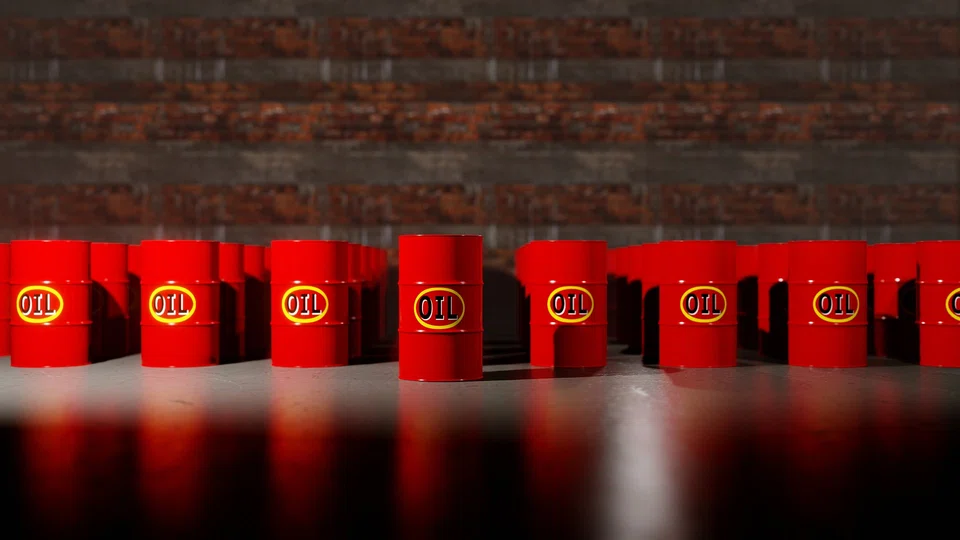
    • An exposure to commodity futures could help to diversify a portfolio and hedge against inflation. But for production-weighted ETFs investing in futures contracts, energy has by far the largest weight of typically over 50 per cent.
    • An exposure to commodity futures could help to diversify a portfolio and hedge against inflation. But for production-weighted ETFs investing in futures contracts, energy has by far the largest weight of typically over 50 per cent. Pixabay

    WE are all familiar with the standard caveat for investments – that the past isn’t predictive of the future. But from the perspective of more than a century of global market data, are there insights that investors can glean?

    Credit Suisse Global Investment Returns Yearbook, published annually, singles out a particular area of focus in every edition. For its 15th edition published recently, professors Elroy Dimson, Paul Marsh and Dr Mike Staunton of the London Business School looked into two areas of particular resonance for investors today: commodities and inflation.

    How well do the various asset classes – equities, fixed income, and commodities in particular – serve as hedges against inflation? What about a stagflationary environment? Some patterns may well surprise you.

    Here are some highlights that I’ve singled out.

    Persistence of inflation

    Inflation has been very benign in the first 21 years of this century, an average of just 1.4 per cent in 21 markets. As the Yearbook points out, inflation never exceeded 4 per cent and turned negative during the Global Financial Crisis. But the long period of low and declining inflation can breed complacency. By the time the US Federal Reserve took action in March 2022 to raise interest rates, US inflation had risen from 0.3 to 7 per cent. By end-2022, average inflation across 21 countries with continuous data over 123 years was 8 per cent.

    While there are recent signs that US inflation may have peaked – it came in at 6.4 per cent in January, compared to a year ago – historical data suggests inflation is typically persistent.

    The Yearbook cites an argument by Arnott and Shakernia, who looked into inflation persistence in 14 developed economies between 1970 and 2022. They found that reverting from 4 to 3 per cent inflation is “easy”; “hard” from 6 per cent and “very hard” from 8 per cent or more. When inflation is higher than 8 per cent, it may take six to 20 years, with a median of over 20 years, to revert to 3 per cent.

    Inflation and asset returns

    There is little question that inflation is bad for bonds, which typically have fixed coupons. Not only does inflation erode the purchasing power of the coupons, but when interest rates rise to counter inflation, those coupons also need to be discounted at a higher rate. This causes bond prices to fall, as we’ve seen starkly in 2022.

    But what about equities? Most investors, including strategists, believe equities can hedge against inflation. But based on the Yearbook’s data, high inflation impaired equities’ performance, and deflation led to poorer returns from equities than government bonds. The correlation between real equity returns and inflation was negative – that is, equities were a poor hedge against inflation.

    “It’s widely believed that stocks must be a good hedge against inflation to the extent that they have had long-run returns that were ahead of inflation. However, their high ex-post return is better explained as a large equity risk premium. It’s important to distinguish (between) beating inflation and hedging against inflation,” says the Yearbook.

    Stagflation: the bogeyman

    To examine the impact of inflation, the authors looked into asset returns against three scenarios of GDP growth and inflation (lower, middling and higher economic growth/inflation). For both equities and bonds, the best scenario, not surprisingly, is higher growth and lower inflation; equities in that scenario returned 15.1 per cent and bonds 8.8 per cent.

    In times of stagflation, real equity returns averaged minus 4.7 per cent, and the average real bond return was minus 9 per cent. “These results reinforce the fact that inflation is bad for both stocks and bonds. They also show why investors are right to fear stagflation.”

    Commodities: many caveats

    Commodities were the star asset class for two years running. In 2021, the S&P GSCI TR Index returned 42 per cent, and nearly 26 per cent in 2022, a year when stocks and bonds both tanked. The iShares exchange-traded fund (ETF) that tracks the index returned 24 per cent in 2022. Over three years its annualised return was 9.3 per cent, but return over 10 years was minus 4.27 per cent.

    But the Yearbook’s long-run data shows that investing in physical commodities (based on spot prices) would not have beaten inflation. The average real return from picking a commodity at random was minus 0.49 per cent. The annualised return from gold was a tad higher at 0.76 per cent; it outperformed Treasury bills by 0.3 per cent. But gold has been far more volatile. Its standard deviation of 17 per cent a year was similar to the world equity index.

    Gold also fared poorly against stocks and bonds. An initial US$1 investment in gold in 1900 would have grown to US$2.50 by end-2022. The terminal value of US$1 invested in US bonds was US$7.80, and US stocks grew to US$2,024.

    Investing in physical commodities is, of course, impractical and costly. Commodity futures may be an alternative, but there are still challenges. The Yearbook finds that an equally weighted portfolio of commodity futures contracts generated an annualised excess return over Treasury bills of over 3 per cent.

    Commodities also serve as a diversifier in portfolios; their correlation with equities is low and correlation with bonds is negative. They are also an inflation hedge, unlike stocks and bonds. In periods of above-average inflation, commodity futures generated excess return of 11 per cent above Treasury bills, and minus 0.6 per cent in periods of below-average inflation.

    Commodity drawdowns: can you stomach them?

    There are ETFs offering exposure to commodity futures. But for investors, one of the challenges is that historical drawdowns from the asset class can be long and deep.

    Prof Marsh said in a recent press briefing: “You don’t get a free lunch … You get periods of deep and long drawdowns but stocks and all risky assets also have this problem of long periods where you are underwater.” Many investors, he said, went into commodities after the publication of an influential paper in 2006, which documented an annualised risk premium of 4.2 per cent from an equally weighted index of commodity futures. This spurred the launch of ETFs in commodity futures.

    But shortly after, the commodities market fell severely between 2008 and 2021. “And then a lot of those investors lost faith, just as the futures would have been really useful to them, as we entered the recent period of higher inflation.”

    In any case, for a balanced long-term investor, say in a 60-40 (bond/equity) portfolio, the optimal allocation into commodities may be just 3 per cent, assuming an expected excess return of 1 per cent. Prof Marsh also cautions that investors considering a commodity futures ETF should scrutinise the weights of the index that the ETF tracks. Production-weighted indexes would have a disproportionate weighting to energy futures, for instance, which would skew the ETF’s risk and return profile.