Lloyd’s Singapore hub to write over US$1 billion in premiums in 2024
Senior executive is anticipating demand for insurance to grow in Apac, as wealth increases in much of region and people realise the need for more protection

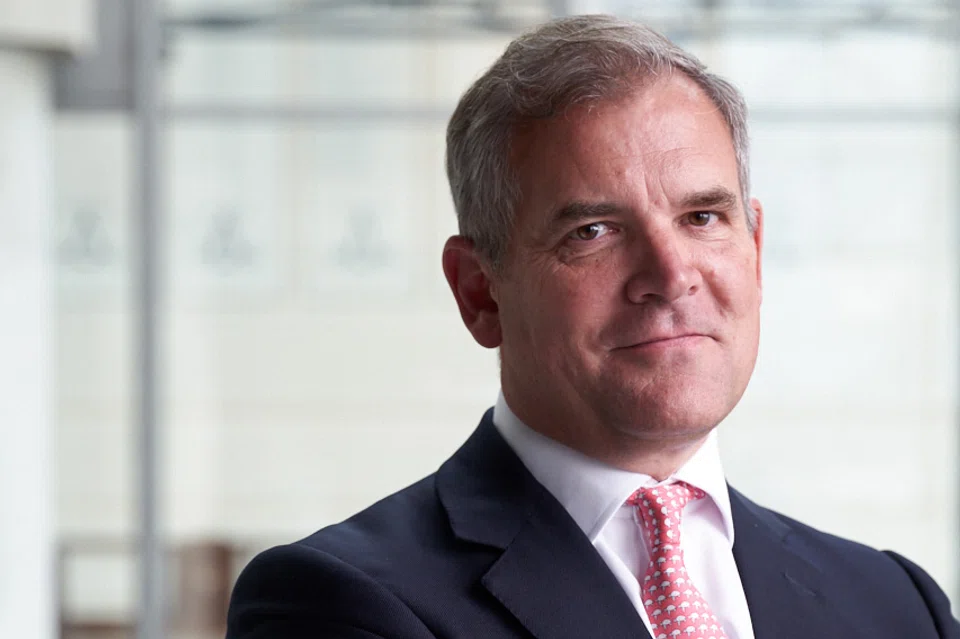
LLOYD’S of London’s Singapore hub will write more than US$1 billion of business this year, as growing wealth levels help to raise awareness of the need for insurance, said Lloyd’s chairman Bruce Carnegie-Brown.
Gross premiums across Lloyd’s business tend to rise alongside global gross domestic product growth. In the last two years, Lloyd’s gross premiums have grown at a more rapid clip than the global GDP, at around 11 per cent per annum.
“One of the features of developing economies around the world is that they tend to be underinsured; that remains true in much of the Asia-Pacific (Apac). But this is the most populous region in the world, and of course economic growth in Asia is the fastest in the world...
“Wealth is growing rapidly and where there is wealth, people need protection. We anticipate demand for insurance to continue to rise,” noted Carnegie-Brown.
Lloyd’s Asia is the largest underwriting centre outside London, with Singapore serving as a hub for the Apac region. In 2022, Lloyd’s Asia reported gross premium of US$897 million, with 17 per cent from Australia/New Zealand and 13 per cent from Singapore.
Apac contributes around 10 per cent to Lloyd’s global premium; about US$6.7 billion of gross premium was written across the region in 2023.
Seeking to address risks
Lloyd’s is an insurance marketplace comprising financial backers grouped into syndicates, which pool and spread risks.
Carnegie-Brown said: “I think the obligation of the insurance industry is to do a better job of raising awareness of the value that insurance provides. If more people buy cover, the price of cover would come down because, by definition, risks are more broadly shared.”
Systemic risks, which include cyber, pandemic and climate risks, are concerns that Lloyd’s seeks to address partly through research and innovation.
A major initiative is Lloyd’s Lab, launched in 2018 to foster innovation in insurtech. In 2023, the teams that were part of the platform’s 11th cohort had dedicated themes for the Apac region, focusing on solutions to address extreme climate change, cyberthreats and promote sustainable growth in the insurance industry.
Among the alumni of Lloyd’s Lab is Singapore-based Protos Labs, an insurtech that seeks to address the high costs of cyberpremiums through advanced risk analytics.
Cybercover is Lloyd’s fastest-growing business, where it has a 25 per cent market share, added Carnegie-Brown. “Interestingly, over 80 per cent of cybercover is bought by North American companies. So the rest of the world is less aware of the risks, and certainly shows less inclination to buy insurance. Asia, in that respect, is not much different from Europe.”
Globally, he expects cyberinsurance premiums to total around US$14 billion in 2024.
A recent development, he said, is to separate the pricing of cover for state-sponsored cyberactivity from “regular or business-as-usual cyberactivity”.
“We did that for two reasons. One, smaller enterprises are less likely to be prone to a state-sponsored attack. They shouldn’t have to pay a premium for a risk they don’t need cover for. Non-state-sponsored risks that we sell should remain much more affordable and available to customers...
“Second, as cyber develops as a risk class, it’s important for us to put the right amount of capital against the risks. By turning cyber into two classes of business, we can capitalise it appropriately.”
On climate risk, he noted that as policies are typically renewed annually, the risk can be repriced every year. “This works well if the development is linear. But if it’s exponential, there’s a risk you’re always behind the curve. That would be the biggest concern for the industry – that something exponential is happening in terms of the cumulative effects of climate-related activity because of global warming.”
He pointed out that weather-related events have become more frequent and severe. “If you step back and look at the purpose of insurance, it’s really to cover unexpected loss. If the loss becomes expected, then at some point the premium and claim are the same number, and the model breaks down...
“Insurance retreats as things become more expected. That’s not good for our customers. The conversations we have with governments are about building more resilience in countries around the world – so that when these things strike, the expected losses are not significant and we can price for the more extreme events.”
Good performance
Lloyd’s reported a strong set of interim results for the six months ending in June. Pre-tax profits rose 26 per cent to £4.9 billion (S$8.4 billion).
In the results statement, chief executive John Neal said that market conditions remained favourable through the first half of 2024, “driven by consistent underwriting discipline and against a backdrop of below-average major losses”.
He added: “We continue to see positive trends across a number of lines, with property classes generally well-priced, and some attention and focus still needed on casualty classes. As a whole, we’re seeing ‘super cycle’ conditions based on a protracted period of stable capital and underwriting conditions.”
Carnegie-Brown noted that market conditions have improved, after five years of premium rises. “Most insurers would say that pricing is adequate across most of their product lines today. As a result, the financial performance of the insurance industry has improved quite a bit.”
Inflation is typically negative for insurers as replacement costs rise. “The interest we earn on the money we hold to pay claims is a sort of hedge... In more recent years, although rates have moved up from zero to 3, 4 or 5 per cent in some cases, inflation was in double digits in some countries. So, the hedge effects of interest rates against inflation risk in insurance was inadequate...
“In each quarter for the last five years, we’ve seen average price appreciation in the Lloyd’s market across the portfolio, in aggregate over time. This was off the back of some very low premiums. That has now flattened out. Prices are no longer rising. Selectively, in some areas, they’ve fallen as new capacity has come in.”