As market cycles shorten, scenario modelling is key to action and profits: Mercer chief strategist
Genevieve Cua
Genevieve Cua

Published Tue, Dec 12, 2023 · 06:38 PM
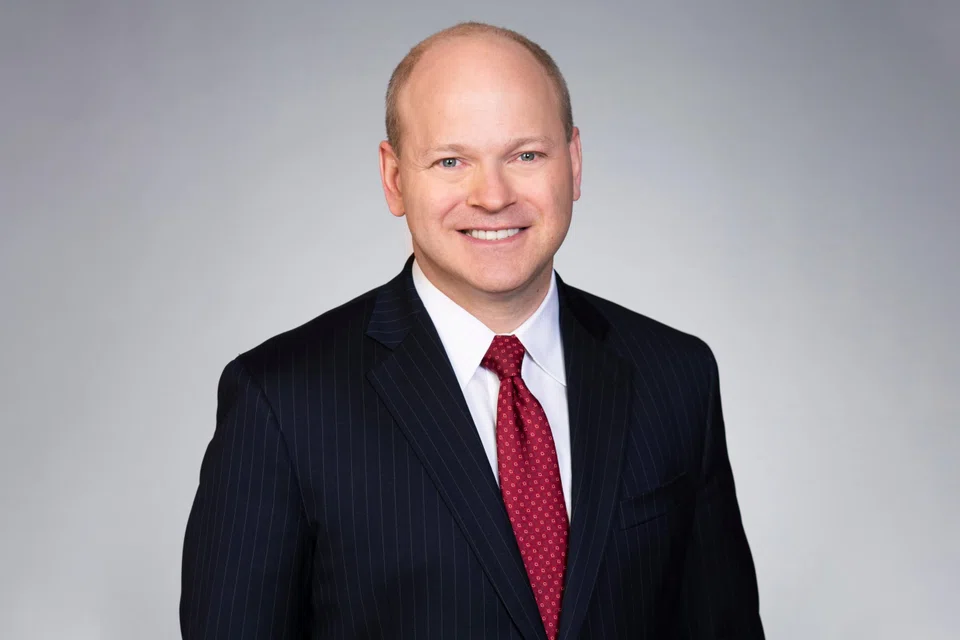
    • Mercer chief investment strategist Rich Nuzum says the window to invest profitably in a crisis has shortened from months during the 2008 global financial crisis to just days now.
    • Mercer chief investment strategist Rich Nuzum says the window to invest profitably in a crisis has shortened from months during the 2008 global financial crisis to just days now. PHOTO: MERCER

    SPEED is of the essence if you are to profit from investing in a crisis. The window of opportunity has narrowed significantly since 2008, said Rich Nuzum, Mercer’s executive director of investments and global chief investment strategist.

    During the 2008 global financial crisis, investors had two to six months to pick up distressed and high-yield debt, and private market assets in the secondary market.

    “With the Covid drawdown, we had two to six weeks; with the gilts crisis, two to four days. And with the US mini-banking crisis, it was also days, not weeks.”

    Mercer clients, who are asset owners and institutions, run through crisis scenarios to model likely behaviours of markets. “We spend a lot of time with our clients to get ready for the next crisis, to enable them to seize opportunities,” said Nuzum. “We regularly go through war-games scenarios… This helps to build muscle memory and governance so that when a crisis hits, even if it doesn’t fit your fact pattern, you’re ready to act.”

    Mercer boasted some US$16.2 trillion in assets under advisement as at the end of 2022, and US$354 billion under management at end-March 2023. Clients who are more opportunistic take action themselves; others outsource portfolio management to Mercer.

    Currently, Mercer clients grapple with five potential “shock” scenarios, all of which are known risks. One is the Magnificent 7’s outsized weight in markets. A crash in their stock prices would likely also have an outsized impact on the downside. The seven stocks – Apple, Microsoft, Alphabet, Amazon, Meta Platforms, Nvidia and Tesla – collectively comprise around 29 per cent of the S&P 500 and account for the lion’s share of the index’s return.

    Some sophisticated investors are taking money off the table, said Nuzum. “Some asset owners look at the phenomenon and say – even though they are great companies with competitive moats and they’re important to the global economy – ‘we’re going to take a little risk off the table because we don’t want to participate if they come back to earth’. Some others say, ‘this time is different’…”

    The second crisis scenario is a snowballing conflict in the Middle East beyond the Gaza war. A key risk is that Iran will be drawn into conflict with Israel or the US, and the Persian Gulf shuts down for oil shipments. “That would cause oil prices to skyrocket, and possibly even cause a shortage globally,” said Nuzum. “That would be a stagflation shock to the economy. A possible widening of the conflict to Iran is not a remote possibility… This is hard to hedge because oil is an important commodity.”

    The third risk scenario is conflict breaking out in the Taiwan Straits, which could arise by accident. “Taiwan is the main source of advanced semiconductors,” noted Nuzum. “That type of shock would be bigger than the impact of Russia invading Ukraine.”

    Fourth is that tension between China and US escalates, and ends in a mutual freezing out of entrepreneurial and tech talent from either market. “If the Chinese and US scientific community can’t collaborate around the development and commercialisation of advanced technologies, it will be bad for long term investment returns,” said Nuzum.

    He added that a recent meeting between the US government and venture capital companies discussed the practicalities of limiting the flow of 5G technologies towards China. “What the venture capitalists said to the US government was this: ‘You’re asking us not to share information with Chinese nationals, who include our employees. And 20 to 60 per cent of cutting-edge academic research is done by Chinese nationals. If you’re in a race, the winning strategy is to run faster, not slow the other down.’

    “We’ve had the benefit of 20 years of Chinese entrepreneurial and scientific talent. To bifurcate because of concerns around security and geopolitics – that’s not good for the world economy. It’s a stagflation shock.”

    The fifth risk is a cyberattack causing Internet outages globally and wreaking widespread damage. “There’s an arms race around corporations and governments trying to defend themselves against the hacker community,” said Nuzum.

    Meanwhile, a weaker Chinese economy opens up opportunities. Valuations of Chinese stocks, for instance, are currently at attractive levels. Tension between China and the US also open up the playing field for non-American investors in China, even as it sidelines US companies.

    “My Middle Eastern clients love it because they look for private market deals in China,” said Nuzum. “They’re making infrastructure, private equity and private credit investments in China… They feel they have the world’s second-largest economy – valuations are low, the diversification potential is huge. And there are fewer Westerners competing for deals.”

    He added that correlations between stocks and bonds remain positive. “When the concern is about inflation and monetary policy to rein in inflation, correlations will be positive. We’re still in that regime.” Investors continue to pile into alternative investments for diversification benefits.

    “Alternatives diversify against the Magnificent 7 and gives investors more exposure to assets in emerging frontier markets. It allows them to lock in not just 2.5 per cent real return, but another 2 to 3 per cent on top of that.”

    These returns can be reaped from private debt, thanks to higher bond yields. “That wasn’t available two to three years ago when assets were priced off a zero interest rate. The whole capital market set is better today. Bonds are back but most investors will use other asset classes to get a higher return,” said Nuzum.

    Retail investors who are keen on alternatives, however, should watch the fees. “We think the underlying asset class starts with a premium of about 3 per cent against the public market equivalent. But when fees get above 3 per cent, all that is eaten up,” he noted.

    With the trend of companies staying private longer, sophisticated investors are hedging their portfolios via stakes in innovative private companies. “Innovation is available in private markets. Unicorns and decacorns aren’t rare anymore… Sophisticated investors say we have to own the disruptors to hedge the risk that we get disrupted.” Unicorns are companies that achieve market valuation of at least US$1 billion; decacorns have achieved US$10 billion in valuation.

    He concluded: “I wish retail investors had better access to private markets because they are structurally underweight innovation. It’s unfair that institutions and family offices get to play there.”