

Modi’s third term can still be lucky for Indian stocks
Election results may have dampened some of the euphoria around Indian equities, but the fundamental drivers of India’s growth remain intact. Sustained progress will come down to execution – and job creation.
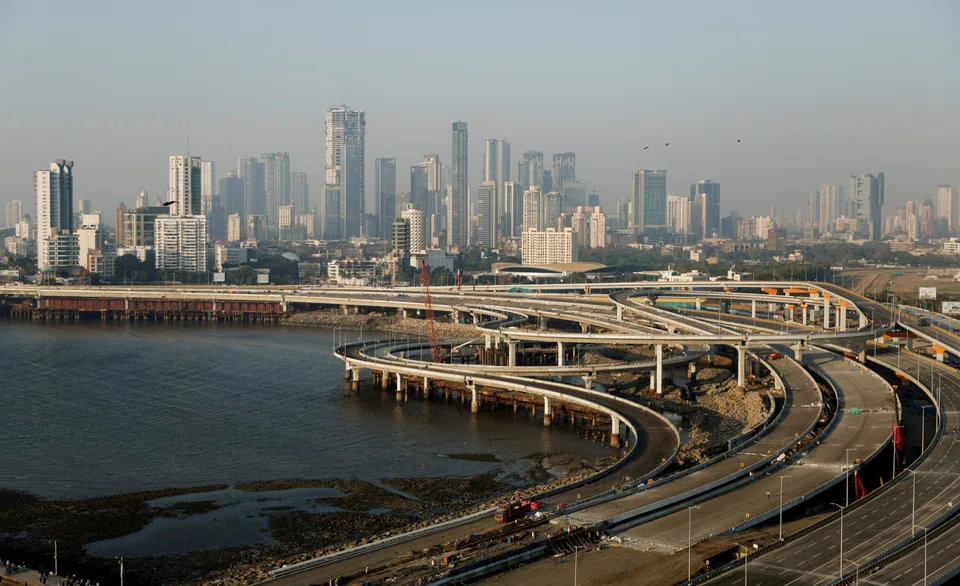
INDIA’S newly re-elected Prime Minister Narendra Modi has overseen a decade of economic growth that has lifted millions of Indians into the middle classes and driven a threefold surge in the country’s main stock index.
But the Bharatiya Janata Party’s unexpectedly narrow victory has led equity investors to question whether a historic third term for Modi will be just as lucky for Indian stocks. The BSE Sensex tumbled by as much as 6,200 points at one point as results emerged on Jun 4, closing down 4,390 for a 5.74 per cent loss on the day. Three days later, it was back above the pre-election benchmark, going on to mark another all-time high towards the end of June. According to Bloomberg data, as at Jun 21, global funds had been net buyers of Indian equities for 10 days straight, adding a cumulative US$3.4 billion.
After such dramatic price swings, it seems highly likely that Modi’s third term will coincide with a more volatile period for Indian stocks than his first two. The market’s response shows emphatically that global enthusiasm for India’s growth potential has left the stock markets with little room for disappointment. Valuations are rich, to say the least: the average price-earnings ratio more than 40 per cent from 2013, the year before Modi’s first term. The gauge’s price-to-book ratio is at its highest since 2009.
That said, India remains the world’s fastest-growing major economy, with a projected growth rate of 6.8 per cent for 2024. We think India’s impressive growth will continue to support Indian equities over the medium and long term, even against a more complex political backdrop.
Indeed, with the elections now in the rear-view mirror, we can focus once more on the road ahead. Looking forward, the fundamentals are still in India’s favour. However, investors will need to tread carefully and pay attention to potential speed bumps – especially if the economy continues to travel at 100 kilometres an hour.
Mind the skills gap
Job creation is high on our list of potential speed bumps. India’s economic growth is averaging more than 6 per cent a year under Modi. Yet it continues to struggle to create sufficient new jobs for the country’s 1.4 billion and growing population. Unemployment stood at 7.6 per cent in March, the Centre for Monitoring the Indian Economy estimates, while a recent Reuters poll of economists found the jobs issue was the top challenge facing Modi.
This unsustainable cycle of “jobless growth” has created some paradoxical indicators. According to the International Labour Organisation’s 2024 India labour market report, there has been a rise in total employment; on the other hand, good quality jobs are in short supply, and unemployment is rampant among India’s most educated segment of younger people. In 2022, graduates were nine times more likely to be jobless than youths unable to read and write.
India’s economy has also been marked by an increase in capital-intensive production that deploys more technology at the expense of human labour. The Modi administration has contributed to this through its “picking winners” strategy, with performance-linked incentives for 14 mostly capital-intensive sectors.
That said, Modi’s administration seems aware of the problems, pushing ahead with its 2020 New Education Policy (NEP) that set out to radically retool the system. The Covid pandemic was a big setback to those changes: India’s schools were closed for longer than those of almost any other country, setting back an entire generation of future workers. India boasts some of the world’s best educational technology companies, but there remains a gap between those families that can afford to pay for premium education and the vast majority that can’t.
Uncovering opportunities
Reforms such as these are positive for India’s equity market in the long run. They also underline the scale of the challenge ahead. India’s legacy education system will require a Herculean effort to fix: chronically under-resourced, ill-equipped and poorly motivated teachers; questionable standards, from primary to tertiary levels and perennial concerns over corruption. Not to mention power, telecoms and other infrastructure, teaching materials and affordability for poorer parents.
For investors, we think a more selective approach to Indian equities is warranted. Alongside a deep understanding of the key reforms that will support India’s continued appeal, careful analysis of individual stocks can help uncover differentiated opportunities for earnings growth.
Along with the IMF, we still expect to see continued strong performance from India in the coming years. But at the same time, we need to recognise the vast distance the country has covered over a relatively short time, and the potential for some periods of weakness.
India’s strong fundamentals are likely to remain intact in Modi’s third term, which will continue to support Indian stocks. India still has plenty of room for expansion, and an upgrade of industry and manufacturing will only add to the positive long-term outlook. The recent swings in the stock market, however, show that the easy money is long gone. Investors will need to do more to make their own luck.
The writer is head of Asia (ex-Japan) equities, discretionary, Man Group
TRENDING NOW

World’s largest offshore wind platform by Seatrium consortium on track to be completed by 2028

Is stamp collecting enjoying an analogue revival or are its best days over?

GovTech retrenches another 38 staff in second round of layoffs

MBS adjusted property Ebitda falls 20.6% in Q3 with fewer high-roller visits, weaker hold

