

‘More deal flow than we can handle’: EQT Asia’s Jean Salata
Even as it embraces being part of a larger group, EQT Private Capital Asia is revelling in its Asian roots and identity

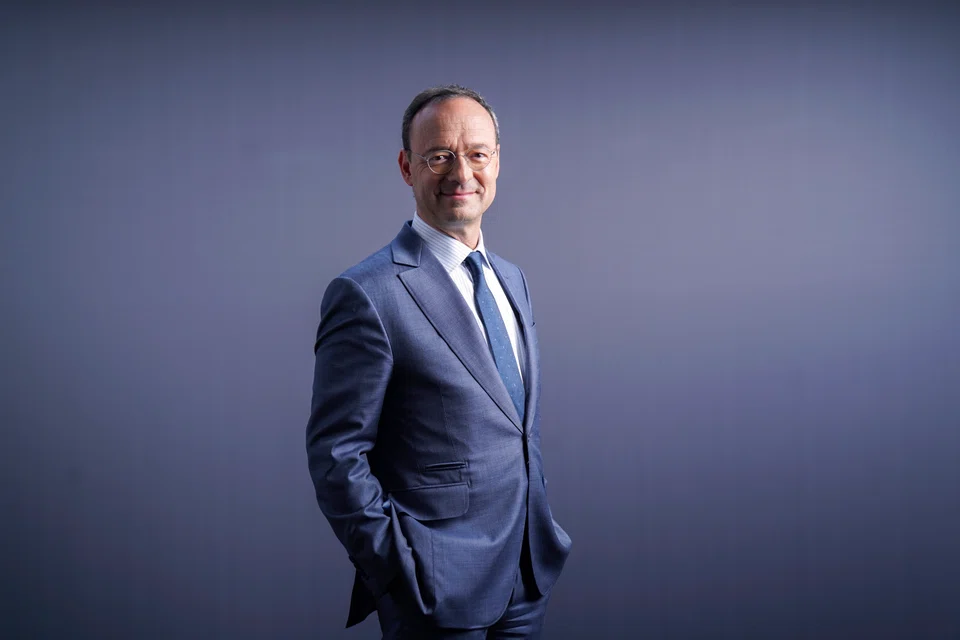
IN 1997, Jean Eric Salata started an Asian private equity (PE) investment programme for UK-based Baring Private Equity Partners. Three years later, he led a management buyout to establish Baring Private Equity Asia (BPEA) as an independent firm.
At the time, Asia’s private equity scene had not yet established itself as a place where one could make money. From 1997 to 2001, Euromoney magazine reported, United States PE as an asset class delivered an internal rate of return (IRR) of 16.6 per cent. Asia PE’s IRR was negative 3.3 per cent.
Salata, therefore, might have been called a brave man. It turns out he is also a farsighted one.
Although 2023 was a tough year, investors continued to be drawn into Asia PE as it has been a more reliable way to tap the region’s demographic dividend and economic growth.
Bain & Company’s Asia-Pacific PE report for 2024 indicated that the median IRR for 2015 to 2017 vintages ranged from 13 to 17.5 per cent.
Over five, 10 and 20-year investment horizons, Apac buyout and growth PE funds have also outperformed the MSCI All-Country Asia index.
The increasing attractiveness of the region is reflected in the amount of industry activity. Salata pointed to data out of India as evidence of the growth trajectory.
Over the last 10 years – from 2013 to 2023 – Bain data shows total PE investment has grown from US$8.9 billion to US$29 billion.
The average deal size has grown from US$100 million to US$340 million, and the value of all exits has grown from US$4.7 billion to US$22.5 billion.
“The market has really matured, and that kind of trajectory is resulting in a bigger opportunity set for investors in the region,” Salata said.
He also noted that Asia represents roughly 45 per cent of global gross domestic product, but represented only about 9 per cent of the money raised by private capital funds last year.
“(PE) is an under-allocated, under-funded market in this part of the world,” he said. “There’s still a lot of room for growth and expansion, as the economies continue to grow and the markets continue to develop and mature.”
The region’s PE landscape is more competitive, though, so it makes sense that BPEA is now part of a much larger organisation.
This year, Stockholm-listed investment group EQT completed its acquisition of BPEA. The combined group is the third-largest private markets company globally. It also ranks among the top three PE players, according to news and data provider Private Equity International.
Salata is chairperson of EQT Asia and head of EQT Private Capital Asia.
Being part of a global entity has advantages for both making money and raising it. “As business has become larger, more global and more complicated, having true global sector capability and a global investment capability do differentiate you as an investor,” Salata said.
“Your ability to understand trends, understand technology, understand global dynamics and risks, tap global expertise with investors and industry executives – all the things that we do now on a global basis – does give you an extra level of competitiveness and insight that I think you need to be a top quartile investor.”
This global analytical ability is especially important because the investment strategy has evolved over the years. “(We have) become more sector-driven as opposed to opportunistic,” Salata said.
“Twenty years ago, I think it was really about broad exposure to the region and to different companies. Now I think to be effective our strategy is really to try to be more top-down, thinking about which sectors we want exposure to.”
Among the focus areas for EQT’s Asian PE strategy are healthcare, technology, technology services and software, and business services – sectors that Salata said were picked for their long-term structural growth.
Funds that are part of large, global brands also have an easier time raising money. “It’s not to say that there won’t be by country funds that won’t excel. There always will be, because we have a very entrepreneurial industry,” Salata said. “There are a lot of very smart, talented people that are always building new businesses.”
He believes that the PE industry is gradually consolidating as it matures, however, and notes that just a small number of funds account for the bulk of funds raised in recent years.
This trend will likely be exacerbated by the democratisation of private markets, he added. “The private banks have a certain amount of shelf space and a certain amount of bandwidth to handle a limited number of products,” he said.
Private banks are likely to favour managers with greater brand recognition and as complete a suite of products as possible, covering multiple assets and geographies.
To cater to high-net-worth individuals and family offices, many private markets asset managers are also rolling out products with liquidity options – what the industry calls semi-liquids.
Unlike traditional PE funds, which require investors to commit capital for a fixed period, semi-liquids allow investors to redeem some of their investments at intervals.
Such products are complex, however, and also require the general partner offering the fund to have a decently sized balance sheet.
“There is a fair amount of cost involved in setting this up and executing it,” said Salata. This includes investment in distribution, especially in hiring people to form distribution relationships, and to educate the audience. “It’s a labour-intensive process to set up and to manage.”
For certain structures and in certain markets, regulators also require a minimum amount of capital to be tied up. Furthermore, semi-liquid funds tend to be seeded – meaning the fund will already have some initial investments. Seeding allows a fund to mature more quickly, but typically requires a general partner to put up its own capital.
“That’s also an entry barrier. It is going to be just really limited to the major global branded firms that will be the primary providers of products like this,” Salata said.
Even as it embraces being part of a larger group, EQT Private Capital Asia is revelling in its Asian roots and identity.
The diversity of Asia’s economies has been challenging for many PE firms. In response to a question on how EQT is coping, Salata said: “We actually have more deal flow than we can handle.”
One big area of opportunity is taking public companies private, as Asia’s public equity markets are relatively undervalued. There are companies that are not well followed, or that went public and probably should not have done so.
“The markets are still somewhat dislocated. There is still a disconnect between the fundamentals that we see in the region and (valuations),” he said. “For investors that have capital to deploy, it’s a very interesting buying environment right now. Looking back, I think this will be a good vintage for investing capital.”






