

Navigating bond funds: Yes to yields but risks aplenty in high-yield assets
Bond funds enable diversification with modest investment, but steep redemptions at times of crisis can cause long-term investors to suffer

IN FIXED income investments, the toss-up between a direct investment in a bond and a bond fund seems a no-brainer.
Here’s the most obvious advantage: A fund enables you to diversify across a basket of issuers with a very modest lump sum of S$1,000 or less if you opt to invest regularly. A direct investment in a single bond typically needs an outlay of at least S$200,000 or US$200,000.
But there are advantages too in holding single bonds – if you can afford it and have studied an issuer for credit strength.
My mother’s portfolio, held under a trust, is a case in point. Judicious investments in issuances by the Philippine government and select bank bonds, held over long periods, have proved rewarding not just in terms of coupon distributions but also in terms of price appreciation.
A single bond, however, exposes you not just to the overall risks of bond investments – which include the interest rate, duration and currency risks if the bond is denominated in a foreign currency – but also to the unique credit risks of single issuers, whether corporate or sovereign.
A credit event, which could take the form of a credit-rating downgrade or failure to pay interest or principal, could cause the market value of a bond to drop.
If your portfolio is, for instance, S$1 million, and you hold two bonds, the mark-to-market value of your portfolio could be significantly impacted by a default. You may even grapple with permanent loss of capital should an issuer go bankrupt and the recovery rate is low.
Morningstar says a fund’s exposure to defaults is, to a large extent, always bad. But it also pointed out in a paper late last year that the price of defaulted bonds begins to decline before the actual default.
Country Garden, for example, defaulted in October 2023, but its bond prices had been declining for several months. By the time of its default, the bonds were already trading at a distressed price of 0.05 on the dollar.
Morningstar said defaults can present tactical opportunities. But funds need to have the expertise to invest in distressed debt where the skill set differs from traditional bond investments.
To get diversification from a portfolio of direct bond investments, some private banks indicate a portfolio size of at least S$10 million to S$20 million is needed.
Here are some aspects to note about investing directly in bonds versus bond funds.
Direct bonds vs bond funds
In actively managed bond funds, the manager has the flexibility to invest in a range of sovereign and corporate issuances, subject to the fund’s mandate and risk limits. A bond fund, however, differs significantly from investing in a bond. The fund collects coupons from its holdings, which accrue towards the fund’s total return.
The underlying securities are traded and may not be held to maturity. Regular distributions may be made from coupons, realised gains from the sale of securities, or from capital. Payouts funded from capital are to investors’ detriment, which I’ve written about earlier. A bond fund typically has no maturity date, although there are a small number of “fixed term” bond funds.
Fixed-term or fixed-maturity bond funds approximate the experience of holding a portfolio of individual bonds. In such a fund, the manager buys bonds and holds them to maturity. Just like holding a bond, you should receive income distributions every six months, and your principal at maturity.
UOB Asset Management, for example, rolled out the United Fixed Maturity Bond Fund, marketed through Tiger Brokers, in 2022. The fund has a three-year maturity. It was marketed as an alternative to endowments, and targeted returns of 4.95 per cent a year.
BT understands that the manager actively monitors the creditworthiness of the underlying securities, and has the flexibility to switch out should there be a credit event.
Bond funds’ holdings are marked to market daily, and valuation is reflected in a single net asset value (NAV) price. A bond fund may show a price decline, which can be steep.
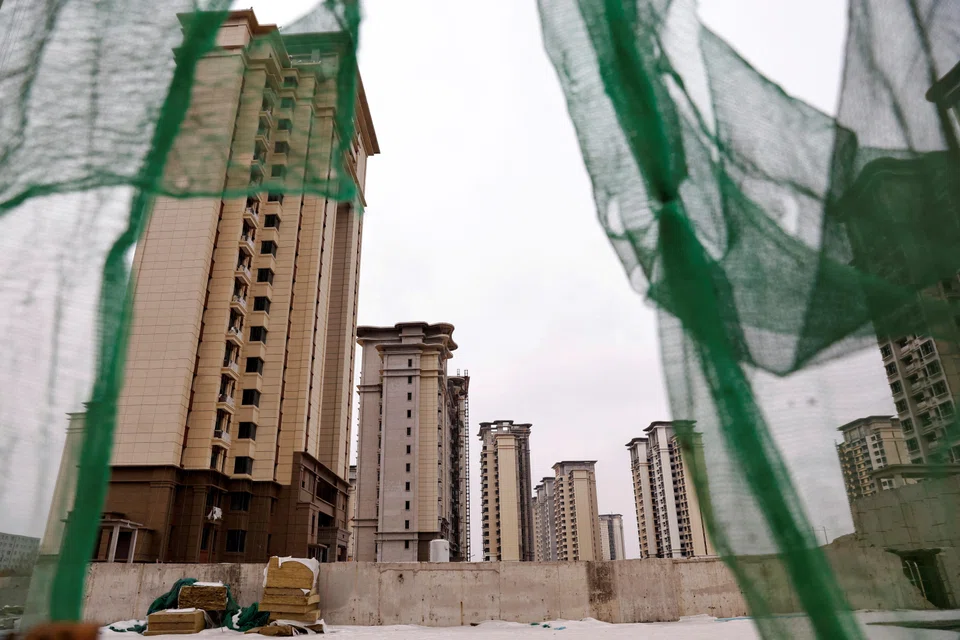
Asia high-yield bonds funds, for instance, were hit by exposure to China’s troubled real estate sector between 2021 and 2022, including Country Garden and Evergrande. Evergrande defaulted on its bonds in 2021 and was ordered to liquidate earlier this year. Country Garden defaulted on US dollar bonds last year.
Some Asia high-yield funds suffered losses of nearly 40 per cent in 2022. Returns from this segment have recovered since 2023. But if you invested in 2021, you’re likely still nursing a double-digit loss.
If you invest directly in a bond, the mark-to-market value of the bond is also reflected in your account. But if you intend to hold to maturity, fluctuations in the price value should not matter – as long as there is no default in coupons or principal.
Pain of heavy redemptions
A second risk of investing in managed funds – this applies to any unit trust regardless of the asset class – is that a crisis could cause significant fund redemptions. These redemptions could deal a severe blow to a fund’s NAV price, and may penalise those who stay invested for the long term.
Typically, an actively managed fund holds little in cash. A surge in redemption requests forces the manager to sell holdings to raise cash. This exacerbates losses, particularly if the sales are done when assets are already under severe pressure.
Endowus chief investment officer Samuel Rhee said fund redemptions are out of investors’ control. “But the beauty of a fund is that there is always liquidity. Many people sell before or during the fall and lessen their losses – as opposed to single bonds which often do not have any liquidity and have to be sold through private banks with heavy discounts and commissions.”
I stumbled upon some cases of steep fund redemptions during research for this piece. The Eastspring Asia High Yield Bond Fund, for instance, reported net assets at the start of 2022 of US$616 million. At end-2022, net assets had fallen to US$268 million. It reported a net realised loss on sale of investments of around US$255 million.
BlackRock’s BGF Asian High Yield Bond Fund also had significant redemptions. At the start of the fund’s fiscal year 2023, it had net assets of US$2.11 billion. This dropped to US$1.51 billion at end-August 2023, a reduction of US$600 million.
Eastspring Investments said the drop in assets partly resulted from the demerger of Prudential plc and its UK/Europe business, following which M&G decided to manage some strategies in-house, including Asia high yield. The fund’s latest assets under management of US$192 million reflected this impact.
“The downwards trend of NAV and fund assets under management has been in line with peers and the shrinking market cap of the Asian high-yield bond market as defaulted Chinese property bonds continue to drop out of the benchmark index, leading to a shrinking universe of “performing” bonds,” it said.
The firm has a “swing policy” since 2016 to protect investors in the fund from transaction costs that may arise from large outflows. Swing pricing seeks to protect investors from the dilution impact of large inflows and/or outflows.
When a market is in distress, as seen in the China property sector, liquidity could dry up and cause bonds’ bid-ask spreads to balloon, raising the cost of selling. Swing pricing makes an adjustment to the fund’s NAV to account for transaction costs incurred due to net inflows or outflows.
Those who are investing or redeeming bear the cost of the “swing”. Managers have discretion to decide on the method of swing pricing.
BlackRock analysed 169 funds in 2021 where swing pricing applied; it found that the funds were shielded from dilution effects by up to 55 basis points a year. The BGF Asian High Yield Bond Fund benefited from swing pricing by 48 basis points in 2021.
TRENDING NOW
8 public officers referred to police over property buys near unannounced MRT stations: Chan Chun Sing
Retrenched PMETs who return on lower pay see median 25% wage cut

Grab CEO’s wife Chloe Tong on life with Anthony Tan and finding her purpose

Vietnam’s northern provinces, not Hanoi or Ho Chi Minh City, are powering near 10% GDP growth

