

The next investment frontier: space!
WHILE some might cite fire, the wheel, or iron as the backbone of civilisation, I believe it is human imagination. Much of the technology that makes our daily lives possible first had to be dreamt of – possibly put to paper in some form of fiction – before becoming reality. For example: a 17th century book, Comical History of the States and Empires of the Moon, portended rockets that could reach space.
I’m not advocating investing in science fiction by any means, but a vivid imagination, underscored by meticulous research and real data, can be a very powerful thing.
Take our journey with artificial intelligence (AI), for instance. We acknowledged its immense potential at a time when many were still sceptical, recognising its ability to revolutionise entire industries.
Our early investments in AI within our barbell and IDEA (representing Innovators, Disrupters, Enablers and Adapters) portfolios have yielded substantial returns as this new technology continues to seamlessly integrate into a multitude of sectors. In an era of unprecedented technological advancements, we are now poised to venture into the next frontier: space.
New era of affordable space ventures
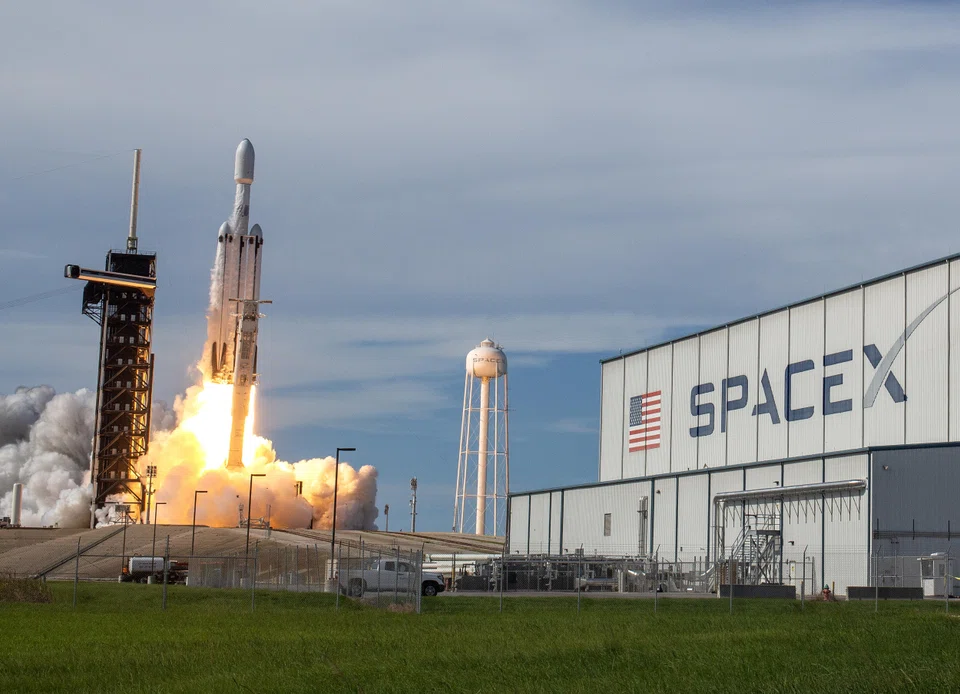
The Cold War-era space race ended almost 50 years ago, but the space industry is now experiencing a renaissance, propelled by a surge in investments from both governments and private companies. This renewed fervour for space exploration and utilisation owes much to the remarkable achievements of companies like SpaceX.
The operationalisation of reusable rockets, for instance, has drastically reduced the cost of launch services by a staggering rate of around 98 per cent since the 1980s.
This reduction in cost has made it economically more viable to explore space in ways that were previously unimaginable. This innovation has not only increased the frequency of space missions, but also expanded the scope of what can be achieved. The ability to reuse rockets has lowered the entry barrier for space exploration, enabling more companies and countries to participate in this exciting new opportunity.
Bridging the digital divide
One of the most promising developments in the space industry is the deployment of communication satellite constellations. For instance, SpaceX, through its Starlink project, is launching large networks of small satellites into low-Earth orbit. These constellations have the potential to provide global Internet coverage, connecting people in remote and underdeveloped areas who currently lack access to the Internet.
This could have a transformative impact on the lives of around three billion people, or roughly a third of the global population. The implications of this are profound. Access to the Internet can drive economic growth, improve education, and enhance healthcare in remote and underserved regions.
Investment themes for the space economy
As the cost of escaping gravity continues to decline, the space economy is set to garner increasing interest from investors and companies alike. We have identified several key investment themes.
1. Launch services
Launch services are, literally, the critical launchpad for the entire space economy and underpin a wide range of space-based applications. The deployment of communication, earth observation and navigation satellites, for instance, depends on the availability of launch capabilities.
Once dominated by government-led programmes, the space is being reshaped by private companies through technological breakthroughs and innovative business models. According to Allied Market Research, the launch service space was estimated to worth US$13.9 billion in 2022 and expected to grow at a compound annual growth rate (CAGR) of 13.4 per cent to reach US$47.3 billion by 2032.
2. Space-related manufacturing
Space-related manufacturing encompasses the production of launch vehicles, satellites and spacecraft components essential for a broad range of activities, ranging from telecommunications to Earth observation. Space-related manufacturing is positioned at the leading edge of multiple disciplines that encompass technology, materials science and engineering.
According to estimates by Mordor Intelligence, the satellite manufacturing market alone is valued at US$244.9 billion in 2024, and is expected to reach US$389.69 billion by 2029, growing at a CAGR of 9.73 per cent in this period.
3. Positioning, navigation and timing (PNT)
PNT services are critical for a variety of applications, from transportation and logistics to financial transactions. Satellite-based PNT systems, such as the Global Positioning System (GPS), provide the precise location and timing information required for these activities.
4. Earth observation
Earth observation involves the monitoring and gathering of data about our planet through the use of satellites. Once reserved mainly for weather forecasting, disaster monitoring and biodiversity assessment, it has undergone a remarkable evolution, expanding its reach and impact across many industries.
The tremendous growth of the Earth observation market can be attributed to the advancements in sensing technologies and the ever-increasing demand for Earth data.
Tomorrow’s themes
- Space tourism. In 2001, the first tourist in space paid a whopping US$20 million for eight days in orbit, paving the way for the space tourism market. Currently, travelling in low-Earth orbit costs between US$250,000 to US$450,000. However, with advancements in technology, particularly with SpaceX’s reusable Starship rocket, capable of carrying up to 100 people at a time (up from the current record of eight), it is estimated that launch costs could fall to US$2 million to US$3 million per launch, compared to the current costs of between US$62 million and US$400 million per launch. These significant savings could bring down the entry price to tens of thousands, enabling a broader demographic to experience space travel.
- In-space manufacturing. This involves producing goods in the unique environment of space, which can lead to the creation of materials and products that are difficult or impossible to make on Earth. Microgravity, for instance, enables the production of purer and stronger materials, advanced pharmaceuticals and even artificial human organs. By investing in in-space manufacturing, we can tap into a market with the potential to revolutionise multiple industries.
The space industry is on the cusp of transformation, characterised by groundbreaking innovations and expanding possibilities. With the myriad future applications, it stands out as a promising investment avenue.
While the industry is still nascent, there are already many investment opportunities via the private markets. Since 2021, we’ve facilitated over US$100 million in client investments into SpaceX, an American spacecraft manufacturer and launch service provider.
While some might say that space is the final frontier, we think that it is only the beginning.
The writer is chief investment officer, DBS Bank
TRENDING NOW

Higher rates, weaker spending: Is the Philippines entering stagflation?

Protect people, not prices: How Asean+3 can build resilience to energy shocks

Cabin fever: Airlines are rushing to refurbish plane interiors, but will their bets pay off?
DBS, OCBC or UOB? Investors urged to be selective as Q3 reveals widening performance gap

