INVESTING GLOBALLY & PROFITABLY

Oil price volatility amid Israel-Hamas war raises inflation fears

Further escalation of conflict could jeopardise crude exports from a region that produces about a third of global supply
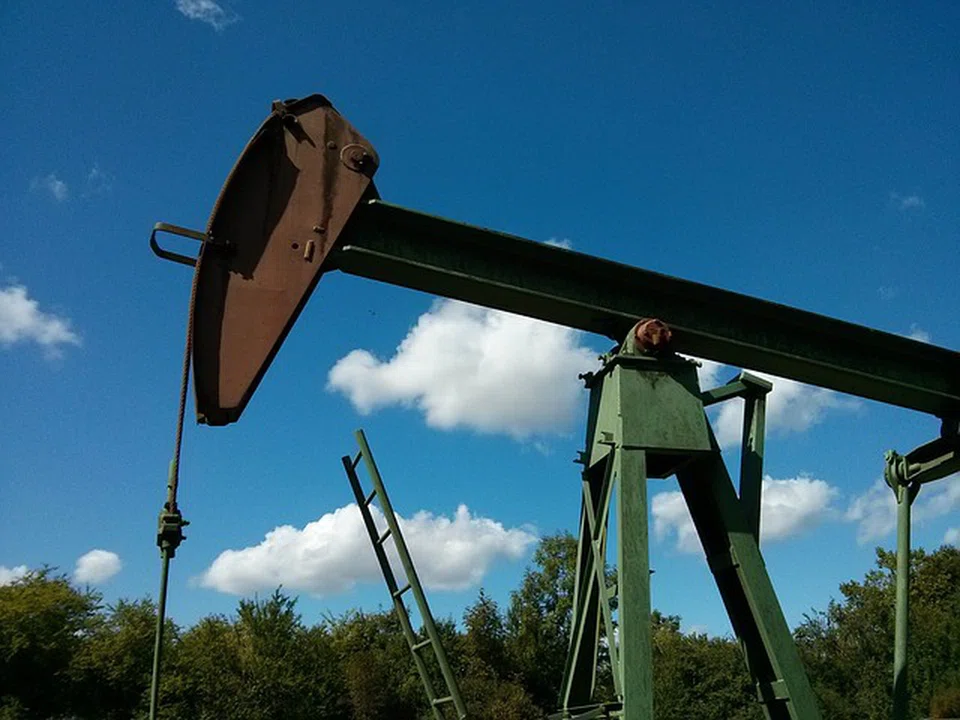
    • The rise in oil prices amid geopolitical conflict raises fresh fears of a spike in inflation which could weigh on the global economy.
    • The rise in oil prices amid geopolitical conflict raises fresh fears of a spike in inflation which could weigh on the global economy. PHOTO: PIXABAY
    Published Tue, Nov 7, 2023 · 05:09 PM

    THE Israel-Hamas war, which erupted on Oct 7, 2023, has sent shockwaves across the world.

    Unlike the spike in oil prices that followed Russia’s invasion of Ukraine last year, the fighting between Israel and Gaza does not directly involve oil-producing nations. Israel for instance, has almost no domestic crude production, and imports around 220,000 barrels per day (bpd) of crude. Moreover, it has only two oil refineries with a capacity of just under 300,000 bpd.

    However, the risk today is that the localised conflict in Gaza could turn into something far more serious. This would involve a broader regional conflict, such as Iran being dragged into the conflict. Iran’s foreign minister has already called for a full and immediate boycott of Israel by Muslim countries, including an oil embargo on the country.

    If Iran were to become more actively involved in the Israel conflict, pressure would be exerted on the US and other countries to step up enforcement of sanctions on Iranian oil. This would lead to a reduction in supplies. US President Joe Biden has already condemned Hamas’ attacks on Israel and conducted an impromptu one-day visit Israel on Oct 19 in a show of support.

    Such actions would impact oil markets, as Iran has become a growing source of extra crude this year, alleviating an otherwise tightening market. It is the fifth largest among Middle East crude exporters and the world’s eighth-largest oil producer, accounting for about 3 per cent of the global supply. This is well below the US and Saudi Arabia, but just ahead of Brazil and Kuwait in 2022.

    Worst-case scenario: disruption of oil flows

    US sanctions however, are not the worst-case scenario. The worst scenario is an interruption in the flow of crude to global markets, probably due to the closure of the Strait of Hormuz. Previously, Iran threatened to close the strait to maritime traffic in 2018 as a retaliation against US sanctions.

    The Strait of Hormuz, a thin strip of water by Iranian shores, is a key maritime transit route through which Persian Gulf exporters (Saudi Arabia, Iran, Iraq, Kuwait, Qatar, the United Arab Emirates and Bahrain) ship their oil.

    It is the world’s most significant oil choke point, through which almost 20 per cent of the world’s oil supply flows through daily. Hence, the potential of the Israel-Hamas conflict to radiate beyond their shores and disrupt the global oil markets is not a risk to be taken lightly.

    Higher oil prices

    As the fighting between Israel and Gaza does not directly involve oil-producing nations, its immediate effect on energy prices is likely to be limited.

    Nevertheless, the situation is incredibly fluid, and we are very mindful that the impact would depend on how the conflict plays out. Further escalation could jeopardise crude exports from a region that accounts for about a third of global supply. This is potentially one of the most significant geopolitical risks to oil markets since the Russia-Ukraine war.

    Oil price volatility is likely to be high in the near term, given the many uncertainties that the conflict raises for the oil market. This is a time when global energy markets are already tense; both Saudi Arabia and Russia have announced voluntary supply cuts until the end of 2023. This pushed oil prices to their year-to-date highs in late September.

    It is unlikely that the Organization of the Petroleum Exporting Countries and their allies would step up production amid the ongoing regional tensions. Tighter supplies in the face of rising demand allow producers to rake in extra oil revenue despite pumping fewer barrels.

    The rise in oil prices during such geopolitical conflicts has inspired fresh fears, as it runs counter to efforts to tame inflation. Higher oil raises energy costs for consumers and businesses, and weighs on the global economy. There is a possibility that inflation may spike in the future, as soon as the high base effects of energy prices in 2022 start to wear off.

    Over the longer term, constraints on production from the private sector arising from years of under-investment suggest that oil prices are likely to remain higher for longer, as corporates prefer to focus on capital discipline instead. This forms a strong fundamental backdrop for oil prices. In view of this, we expect inflation to remain higher for longer, above the Federal Reserve’s 2 per cent target.

    With oil prices likely to remain elevated, investors may wish to consider the Blackrock World Energy Fund, which has exposure to global integrated energy players with an emphasis on production, or the Energy Select SPDR Fund which offers exposure to the US energy industry and includes many of the world’s largest oil producers.

    Alternatively, investors can also consider the Blackrock Natural Resources Growth & Income Fund or the SPDR S&P Global Natural Resources ETF to get diversified exposure to the commodities sector. Both these products invest in natural resource companies, such as those involved in oil and gas exploration and production, as well as in metals and mining.

    The writer is a senior research analyst of the research and portfolio management team at FSMOne.com, the business-to-consumer division of iFast Financial, which is a subsidiary of iFast Corporation