

Singapore investors build showcase of banking expertise in Gulf
Singapore Gulf Bank is set up by private investment group Whampoa and Bahrain’s sovereign wealth fund

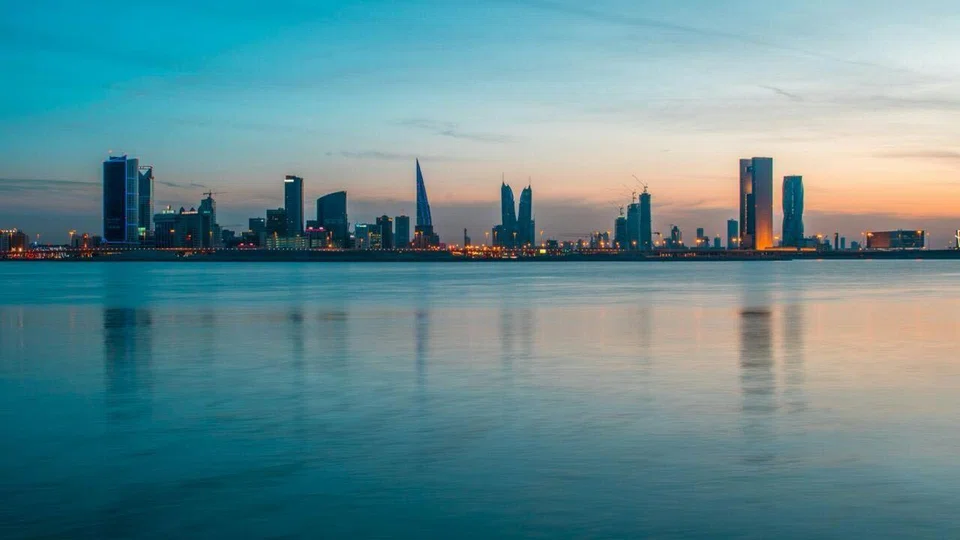
[SINGAPORE] About 6,000 kilometres from Singapore in Bahrain’s capital, a group of Singapore investors have built a showcase of the Republic’s banking expertise.
The Singapore Gulf Bank (SGB) was set up in 2024 in Manama city by the Whampoa Group, a private investment holding group linked to OCBC’s founding Lee family, and supported by founder investor Mumtalakat, Bahrain’s sovereign wealth fund.
Edmund Lee, son of the late prominent stockbroker Freddy Lee and nephew of Singapore’s first prime minister Lee Kuan Yew, chairs the bank. The veteran banker worked for a decade at JPMorgan Chase, where his positions included vice-chairman of Asia-Pacific and senior country officer for Singapore.
The digital bank’s launch in the Gulf coincided with a booming wealth sector in the region.
Savills Middle East’s Spotlight on Wealth Trends report in 2025 showed that Dubai and Abu Dhabi – both part of neighbouring United Arab Emirates (UAE) – came in top and fifth as global wealth destinations of choice.
Role of SGB
On Whampoa’s venture into Bahrain, SGB co-founder and CEO Shawn Chan said that while digital assets and stablecoins are increasingly embedded in real-world financial systems, traditional banking infrastructure has not caught up to support them at scale yet, particularly within a regulated framework.
“The gap (in global financial systems) is most visible in cross-border activity,” he said in a recent interview with The Business Times. “Settlement remains slow, fragmented and constrained by today’s banking systems, amid businesses operating across jurisdictions, asset classes and currencies globally.”
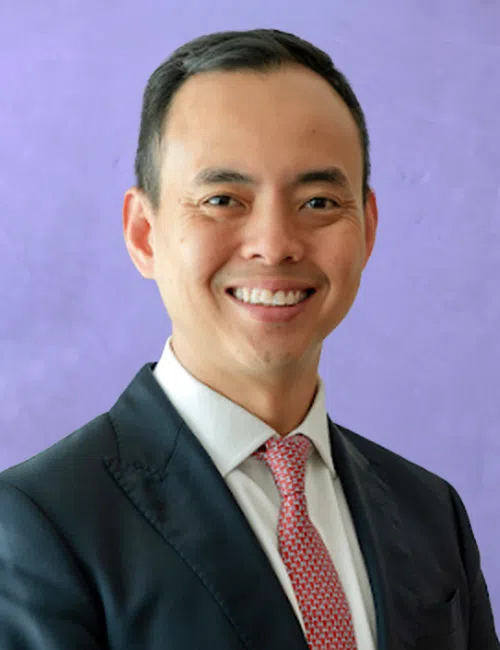
The bank’s answer was to offer 24/7 banking, reliable US dollar access, and connectivity between fiat and digital assets to both corporate and retail clients.
It provides traditional banking infrastructure, such as accounts, payments, and settlement services, to companies participating in the digital economy, such as e-commerce platforms and payment firms.



A Dubai e-commerce report noted that online retail sales in the Middle East and North Africa (Mena) have expanded 11 per cent annually since 2022, with the market expected to reach US$57 billion this year.
Chan said SGB’s location in Bahrain – a financial hub and gateway to the Mena region – has clear advantages in tapping the “fastest-growing regions” for cross-border e-commerce.
It recorded over US$4 billion in deposits and US$12 billion in transaction volume in 2025. This includes US$6 billion processed through its own settlement network, SGB Net.
The bank also holds a Golden Licence – introduced by Bahrain to expedite strategic investment projects – which allows it to operate as a full bank, offering streamlined regulatory support, business licensing and also priority allocation of land.
It is one of only two foreign-owned banks in the kingdom operating under such a banking licence, with the other being Citibank.
Asia-Gulf business remains promising
Chan believes the outlook for Asia-Pacific-Mena in 2026 remains “structurally strong”, especially since the gap SGB seeks to fill becomes more pronounced.
“This is in light of how global liquidity has tightened and cross-border settlement complexity (has) increased in recent times,” he said, prior to the recent conflict in Iran.
But even with war breaking out in the Gulf over the weekend, wealth manager WRISE Private Middle East was firm that Asian wealth inflows into the Gulf, particularly in the UAE and Dubai, will remain “robust”.
Dubai-based WRISE is part of Singapore-based WRISE Group. It provides the ultra-rich with integrated asset management, institutional-grade portfolio insights, and wealth planning.
Chan said capital and trade flows from Asia into the Gulf will continue to grow. “This growth, importantly, is increasingly occurring outside traditional Western financial corridors.”
In addition to its SGB venture, Whampoa has a portfolio of over 200 companies, including a fund started by cryptocurrency exchange Binance.
Whampoa is co-founded by Amy Lee and Lee Han Shih.
Amy Lee is a former senior partner at local law firm Lee & Lee and niece of Lee Kuan Yew. Lee Han Shih is a scion of OCBC’s Lee family, executive director of the Lee Foundation and CEO of media production house Potato Productions.
Investments and businesses of the Lee families in China are managed by Justin Han, co-founder of Whampoa Group and SGB.
Founding members of SGB also consist of leading business executives from Hong Kong, Qatar and Bahrain-based companies.
Cryptocurrency entrepreneur Wu Jihan, the co-founder of Bitcoin mining company Bitmain and Singapore-based digital asset platform Matrixport, is among them.
Prior to establishing SGB, Whampoa Group explored digital banking opportunities in Singapore through a joint initiative with ByteDance in 2019. However, the exercise did not proceed, Chan said.
Bahrain has a history of regulating digital assets, with a single framework covering banks, capital markets and digital asset activity since 2019.
“Bahrain, for these reasons, provided a natural platform from which to serve global trade flows, with Asia-Gulf corridors offering an early use case,” said SGB’s Chan.
Decoding Asia newsletter: your guide to navigating Asia in a new global order. Sign up here to get Decoding Asia newsletter. Delivered to your inbox. Free.
Copyright SPH Media. All rights reserved.
TRENDING NOW

Grab CEO’s wife Chloe Tong on life with Anthony Tan and finding her purpose

Hwa Seng Builder, two China companies win S$1.2 billion Tuas Road Viaduct phase two contracts

Deal between tycoon friends sparks scrutiny of Philippine power sector

Canada is upping oil flows to Asia, but South-east Asia’s refineries aren’t ready to handle them yet

