

Special dividends or share buybacks: How companies decide and what each means for investors
Income-focused shareholders may prefer special dividends, while value investors may favour buybacks

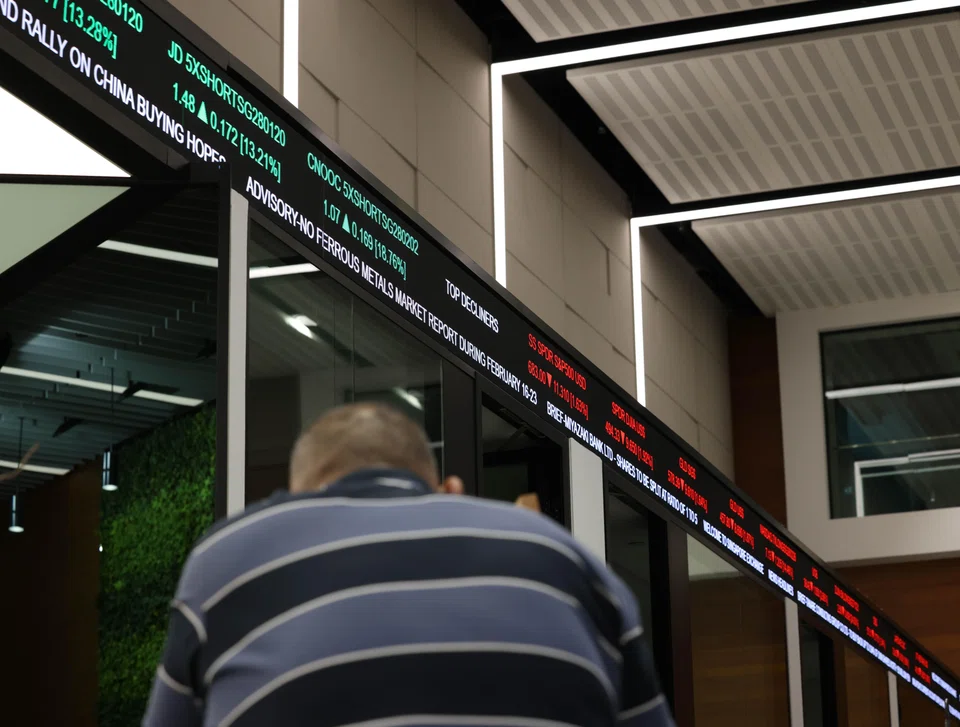
[SINGAPORE] The latest earnings season has seen a wave of companies returning surplus cash to shareholders through special dividends, underscoring a broader debate over how best to deploy excess capital.
Firms including Food Empire , SBS Transit and OCBC have proposed one-off payouts, while others such as Yangzijiang Maritime continue to favour share buybacks.
Buyback activity on the Singapore Exchange reached a 10-year high in 2025, highlighting the popularity of both approaches.
At OCBC’s Wednesday (Feb 25) results briefing, group chief executive officer Tan Teck Long said that the bank – whose capital-return programme comprises both special dividends and buybacks – prefers returning excess capital through special dividends. Tan noted that such payouts reward shareholders “in a broader way”.
So how do companies decide between special dividends and buybacks, and who stands to gain more from each strategy?
Which strategy benefits companies?
Special dividends are one-off cash payments that companies give shareholders on top of regular dividends, typically when they generate excess profits.
On the other hand, share buybacks are when companies use their cash to buy back their own shares from investors, potentially raising the company’s share price in the long run.
Companies that issue special dividends tend to be those with surplus capital that do not view their shares as undervalued, explained Gerald Wong, founder and CEO of Beansprout.
In such cases, companies may believe that it is better for them to return cash to investors, rather than overpay for their own shares via a buyback scheme.


“Alternatively, it may be that management wishes to reward shareholders without committing to a recurring increase in ordinary dividends,” he added.
Conversely, share buybacks are more beneficial if the management believes that the company’s shares are undervalued, or when it wants to signal confidence in its long-term prospects.
“This approach may be more suitable for companies that have strong balance sheets, and see value in reinvesting in their own shares,” Wong said.
Companies may also combine schemes, as in the case of OCBC’s capital-return programme. Doing so allows them to achieve different capital-management objectives concurrently and balance different shareholder preferences.
While reducing the number of shares outstanding through buybacks helps to improve a counter’s per-share metrics, such as earnings per share (EPS), special dividends allow the company to cater to income-focused shareholders.
Which scheme is better for investors?
The answer depends on an investor’s objective, say analysts.
Joel Phua, research analyst at FSM Global, noted that income-focused investors, such as retirees, will likely prefer special dividends due to the immediate and tangible cash payout provided.
However, share buybacks may appeal more to growth-oriented or long-term investors. Reducing the number of outstanding shares could support EPS growth and potentially lead to share prices appreciating over time.
Additionally, investors who buy US stocks may prefer share buybacks since dividends are subject to withholding taxes, said Phua.
Share buybacks also remove the need for investors to reinvest dividends themselves, potentially at sub-optimal rates, said Beansprout’s Wong as well.
Buybacks provide flexibility, as they can be adjusted depending on market conditions.
“If executed at attractive valuations, (share buybacks) may enhance shareholder value over time, too,” he added.
Decoding Asia newsletter: your guide to navigating Asia in a new global order. Sign up here to get Decoding Asia newsletter. Delivered to your inbox. Free.
Copyright SPH Media. All rights reserved.
TRENDING NOW
DBS remains analysts’ pick ahead of Q3 earnings after Singapore banks’ share slump

Singapore identifies 7 firms responsible for haze fires, notices issued urging action: Grace Fu

Good Class Bungalow market activity picks up pace on ‘realistic’ pricing

High Court rules against Julius Baer’s Singapore trust arm in US$50 million family trust dispute

