Private clients slow to embrace alternative investments: BlackRock official

Genevieve Cua
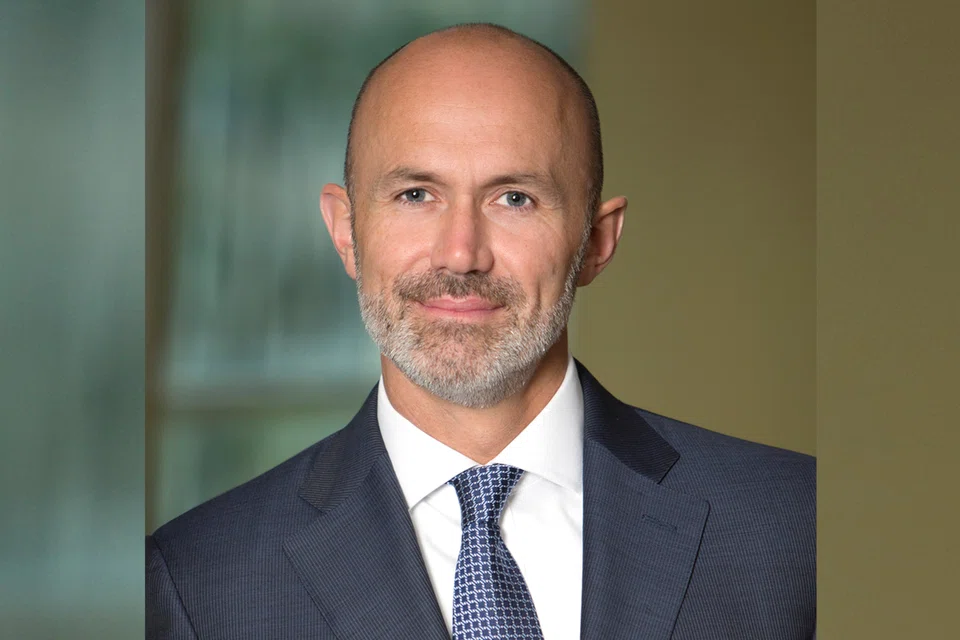
PRIVATE bankers are eager to persuade clients to put larger allocations into alternative investments including private market assets. But the private wealth market remains “immature”, says Edwin Conway, BlackRock’s global head equity private markets.
High-net-worth investors’ allocation into alternatives range between 3 per cent and 5 per cent. In contrast, institutions such as sovereign wealth funds, pension plans and larger family offices allocate at least 25 per cent, notes Conway. “We find it amusing that the assets are still called ‘alternatives’. It’s such a critical part of institutions’ portfolios in a world where asset classes have started to behave differently. Clients are looking to allocate more but the weightings are changing.”
He explains that institutions typically favour the private equity and real estate asset classes – more mature segments of private market assets – but are now placing a greater weightage on infrastructure and private credit.
In private wealth, while allocations are currently low, he expects them to eventually shift in a “pretty profound way”. The balanced 60/40 portfolio (60 per cent equity, 40 per cent fixed income), a mainstay of long-term investing, is likely to change to include alternatives to enhance diversification. This is because public market correlations tend to rise under certain conditions including high inflation and crises – moments when diversification is most needed.
“Most of our partners in the wealth businesses are looking to have their clients allocate 20 per cent of the portfolio into alternatives. That’s a very significant move in the coming years.”
He expects a balanced allocation to eventually comprise 50 per cent equities, 30 per cent fixed income and 20 per cent alternatives.
BlackRock Alternatives’ global private markets survey of allocators found that yield was the key consideration for allocations, followed by capital appreciation.
Among Asia-Pacific allocators, the second most important consideration was risk diversification. The survey respondents represented some US$15 trillion in assets under management, of which US$3.2 trillion was invested in private markets. This represented about a quarter of the global institutional landscape for private market investments.
The search for yield explains the increasing interest in private credit, including infrastructure and real estate debt.
BlackRock has assets under management of around US$320 billion in alternative investments. Of this, US$160 billion is in private market assets
Conway notes that a new macro regime prevails over markets, including “reglobalisation”, or the reconfiguration of supply chains, tighter monetary policy and higher inflation. These factors have caused a revaluation of assets, and for private equity, that process is ongoing.
“The cost of capital has gone up, and private equity is still repricing. The typical private equity fund is marked to market quarterly, so it typically may take a year for private markets to catch up with public markets. But because of the repricing, the whole space has become more interesting. We think PE is still very attractive and most clients tell us they are looking to allocate more.”
He sees decarbonisation as a key investment theme. “We think of decarbonisation as one of the best investment opportunity sets across private markets, because the world is in transition.”
Decarbonization Partners is a partnership between BlackRock and Temasek, which focuses on next-generation private companies that can accelerate the transition to net zero. The partners recently announced an investment in Ascend Elements, which makes sustainable battery materials for electric vehicles.
Decarbonization Partners Fund I has reached US$1 billion in committed capital.
Conway says that BlackRock’s analytics capabilities under portfolio management software Aladdin gives it a competitive advantage in the system’s ability to crunch through data. “Technology and data in private markets will be a massive competitive advantage because there is just so much capital in the world today. Dry powder of US$3.5 trillion is the highest it has ever been. The analytics gives us an ability to act more quickly.”
For the private wealth market, the firm has begun to roll out some alternative funds under the European Long-Term Investment (ELTIF) vehicle. ELTIF is a fund passport regime for Europe, rolled out in 2015 to encourage investments in real assets including infrastructure and private equity. It is open to retail investors. As at end-2022 there were 84 ELTIF funds with US$10 billion in assets.
Next year, revisions to ELTIF are expected to expand its appeal. Changes under ELTIF 2.0 include a broadening of the scope of eligible investments and widening access to retail investors.
The Alternative Investment Management Association expects ELTIFs to attract additional US$100 billion in assets over the next five years. They can be marketed in key non-European Union countries under private placement rules.
Conway adds: “One of the biggest things the industry has to do is educate investors on private market assets, the role they play. The illiquidity is important in order to earn the premium. In the absence of illiquidity, you’re not going to have the same outcome as a closed-end fund.”
BlackRock has launched some alternative funds under the ELTIF wrapper. All are closed-ended funds. It raised 415 million euros (S$602 million) late last year for the BlackRock Private Infrastructure Opportunities ELTIF, which will invest in a portfolio of global infrastructure, tapping into three trends – digitalisation, decarbonisation and decentralisation.
Two more ELTIFs were launched earlier this year – the BlackRock Private Equity ELTIF and BlackRock Future Generations Private Equity Opportunities ELTIF.