For this private debt firm, ‘Asia for Asia’ offers silver lining amid US tariff threats

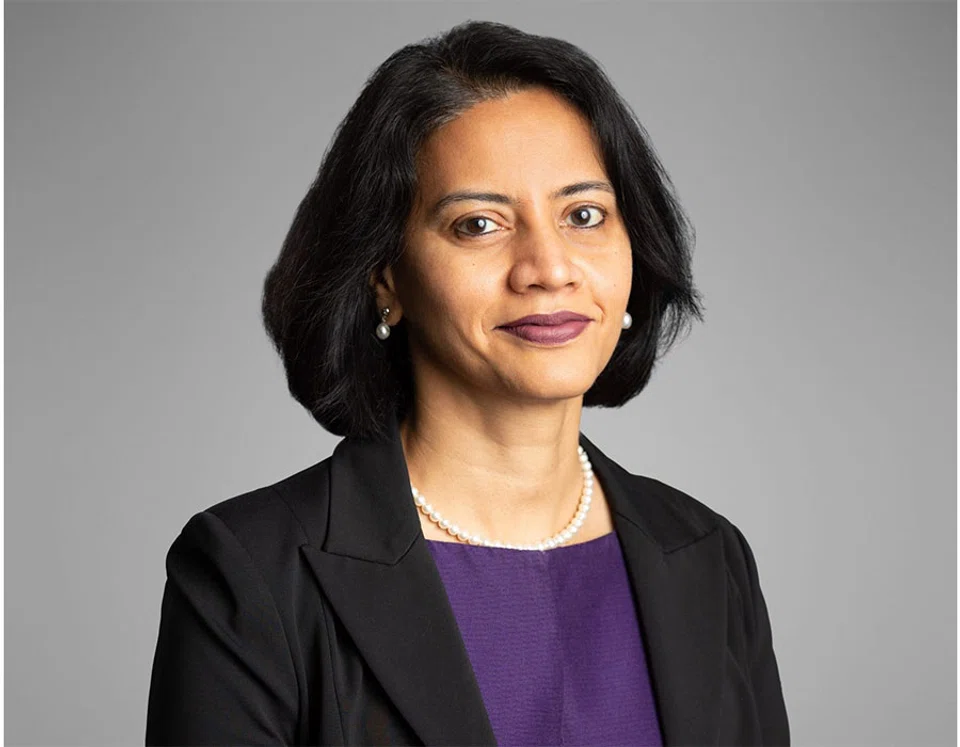
[SINGAPORE] The “Asia for Asia” trend of rising intra-regional trade is likely to offset the potential impact of US tariffs on Asia, said Sabita Prakash, managing director of private credit firm ADM Capital.
“The outlook for Asian countries’ exports gives us food for thought. But, the huge difference over the past five years is what we call Asia for Asia, where Asia has increasingly begun to depend on itself for end-use markets, outsourcing or funding. We feel this will offset some of the issues arising from the trade wars.”
One of its portfolio companies, for instance, is a Vietnamese business which manufactures modular housing for New Zealand. “In the past two to three years, Vietnam has successfully used the China+1 strategy to improve its relationships. We’ve done some deals that are not dependent on what happens between the US and Vietnam...
“We don’t need to focus on Vietnam supplying to the US. Instead, we look at Vietnam supplying to Asia.” The China+1 strategy seeks to minimise supply chain dependence on China.
Hong Kong-based ADM Capital, founded in the depths of the Asian crisis in 1998, manages around US$2 billion in secured direct lending to mid-market corporates in Asia. Its strategies are a mixture of closed and open-ended funds. Since inception, it has completed US$6 billion of investments across 220 loans.
Last year, it entered into a partnership with Seviora Holdings, a wholly-owned subsidiary of Temasek, to collaborate and build on ADM Capital’s sustainability-integrated investment strategy. Seviora, which manages US$52 billion, has taken a minority stake in ADM Capital.
Investing close to home
Prakash reckons that beyond trade, the second stage of Asia for Asia may take the form of Asia-centric investments and acquisitions, driven particularly by the growing pool of private wealth looking to invest close to home. “Opportunities are not necessarily dependent on the US,” she said.
International Monetary Fund managing director Kristalina Georgieva said in a recent speech that the world may appear to be retreating from integration, “but regionally, countries are leaning in”. Over the past four decades, intra-regional trade in Asia has risen by 43 per cent. Today, more than half of Asian trade is regional.
ADM Capital focuses on what it sees as the “sweet spot” of financing opportunities, on companies needing between US$20 million and US$80 million in “growth credit”, which may be unavailable from banks. “Due to a lot of consolidation that has happened in private credit, large alternative investment managers are willing to put in US$100 million or more. The space that’s ignored, with less financing, is where we focus on.”
Portfolio companies may be “nascent” in their track record, with three to five years in business and revenues starting from around US$50 million. “We’d like to see companies move towards a run rate of profitability, but at the same time, it depends on the markets... The companies want to scale up, but are not finding financing.”
Its funds are diversified in terms of country and sector exposures, and even exit opportunities.
Over the past couple of years, private debt assets have been in strong demand, particularly among wealth managers whose clients have an evergreen appetite for yield. By Preqin’s forecast, assets under management in private credit, currently more than US$1.6 trillion, are expected to hit US$2.6 trillion by 2029. Last year was something of a challenge for smaller managers, however, as investors gravitated towards “mega” funds.
Diversifying exit channels
Prakash said: “The current fundraising environment in Asia is throwing up more diversity of funding sources, including greater availability of local capital, private wealth, regional pension funds and insurance companies and, in many cases, strong stock market performance, which again diversifies exit channels.”
Exit strategies include refinancing, cash flows from operations or asset sales, new equity and even innovative options like asset-backed tokens. “Some of these exit options may be affected by macro conditions such as equity market sentiment, and hence the importance of having other fundraising options available,” she said.
The firm is currently raising capital for a “smart city” fund, an infrastructure-themed fund in emerging Asia. It was widely reported to seek US$300 million in capital. “The region has been investing in infrastructure very actively, and there is huge demand financed by banks and large credit funds. But, many SMEs (small and medium-sized enterprises) in the supply chain of the infrastructure projects can’t find financing,” said Prakash.
“The confluence of infrastructure, technology and sustainability is very interesting, and will underlie the industries of tomorrow.”
She said the firm has secured a cornerstone investor, and is in advanced discussions with other private investors. “There are already various investee companies lined up.”
The firm takes a bottom-up approach in deploying capital and pride in its ability to offer flexible terms. “From top down, we try to identify sectors that could be useful. The beauty of our strategy is that despite the rise and fall of interest rates, our returns are stable and consistent...
“Companies come to us because we’re quick, nimble and flexible on structure, tenor, coupon. We’re able to customise the deal to the nature of company cash flows.” Generally, the firm aims to generate annual returns of 15 per cent.
The firm integrates ESG into its investment due diligence and portfolio management. It sees ESG as a fiduciary duty to mitigate the environmental and social risks that may impact investees’ financial viability.
Last year, it launched an Indonesia-focused impact fund – the Asia Climate-smart Landscape Fund – to finance SMEs in sustainable agriculture, agroforestry and aquaculture, by providing medium-term senior secured lending. It has secured seed commitments from Ceniarth and the David and Lucile Packard Foundation, among others. The fund targets total commitments of US$200 million.