
INVESTING GLOBALLY & PROFITABLY

Reasons to invest in Singapore banks

They have robust earnings potential, and are expected to maintain dividend yields of between 5% and 6% over the next two years
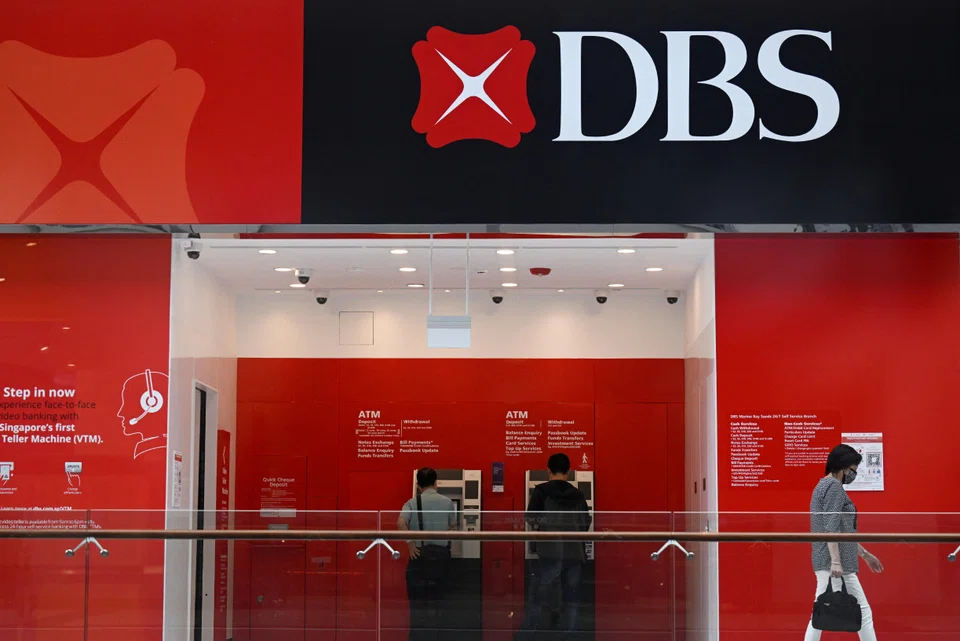
    • Interest rate reductions are expected to have a modest impact on the net interest margins of Singapore's top three banks, including DBS (above).
    • Interest rate reductions are expected to have a modest impact on the net interest margins of Singapore's top three banks, including DBS (above). PHOTO: REUTERS
    Published Tue, Nov 5, 2024 · 07:05 PM

    SINGAPORE’s top three banks have achieved substantial earnings growth over the past two years, supported by an elevated interest rate environment. This has led to impressive year-to-date share price growth, ranging from 13 to 29.4 per cent as at Oct 30.

    Although the Federal Reserve began cutting interest rates in September, Singapore banks had anticipated this move and mitigated the potential effects to their earnings. Thus, they have demonstrated a strong capacity to sustain earnings, even in a gradually cooling interest rate environment.

    Singapore’s rate landscape

    Singapore’s inflation is rather persistent. In September, core inflation accelerated for the second consecutive month, reaching 2.8 per cent year on year (yoy). The economy also grew strongly, with advanced estimates showing Q3 GDP growing by 4.1 per cent yoy. While imported inflation is moderating, stronger-than-expected wage growth and ongoing geopolitical tensions continue to hinder the progress of disinflation.


    As a result, the Monetary Authority of Singapore (MAS) maintained its current rate of appreciation for the nominal effective exchange rate policy band in the October monetary policy statement. We expect the MAS to support the strength of the Singapore dollar for the remainder of 2024 to mitigate imported inflation.

    Consequently, even though the US Federal Reserve cut its benchmark interest rate by 50 basis points in September, Singapore’s three-month compounded Singapore Overnight Rate Average (3MSora) is likely to decline modestly relative to the Fed’s rate. We anticipate Sora to remain above pre-pandemic levels of 2 per cent, creating favourable macroeconomic conditions for local banks.

    Net interest income bolstered by asset growth

    Interest rate reductions are expected to have a modest impact on the net interest margins (NIM) of Singapore’s top three banks. In response to margin compression, these banks are actively lowering deposit rates. For instance, on Oct 1, OCBC reduced its six-month deposit rate at branches from 2.5 to 2.3 per cent, which helped widen the spread over 3MSora.

    Moreover, the banks have proactively adjusted their strategies by increasing investments in fixed-rate assets and extending the duration of their portfolios for downside protection. Earlier this year, DBS shifted some current account savings account balances into fixed deposits, extending their duration to three to 3.5 years to lessen sensitivity to falling rates. Similarly, OCBC has ramped up the issuance of fixed-rate loans.

    Falling 3MSora is likely to stimulate new loan origination, partially mitigating the decline in NIM. However, since 3MSora remains relatively high compared to 2021 and 2022, loan demand is expected to grow modestly in 2024, particularly if consumers anticipate further rate cuts in 2025 and 2026. We expect a more significant surge in refinancing activity in 2025, as consumers who locked in higher fixed mortgage rates in December 2022 will see their two-year lock-in periods expire next year.

    Reductions in deposit rates and increased allocations to fixed-rate assets suggest that banks are well-positioned to sustain robust net interest income (NII) in 2024. Even if NIM compression intensifies in 2025 and 2026, banks have strategically adjusted their NII to be less sensitive to falling rates, due to significant growth in wealth-management services and foreign asset acquisitions. For instance, in 2Q24, DBS reported a yoy NIM decrease of 2 basis points, yet its NII grew by 4.7 per cent, partly driven by the integration of Citibank in Taiwan.

    Similarly, OCBC’s rapid growth in assets under management (AUM) in wealth management has enabled it to invest more in lower-yielding but income-accretive assets. This strategy resulted in a six-basis-point decrease in NIM, but supported a 1.7 per cent yoy increase in NII. Overall, we believe that rapid asset growth will enable banks to maintain a relatively stable NII, even in a declining interest rate environment.

    Non-interest income driven by growth in wealth management

    Singapore banks’ non-interest income is predominantly fuelled by growth in wealth management, and shows less correlation with interest rate cycles. In Q2, all three major banks reported earnings that surpassed expectations, largely due to strong performance in their wealth-management divisions. Singapore’s political stability, low tax environment and favourable policies for family offices are expected to continue to attract significant wealth inflows, particularly amid ongoing geopolitical tensions between China and the West.

    Furthermore, potential rate cuts could enhance consumer sentiment and increase demand for wealth-management services, as clients seek higher-yielding products to maximise returns in a declining deposit rate environment.

    In addition to wealth management, banks are seeing strong growth in credit card and loan-related fees. With expectations of increased refinancing needs and loan origination in 2025 and 2026, we anticipate continued growth in loan-related fee income. Healthy consumer spending and rising sentiment are also expected to further bolster fee income growth.

    Overall, we expect Singapore banks’ NII to remain relatively stable, as reductions in NIM can be partially offset by deposit cuts, asset duration extension and some rebound in loan demand. Furthermore, robust asset growth, sustained demand for wealth management services, and ongoing increases in credit card and loan-related fees present additional opportunities for non-interest income to grow. Collectively, these factors indicate that net income will remain strong and significantly exceed pre-pandemic levels.

    A case for investment

    Singapore banks’ strong earnings potential bolsters the case for ongoing investment. Our estimates suggest that the three major banks will maintain dividend yields of between 5 and 6 per cent over the next two years, significantly higher than their US counterparts, which typically offer around 2 per cent after withholding taxes.

    In a gradually cooling interest rate environment, the attractiveness of dividend stocks is likely to grow, as declining cash yields reduce returns on savings accounts and money market funds. The robust financial positions of Singapore banks will shine through, providing a reliable income stream for investors seeking less volatile investments and consistent returns.

    For income-focused investors looking to invest locally, Singapore banks continue to represent appealing investment opportunities.

    The writer is a research analyst with the research and portfolio management team of FSMOne.com, the B2C division of iFast Financial, the Singapore subsidiary of iFast Corp


