S$1 billion bust raises questions about anti-money laundering checks for country club memberships


Megan Cheah &
Yong Hui Ting
FROM bearbrick collectibles to uber-posh penthouses, all asset classes can be used for money laundering – so long as there’s a buy-and-sell market and the items are of significant value. Expensive country club memberships meet the criteria.
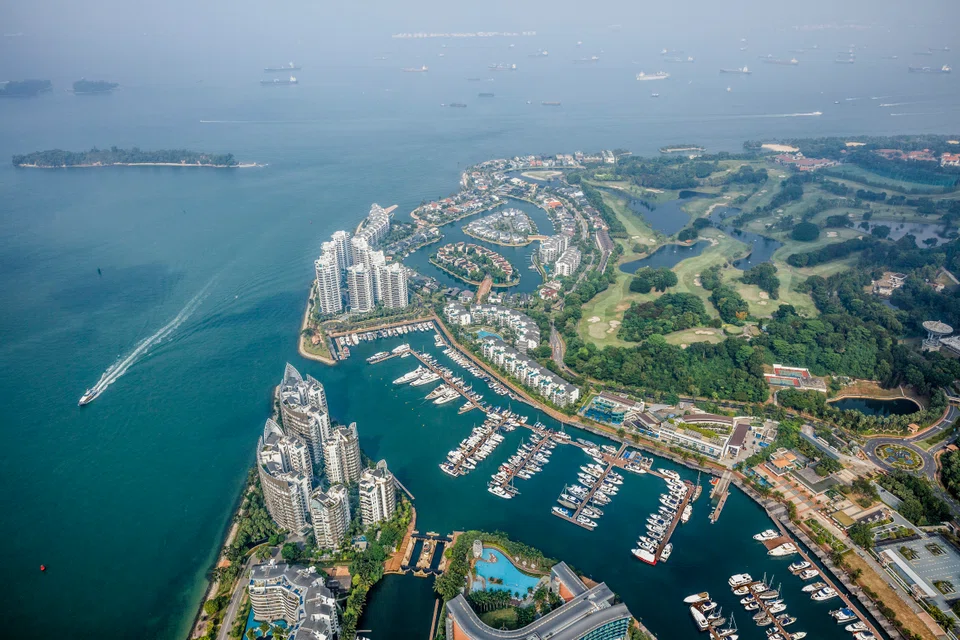
Flipping through copies of the Sentosa Golf Club magazine, The Business Times (BT) found four names – listed as new members in 2021 – that matched some of those arrested in the S$1 billion anti-money laundering blitz earlier this week.
The current rate for a foreign individual to become a member of Sentosa Golf Club (SGC) stands at about S$950,000, according to Madeline Choo, sales director of Active Golf Services, a club membership broker. And there’s a thriving secondary market for these memberships.
Ramesh Moosa, EY Asean forensic and integrity services leader, told BT that it’s possible that club memberships can be used to wash “dirty” money. He said that the sale and purchase of a country club membership between individuals fall outside the regular anti-money laundering and countering the financing of terrorism regimes.
“More importantly, the prices of premier clubs in Singapore, which are available on the open market, have hit new highs over the pandemic.” He added: “This also increases the attractiveness of using club memberships as an instrument for money laundering.”
In response to queries from BT to verify the identities of the quartet, a spokesperson for SGC would only say that the club is “aware of the recent reports on the anti-money laundering blitz” and will “fully cooperate with local authorities if contacted”. The spokesperson did not comment on whether the club had conducted any checks on membership applicants, or on its processes for approving members into the club.
Industry players told BT that the process of signing up for a club membership is relatively simple. An applicant fills up a form, submits a photo and a photocopy of their passport, and waits for approval. The approval process usually takes four to six weeks. BT understands that membership applications are usually approved, unless the applicant has a criminal record or has been bankrupt before.
A spokesperson for the Singapore Island Country Club said that an applicant’s name and photo will be placed on the club’s notice board for a period of 14 days. Any objection by members to the applicant will be brought to the attention of the committee, which has to approve all applications. (*see amendment note)
Andrea Amatuzio, PwC South-east Asia Consulting partner who specialises in financial crime, said that it would be in these clubs’ “best interest” to implement and enforce controls when it comes to the sale and purchase of memberships, to safeguard its reputation and members’ safety. For example, for sales between individuals, clubs should be directly involved in membership transfer and ensure there are new admission controls before the transfer is made, he noted.
As for membership sales handled by the club but are paid for by an unrelated third party, or paid in cash, the club should obtain bank statements from its associated banks and ensure it has all the necessary payment details, including source, payment originator and methods used. “Due to potential reputational risks, the club should always conduct thorough due diligence on new admissions,” Amatuzio added.
*Amendment note: The article has been updated to reflect Singapore Island Country Club’s clarifications on its membership approval process. An earlier version of this article also quoted a spokesperson as saying that she has never seen any application being rejected before. SICC has denied making this statement.