

Should investors care about the outcome of the US presidential election?
Polls, especially emotionally charged ones, make investment decisions more challenging
ON NOV 5, the UK will celebrate Bonfire Night. There will be fireworks and, of course, bonfires with a “guy” on top. The origin of this is the Gunpowder Plot in 1605, when Guy Fawkes tried to blow up the House of Lords and kill King James I. He was caught red-handed after an anonymous tip-off to the authorities, convicted, and then hung, drawn and quartered.
Nov 5 is also the day when the US presidential election takes place. Given what happened in January 2021, after the last US election, this seems ironic. Will we see merely entertaining fireworks, or will bonfires occur?
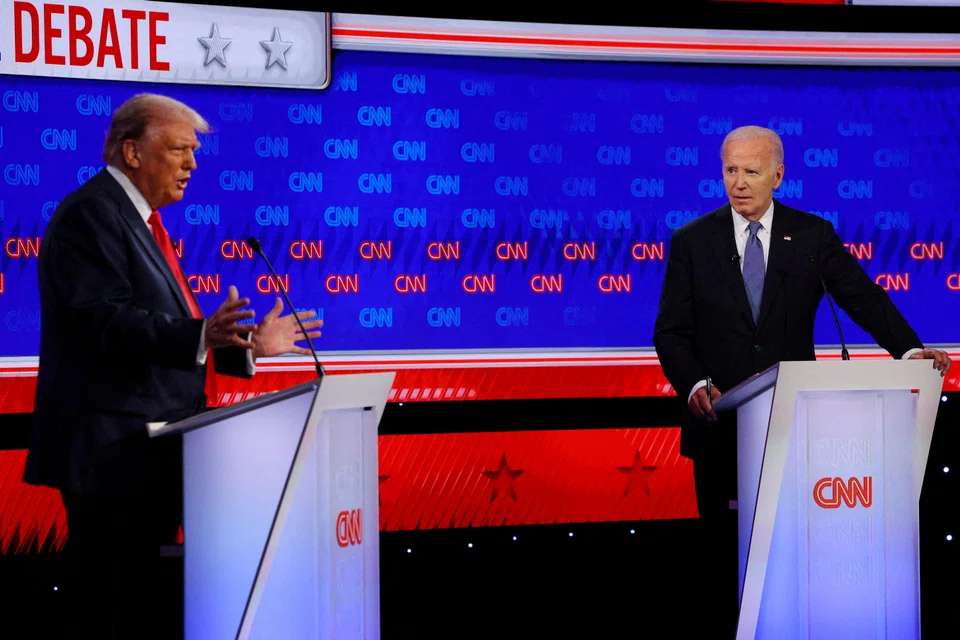
Fireworks are guaranteed, as demonstrated by the first debate in June. The debate was a clear win for Trump as worries about Biden’s physical and mental capacity to continue as president for another four years rose, even within the Democratic Party. This appears to have, at least for now, reinforced Trump’s edge in the polls, while Biden is reassuring his own party that he is still the best person to take on Trump.
The question for us, though, is to what extent investors should care? Let’s break this down into two parts: before and after the election.
Looking at history, the second half of an election year is normally still positive for the US stock market, despite the risk of increasing volatility just before the election. This suggests that significant political uncertainty is not normally the dominant driver for investors.
Hence, we remain overweight on global equities and, indeed, have a preference for US equities. We see inflation moderating in the second half of the year, with upside inflation surprises already starting to fade. This should allow the Federal Reserve to start cutting interest rates in the second half of the year and bond yields to decline.
Technology and communication services have a high weight in the US stock market – they are more resilient to a growth slowdown and benefit more from lower interest rates and bond yields. Meanwhile, after stagnating in 2023, earnings are recovering strongly and outperforming expectations. All these suggest that equities are likely to grind higher in the coming months.
After the election, things get more complicated. At the risk of oversimplification, there are three main scenarios: a clear Biden victory, a narrow Biden victory, and a Republican clean sweep.
Three scenarios
In the first scenario, which we deem to be the least likely outcome, Trump’s 2020-2021 “stolen election” mantra is unlikely to gather momentum and political conflict is likely to ease, at least temporarily, as the Republican Party pivots away from Trump.
Assuming this brings with it a clean sweep of the House and the Senate, fiscal policy will probably remain tilted towards high spending and raising taxes on the wealthier segments of society. It would also signal strong support for Ukraine and continued sponsorship of the decarbonisation agenda.
A tight victory for Biden, on the other hand, would mean that the House and Senate are split. Arguably, from an economic perspective, this could be the best outcome as dramatic policy changes would be challenging to implement, potentially resulting in the least fiscally irresponsible outcome.
However, the political environment would be challenging. It is possible that the Republicans could formally endorse the “stolen election” mantra, potentially leading to significant clashes between ardent supports of both parties. Indeed, it is not beyond the realm of possibility that a state suggests it should cede from the union (although doing so is highly unlikely).
All of this would make it harder for the Republican Party to move away from Trump, potentially leaving the door open for him to run again in 2028.
Finally, a clean sweep for the Republicans probably minimises the political uncertainty, but leaves the door open for radical economic, trade, immigration and geopolitical policy shifts.
There is a sense that Trump did not have the machinery around him in his first term to drive his agenda efficiently. Many believe that it would be different this time.
Trade tariffs would likely be introduced, given cross-party support for greater protectionism. While China is the focus, tariffs and threats of tariffs are likely to extend to allies as well. Immigration would probably be sharply curtailed. Support for Ukraine could fall dramatically, while oil would be promoted over green energy.
Finally, fiscal policy is likely to remain very loose as the Trump tax cuts implemented during his first term are extended indefinitely.
Trump’s policies
So, what does all this mean for investors in the longer term? Making predictions based on political outcomes is always risky. Remember 2016, when the overwhelming narrative was that a Trump win would be bad for equities. On confirmation of his victory, the stock market dipped intraday, then rose more than 30 per cent in the next 14 months.
Trump’s policy agenda, on the face of it, looks the riskiest. His fiscal, trade and immigration policies look inflationary. However, he is also likely to be more supportive of US business interests, especially for the traditional energy sector. This means he will likely calibrate his policies to ensure they do not inhibit businesses.
Therefore, it is important for investors not to overreact based on personal political biases or rhetoric. Elections, especially emotionally charged ones, make investment decisions more challenging.
However, I believe the best approach is to stay invested through the uncertainty and look for opportunities to add to diversified portfolios if we see short-term weakness.
The writer is global chief investment officer at Standard Chartered’s wealth solutions unit






