

Silver lining for Julius Baer Group from Credit Suisse collapse
Resolution of crisis shows strength of Swiss banking system. But bank chief says there must be ‘convergence of terms’ around bank AT1 perpetuals

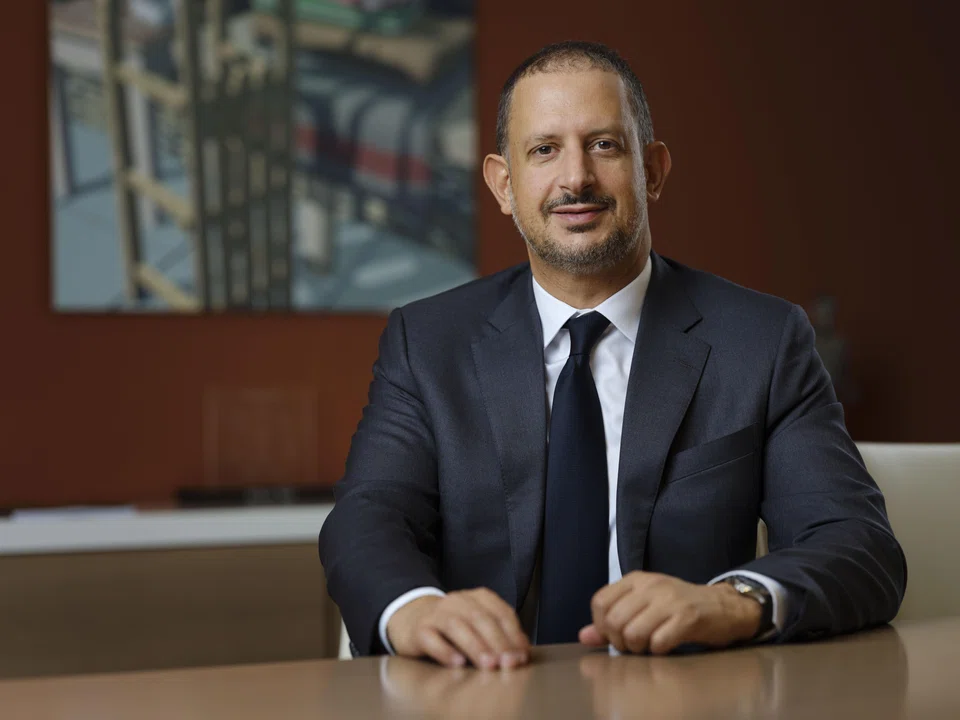
THE Credit Suisse crisis and its rapid resolution over a weekend in March are testament to the strength of the Swiss wealth management and banking system, says Julius Baer Group chief executive Philipp Rickenbacher.
Credit Suisse’s collapse and its subsequent acquisition by UBS present Julius Baer with a silver lining: It has become the second largest listed Swiss bank by market capitalisation.
Rickenbacher, who was recently in Singapore, said the crisis and its subsequent impact on bank perpetuals – or Additional Tier 1 (AT1) issuance – should not cause clients to lose confidence in the Swiss banking system.
“What should not be forgotten is that a globally, systemically relevant institution could be saved in Switzerland with a domestic solution within a few days, without any disruption to the markets. I believe the fact that the rescue could happen is testament to the strength of Switzerland as a financial system and has avoided another 2008.
“We are now No 2 among Swiss listed banks by market capitalisation – not just by accident, but also as a result of our pure wealth management business model. I do believe this will elevate our position in Switzerland and internationally. This will further our attractiveness as an employer, and also for clients and for shareholders.’’
Julius Baer last year reported net profit of 1.05 billion Swiss francs (S$1.56 billion), a decline of 8 per cent from 2021. Assets under management fell 12 per cent to 424 billion Swiss francs, mostly due to significant declines in global equity and bond markets. Net new monies for the full year came to 8.7 billion Swiss francs, thanks to a surge in inflows in the second half, which more than compensated for the outflow of one billion Swiss francs in the first half due to client deleveraging.
The group is unable to comment on inflows in the current fiscal year. The Asian business has a share of about a quarter of assets under management and headcount. Globally there are roughly 6,900 employees.
On the upheaval in the bank perpetuals market, Rickenbacher said there needs to be “a convergence of terms around AT1’’. Julius Baer itself has outstanding issuance of perpetuals or AT1 debt of about US$2.2 billion. The Swiss regulator’s decision to wipe out the value of all Credit Suisse’s outstanding AT1 debt as part of the rescue package was controversial, as it subverted the traditional capital structure where shareholders rank behind bondholders.
It has been reported that Swiss regulator Finma (Swiss Financial Market Supervisory Authority) has been hit by an estimated 150 lawsuits over the wipe-out of Credit Suisse perpetuals, representing between 2,000 and 2,500 individuals.
Rickenbacher said: “We have been using AT1s as an instrument to optimise our capital position. And we will use either this instrument or other instruments in the future to continually do so. But we can be very comfortable with the capital position that we have and our financial strength, and also the very controlled risk profile of Julius Baer.’‘
The bank’s growth strategy is two-pronged – via organic growth and mergers and acquisitions, he said. Between 2020 and 2022, the group set out to focus on “sustainable profit growth’’, pivoting from purely asset gathering. In the period, it managed to achieve a cost-to-income ratio of 65.9 per cent against a target of less than 67 per cent. In terms of pre-tax profit, its target was growth of greater than 10 per cent; it grew by an average 10.3 per cent.
For the current strategic cycle of 2023 to 2025, it has spelt out three main objectives. One is to focus on value services for clients while generating profitable growth. This involves generating more recurring income through services such as discretionary portfolio management. Second is its aim to achieve scale by acquiring and developing talent. Third is to invest in innovation. It will invest 400 million Swiss francs more in technology, bringing the total tech investment to one billion Swiss francs between 2023 and 2025.
For Julius Baer in Asia, penetration of discretionary portfolios ranges between 10 per cent and 15 per cent, based on an industry estimate.
In terms of innovation, the Singapore office set up an innovation lab called Launchpad in 2021. It has, for instance, launched the Julius Baer Investors Club platform within the e-banking app for a small group of pilot clients. It has also tokenised a piece of artwork and issued asset-backed tokens as part of an internal proof of concept.
On AI applications, Rickenbacher said: “My wish would be to have an ask-Google bar for our clients, where they can ask complex questions about investments and the system would allow the client to gain insights that combine market intelligence and our opinion, but also client preferences and needs…
“I believe that AI will help us do even better risk management moving forward, be it in the area of fraud detection or anti-money laundering – it will play an important role in our industry.’‘
TRENDING NOW

First Resources blames El Nino, outside fires for Kalimantan hotspots amid haze scrutiny

High Court rules against Julius Baer’s Singapore trust arm in US$50 million family trust dispute

Singapore key exports jump by higher-than-expected 68.4% in September, led by non-electronics
MSCI proposes downgrading Indonesia to standalone market status

