

Singapore knocks on the doors of a paradigm shift
Shorter business cycles, range-bound asset values and volatile markets are set to become commonplace. There is no room for complacency
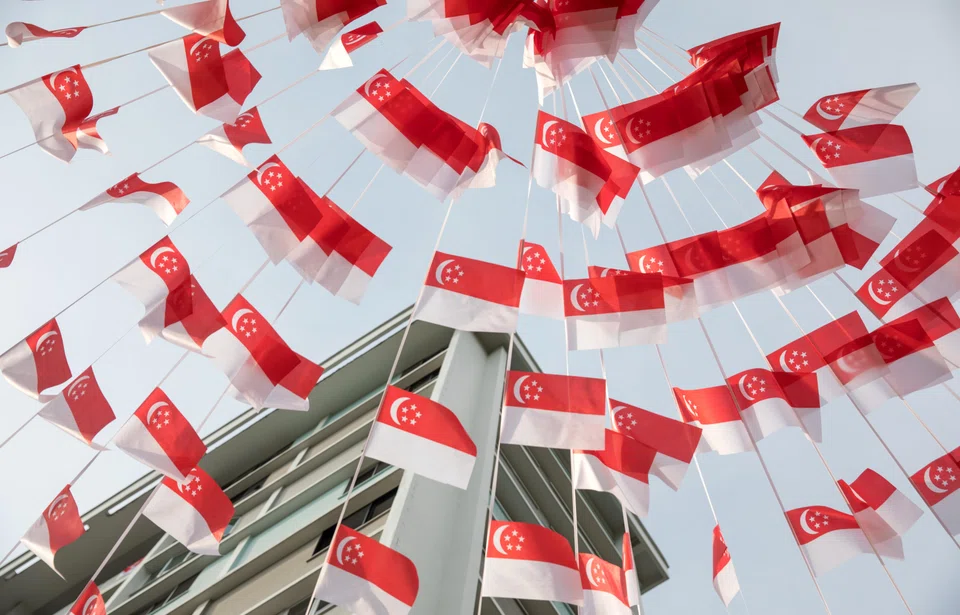
THE Singapore story has been nothing short of remarkable. As we celebrate our 58th birthday today, Singapore is largely free from hunger, poverty and crime. The only gripe might be the insufferably hot and sticky tropical weather.
Globally, we have one of the longest life expectancies at 83.2 years; lowest infant mortality rates at 1.8; and one of the highest gross domestic product per capita. Most Singaporeans own their homes.
Although we can all give ourselves a pat on the back, the era from 1945 to 2008 – except for a period spanning from the mid-1970s to early 1980s – was one of tremendous global economic success unmatched by any other time in history, due to strong growth and low inflation.
With inflation subdued, policymakers could respond aggressively with monetary policy whenever there was an economic storm.
The end result was a super bull market in global financial markets, with the occasional bump in the road. Global capital markets since the end of World War II have been on a multi-decade bull run that ended only last year.
This went hand in hand with growing asset values, rising living standards and major reductions in poverty.
A rising tide lifts all boats. Singapore was fortunate that it had a very capable government, which built a sturdy boat to float above the rising economic waters then.
However, the impressive post-war growth rates and modest inflation can’t go on forever. At some point, the economic tide will recede – arguably, this began during the global financial crisis in 2008, and was exacerbated by the Covid-19 pandemic.
Since then, massive government debt and money-printing have been used to try to make up for slowing growth, and to maintain the living standards of the middle class in democracies which have neither the desire nor the discipline to live within their means. Most of the developed world is now caught in a structural spiral of stagnant growth, high inflation and massive debt levels at elevated interest rates.


This in turn will have deep implications for a globally exposed, export-oriented Singapore, which has seen nine straight months of exports contraction.
The next few decades will likely bring challenges for Singapore.
There is indisputable evidence of climate change, with extreme weather events fuelled by climate phenomena such as El Nino and La Nina becoming more common; a major war between Russia and Ukraine disrupting the world’s breadbasket; ageing and declining populations (Singapore’s included) amid deep, domestic political polarisation.
Last but not least, we have de-risking, de-coupling and de-globalisation fuelled by the increasingly strained relations between the US and China, the world’s two biggest superpowers.
The end result is a structurally higher level of inflation compared to that in previous eras. Climate change and the elevated cost of carbon, a shrinking working-age population, the Russia-Ukraine war, and deglobalisation will result in inflation becoming higher and stickier, with lower growth rates.
With structurally higher inflation, interest rates and bond yields will also likely be higher, adding to the burden of the developed world’s astronomical debt levels. Unstable governments mean fiscal policy has been rendered ineffective. Inflation consistently above target levels means policymakers will have less room to manoeuvre and intervene in financial markets.
In other words, shorter business cycles, range-bound asset values and highly volatile markets may become commonplace. And did we mention the threat and opportunities posed by artificial intelligence to the ways we live, work and play?
But these are not our biggest challenges. As the famous economist Hyman Minsky pointed out, stability breeds instability. This is because when things are going well, the instability of the previous eras becomes a distant memory, leading individuals, corporates and even governments to become complacent and over-confident.
Our biggest challenge: complacency
What has served us well in the past may not be applicable in a future where the old paradigm is changing. Economic slowdowns and recessions often spur policymakers to rethink the merits of the prevailing economic paradigm. With our exports down eight months in a row, we are now knocking on the doors of a major paradigm shift.
Hence, my birthday wish for Singapore is for policymakers and fellow citizens alike to bravely embrace the tumultuous changes in the future with confidence and creativity. Let’s leave no stone unturned as we shift our perceptions, outlook and approach holistically.
Whether it’s the education system, transportation system or even our public housing policy, let’s not shy away from asking difficult questions. In a world increasingly competing on ideas and creativity, not on price, we cannot afford to be complacent. We need to float even when the tide’s receding, or else we will get left behind in the mud.
Happy 58th birthday, Singapore.
The writer is the chief investment officer for south Asia-Pacific at UBS Global Wealth Management
Decoding Asia newsletter: your guide to navigating Asia in a new global order. Sign up here to get Decoding Asia newsletter. Delivered to your inbox. Free.
Share with us your feedback on BT's products and services
TRENDING NOW

DBS, OCBC, UOB rout lops billions off STI as inflation, rate concerns spook investors

Grab CEO’s wife Chloe Tong on life with Anthony Tan and finding her purpose

OCBC sheds S$8 billion in value as shares close nearly 6% down; analysts cautious on banks

Deal between tycoon friends sparks scrutiny of Philippine power sector

