Springtime in China: what will the reunion with investors bring?
Chinese equities are increasingly attractive to global investors, thanks to a mix of macro, regulatory, valuation and positioning tailwinds
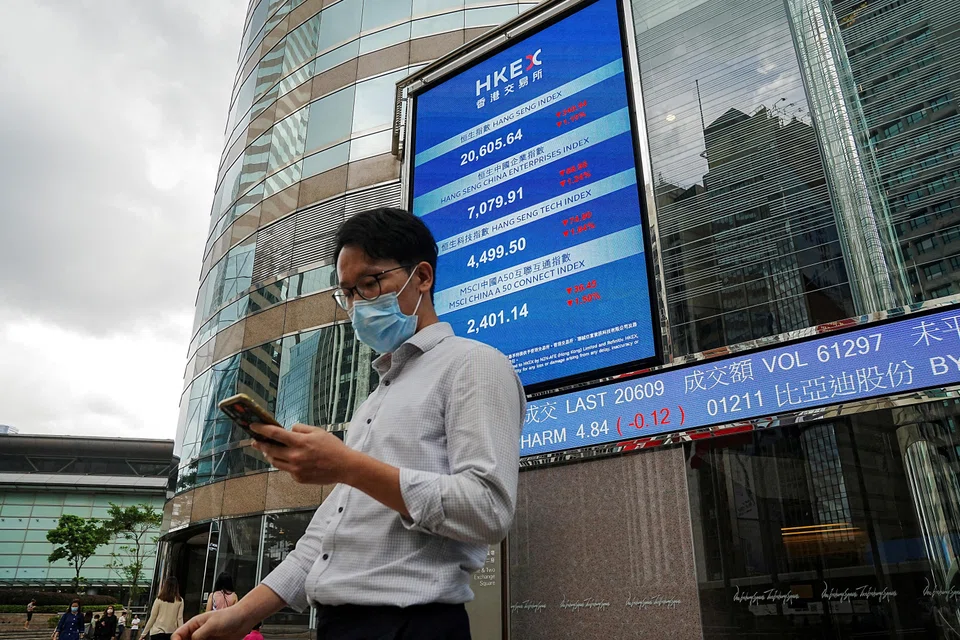
CHINA enters springtime in the Year of the Rabbit, along with a market revival as investors revisit its vast capital markets.
In January alone, China A-share indices posted 7-8 per cent rises, while HK-listed China shares (represented by Hang Seng Index and HSCEI) rose over 10 per cent. The initial momentum was fuelled by positive surprise around the pace of China’s post-Covid re-opening, macro data and return of investment flows into the Hong Kong/China markets.
Northbound inflows via the HK-China Stock Connect into the China A-share bourses rose to a record US$20.88 billion last month, which is US$6 billion above the previous monthly record in December 2021.
With the sharp rally in HK/China equities, can this investor optimism and momentum carry on? We articulate two key reasons why the equity market revival is in its early phase, and how investing in China has changed course after the bruising experience of 2022.
1. Upside economic surprise
Since China’s abrupt zero-Covid policy reversal in November 2022, public health officials estimated that herd immunity has been achieved. Activity data in China has rebounded more sharply compared to other economies like India and Taiwan. Over the Chinese New Year holidays, national domestic tourism traffic and revenues were back to 89 per cent and 73 per cent of 2019 pre-pandemic levels, respectively.
A stronger than anticipated fourth quarter 2022 gross domestic product (GDP) prompted Bank of Singapore to raise our forecast for China’s 2023 GDP growth from 4.5 per cent to 5.2 per cent, rebounding from 3 per cent growth in 2022.
China’s policymakers are re-focusing on economic growth priorities in 2023, after addressing leadership transition and regulatory issues last year. We expect a broadly supportive stance across fiscal and industrial policies to reboot growth in 2023, as well as policy follow-ups from the key priorities announced at the Central Economic Work Conference (CEWC) last year.
These will aim to boost domestic demand; accelerate industrial development, support public and private enterprises; boost foreign investment and manage economic and financial risks.
2. Attractive set-up of fundamentals
Ultimately, valuations of Chinese equities will need to be supported by earnings growth and fundamentals. Leading indicators of corporate profitability, such as manager surveys, are turning positive, and broadly signal an inflection point for earnings of Chinese companies. We believe that the stage is set for a sustainable bull market in Hong Kong and China equities in 2023, as we start from a relatively low base in terms of earnings expectations.
In particular, we favour sectors such as consumer, technology, renewables, green infrastructure and electric vehicles. These are areas exposed to the cyclical recovery that accompanies China’s reopening, as well as sectors exposed to structural themes that will benefit from policy tailwinds in areas of economic development.
However, we expect near-term volatility as investors may tactically take profit, given the sharp rally year-to-date. We also caution that the overall investment thesis for global investors has been scarred after the bruising experiences of the past year.
The unwelcome mix of zero-Covid policies, regulatory and policy risks, as well as US-China geopolitical risks that caused sharp market corrections may have impacted the modus operandi for investors in China.
Positioning
How should investors be positioned to re-enter the China market?
1) Watch the geopolitical risks: Relations between the United States and China are fraught with immense complexity as tensions between both sides ebb and rise. A recent illustration: US Secretary of State Antony Blinken’s previously scheduled meeting with his counterpart China Foreign Minister Qin Gang revived hopes that ties were set to improve. This has been dashed following the recent appearance and subsequent shooting down of a Chinese balloon flying across North America.
Such events weigh on HK/China markets, as investors actively price in greater downside risks should conflicts escalate. On the other hand, these episodes also help to create attractive entry points for well-prepared investors armed with rigorous analysis, sufficient dry powder and sufficiently long-term horizons.
2) Increase in risk premium: The rise in volatility due to geopolitical and policy uncertainties weigh on investors’ risk appetite for investing in China. Hence, investors may demand a higher rate of return going forward. Investors should also focus on higher quality companies in terms of their business models, earnings power and resilience amid global economic uncertainty and recessionary risks.
3) Portfolio diversification across sectors and industries: While China’s equity indices are skewed towards large-cap sectors such as technology and financials, the experience of the past two years has demonstrated the idiosyncratic risks of being overly exposed to individual sectors and companies. This was the case with China’s property, after-school education and Internet platform sectors.
4) Beneficiaries of China’s economic recovery: In addition to direct beneficiaries, companies in the US, Europe and Asia are also potential investment candidates for investors seeking exposure to China’s recovery. These include sectors that benefit from China travel and consumption trends, as well as global manufacturers as global supply chain linkages normalise.
Global impact
On the flipside, we are watchful of the global impact of China’s re-opening on commodity prices and the complications it could pose for the Federal Reserve’s inflation fight.
We remain overall neutral in our equities positioning, with an overweight position in Asia ex-Japan offsetting an underweight position in Europe. Within Asia, we remain constructive on markets across China, Hong Kong, Taiwan and Singapore.
We continue to be broadly cautious of credit, as expressed through our underweight position in developed markets high yield (HY) bonds. In emerging markets, we are neutral on both investment grade and HY given the overall neutral risk-reward in terms of pricing and fundamentals. Bottom-up credit selection in this space remains key.
After journeying through a period of trying conditions, China’s time in the sun has finally arrived. A mix of macro, regulatory, valuation and positioning tailwinds make Chinese markets increasingly attractive to global investors once again. Investors are now keenly aware that there remain areas where extra vigilance is needed, such as geopolitical risks.
However, there are ample opportunities in China, especially compared to the challenging investment landscape for a number of major developed markets this year.
The writer is chief investment officer and head of portfolio management and research office, Bank of Singapore.